
An outpatient behavioral health clinic finds that new referrals wait an average of 28 days for an intake appointment because intake packets sit in weekly batch queues between clerical and clinical staff. Which Lean improvement action addresses the core bottleneck?
Select an answer to reveal the explanation.
Short Explanation
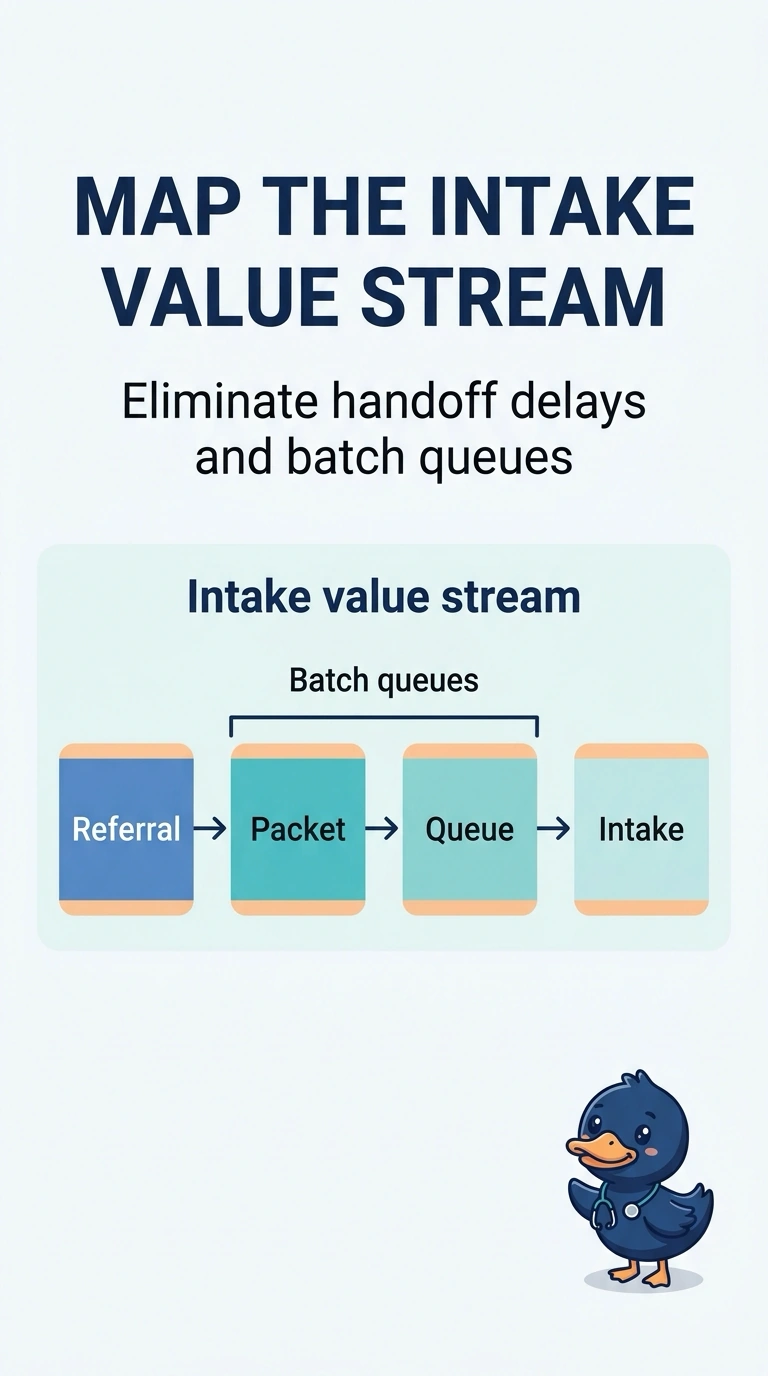
You can see why adding clinician overtime or another inspection may not fix a queue built into the workflow. Mapping the intake value stream helps you find and remove batch queues and handoff delays at their source, so referrals can move toward intake sooner.
Full Explanation
Mapping the intake value stream to eliminate handoff delays and batch queues is correct because Lean distinguishes value-added work from waste, especially waiting and batch processing. Tracing the intake process helps you identify where packets stall and redesign the flow, addressing the structural cause of the 28-day delay. Increasing clinician overtime hours may process the existing backlog faster, but it offers only temporary relief and is unsustainable if batch-queue handoffs remain. Adding a secondary supervisory sign-off to catch incomplete packets creates another inspection queue and can lengthen cycle time rather than preventing incomplete packets at the point of entry. Hiring an additional intake clinician to see referrals as packets arrive adds capacity without changing weekly batch queues, so packets still wait between clerical and clinical handoffs instead of flowing continuously. Caveat: removing handoffs must preserve essential clinical triage screening so urgent behavioral health needs are escalated immediately. Practical check: trace ten consecutive referrals from receipt to scheduled intake, measure touch time and wait time at each handoff, then pilot single-piece daily processing.
Prefer to study offline? Printable PDF study book + test engine ($7.50, unofficial). These questions stay free here.