
A health system's quality director wants to monitor weekly inpatient glycemic control and adjust insulin protocols rapidly across medical units, but an analyst proposes building the tracker solely from finalized billing claims data. Why is claims data unsuitable for this purpose?
Select an answer to reveal the explanation.
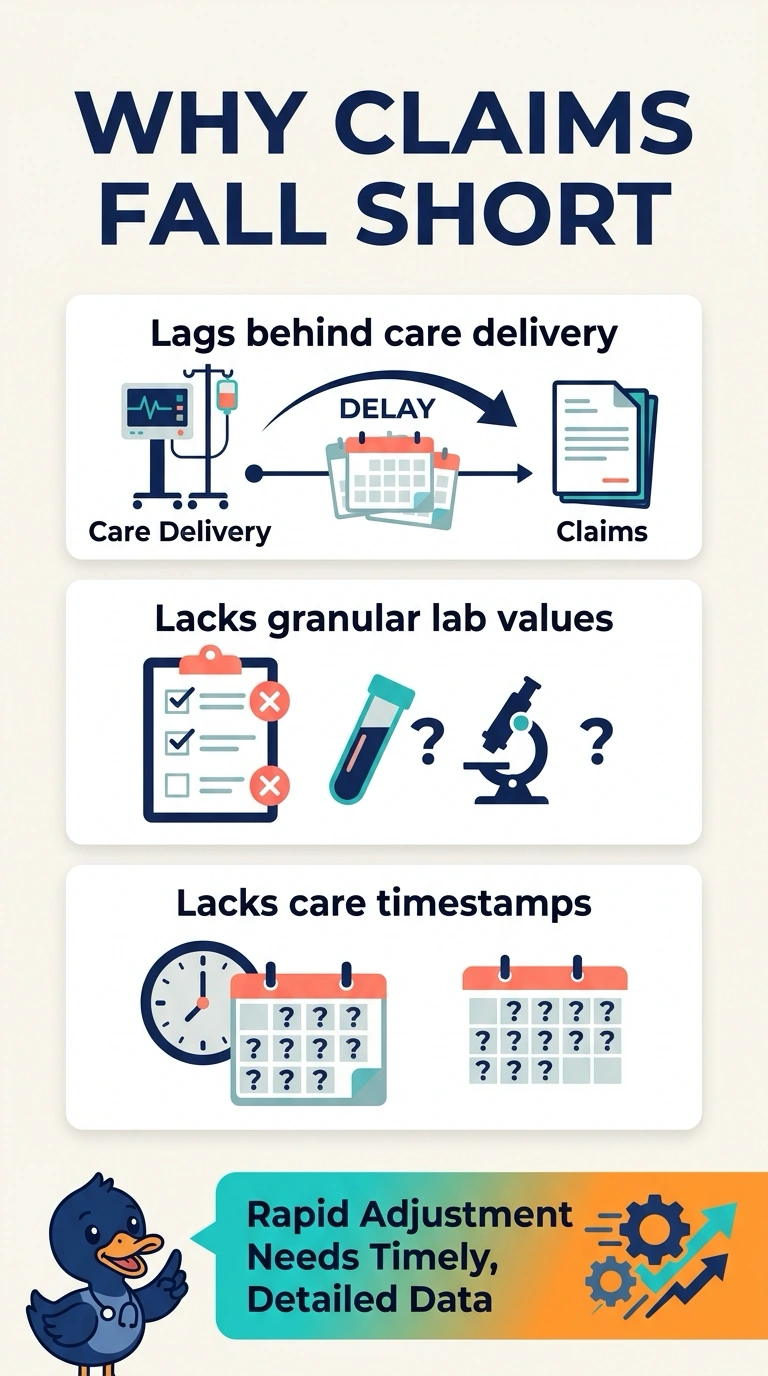
Short Explanation
Using finalized billing claims to steer weekly clinical care is like driving forward while staring at last month's receipt. The trap is assuming that because claims data are standardized and clean, they can power rapid frontline improvement. For timely insulin protocol tweaks, you need clinical EHR data with real lab values and timestamps.
Full Explanation
Selecting the right data source depends on the decision's clinical detail and timeliness requirements. Claims data are unsuitable here because "Claims data lag behind care delivery and lack granular lab values and timestamps," making it impossible to see real-time blood glucose measurements, exact insulin administration times, or weekly unit trends. Choosing "Billing claims data cannot be stratified by hospital unit or attending physician" is incorrect because administrative records routinely link encounters to providers and facilities, even though they lack clinical precision. Choosing "Federal privacy regulations prohibit using billing records for internal improvement" is false because HIPAA permits using identifiable health information for internal healthcare operations and quality improvement. Choosing "Claims databases cover only patients who are enrolled in Medicare fee-for-service" is wrong because claims are generated across Medicare, Medicaid, and commercial payers. As a caveat, administrative claims remain valuable for longitudinal utilization tracking and external benchmarking when clinical abstraction is unavailable. As an operational check, verify data refresh latency and clinical field availability in the electronic health record before launching any rapid-cycle operational dashboard.
Prefer to study offline? Printable PDF study book + test engine ($7.50, unofficial). These questions stay free here.