
A primary care network configures an electronic clinical quality measure for statin therapy in patients with cardiovascular disease, and several eligible patients have a documented statin allergy and no active prescription. How should the quality analyst classify these patients in the measure calculation?
Select an answer to reveal the explanation.
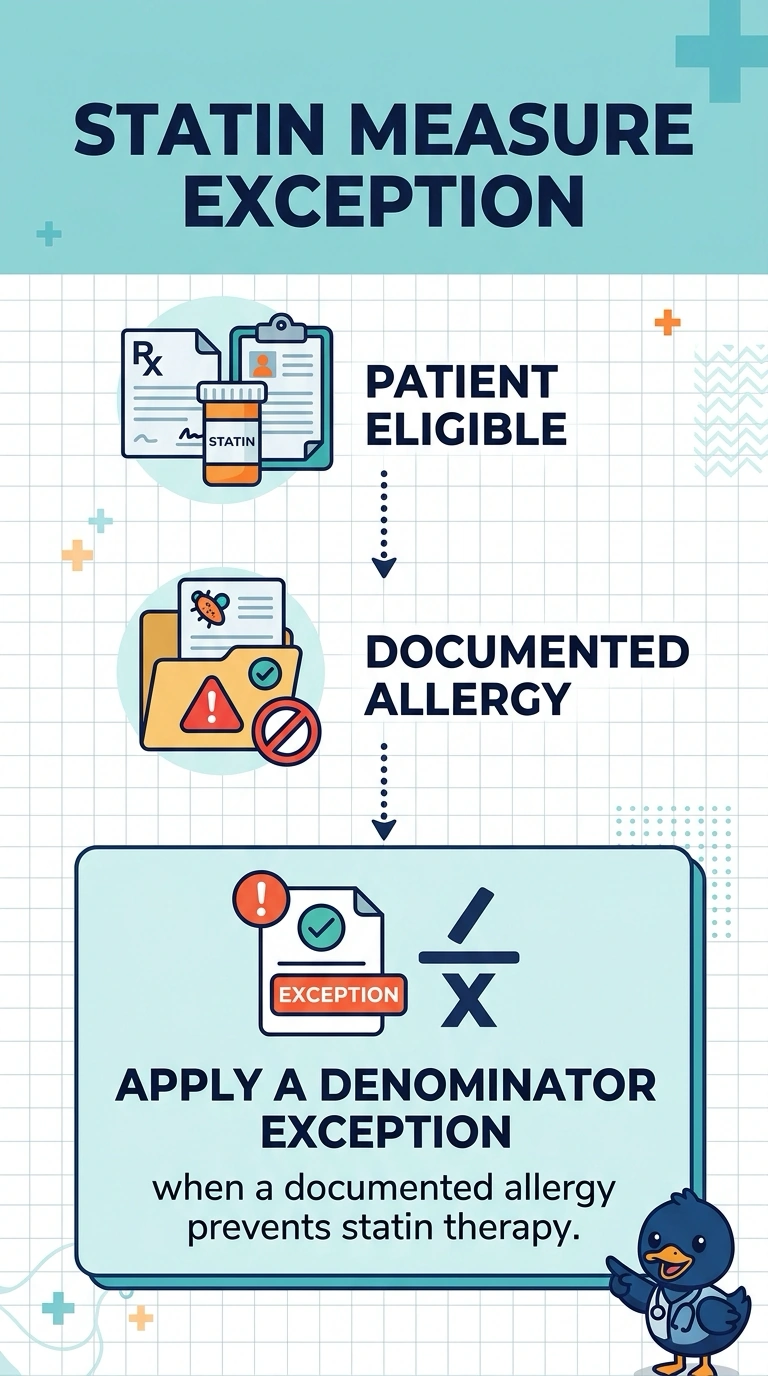
Short Explanation
Think of a quality measure like a clinical checklist with a built-in safety valve when medicine says no. When a documented allergy prevents statin therapy, you should apply a denominator exception rather than an upfront denominator exclusion. The classic trap is lumping exceptions and exclusions together, which distorts both your numerator counts and your clinical audit trail.
Full Explanation
In electronic clinical quality measure specifications, you should Apply a denominator exception when a documented allergy prevents statin therapy. Under CMS measure logic, a denominator exception is evaluated only after checking the numerator: if the patient does not receive the recommended therapy and has a valid documented medical, patient, or system reason, the patient is removed from the denominator so the clinic is not penalized for appropriate clinical judgment. By contrast, choosing to Apply a denominator exclusion to remove all allergic patients from the initial population misapplies the rule because exclusions are absolute criteria such as breastfeeding or an active diagnosis of rhabdomyolysis, applied before numerator evaluation regardless of care delivered. Choosing to Count the patients as numerator failures in the final measure rate for audit completeness unfairly lowers performance scores for following safe prescribing standards. Choosing to Exclude the patient records from the report entirely as incomplete data submissions corrupts population tracking and hides valid clinical documentation. One key caveat is that an exception only applies when the allergy or intolerance is explicitly recorded in structured EHR fields mapped to the value set. As an operational check, audit a sample of excepted charts each quarter to confirm structured allergy codes match clinician notes.
Prefer to study offline? Printable PDF study book + test engine ($7.50, unofficial). These questions stay free here.