
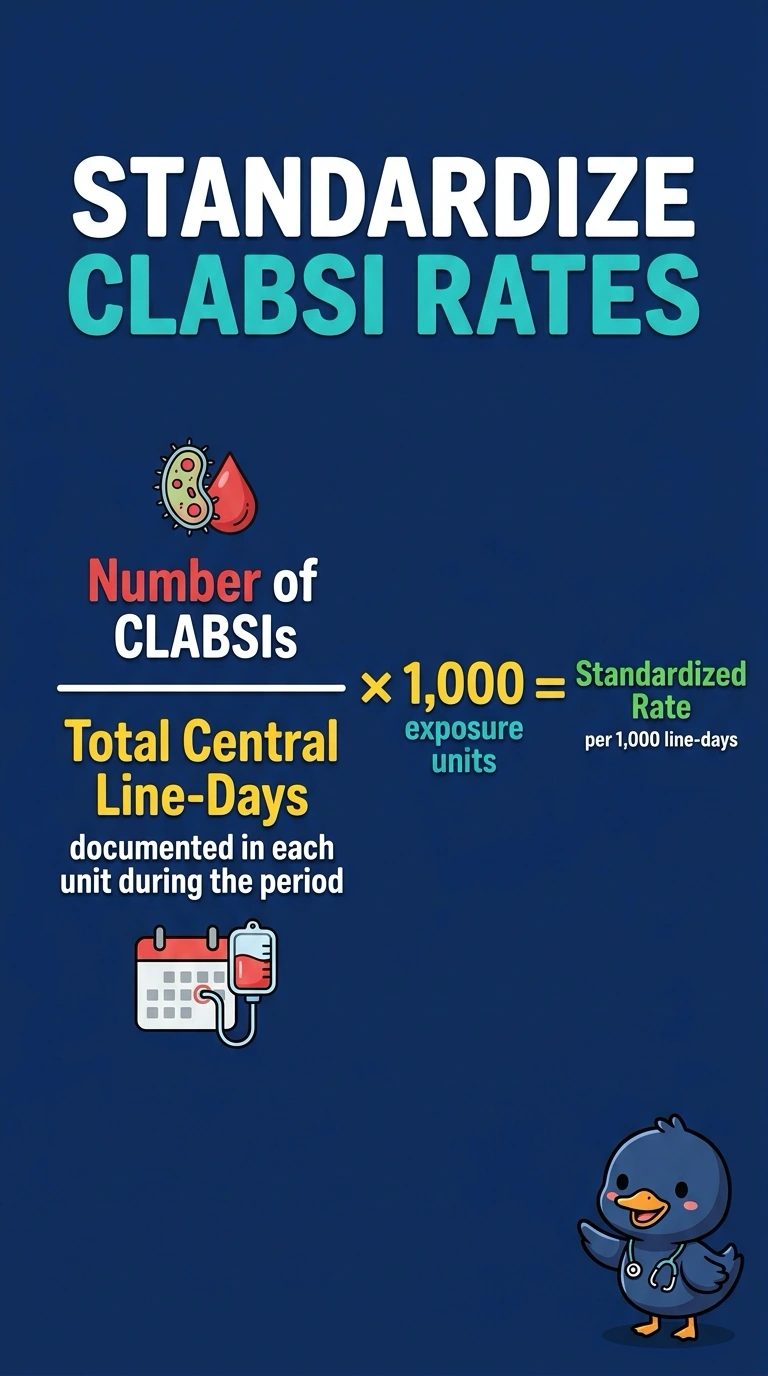
A hospital compares central line-associated bloodstream infection (CLABSI) rates between its medical intensive care unit and a general surgical ward, where central line utilization differs sharply. Which denominator should the quality analyst use to standardize the infection rate per 1,000 exposure units?
Select an answer to reveal the explanation.
Short Explanation
Comparing unit infection rates without matching the denominator to actual device exposure is like comparing highway accident rates by counting parked cars. To fairly compare CLABSI risk between an ICU and a surgical ward, you need to divide infections by central line-days so only patients carrying the risk are counted. Watch out for the trap of using total bed-days or admissions, which dilutes risk on units with fewer lines.
Full Explanation
Accurate healthcare benchmarking requires a denominator that reflects the true population at risk for the event being measured. Using "Total central line-days documented in each unit during the period" aligns with CDC National Healthcare Safety Network surveillance methodology, standardizing CLABSI counts per 1,000 central line-days so high-utilization intensive care units and lower-utilization wards are compared on equal footing. "Total inpatient admissions across both hospital units during the quarter" fails because it ignores both length of stay and whether admitted patients ever received a central venous catheter. "Total inpatient bed-days regardless of whether a patient had a central line" is appropriate for broad unit events like falls, but it understates device-specific risk on wards where few patients have central lines. "Total number of positive blood cultures drawn in each unit monthly" reflects laboratory testing volume rather than patient-days of catheter exposure and cannot serve as a population-at-risk denominator. As a caveat, even standardized CLABSI rates should be paired with the device utilization ratio so leadership sees whether a unit is reducing unnecessary line days. As an operational check, audit daily midnight device counts against electronic health record line-insertion and removal timestamps each month before submitting surveillance totals.
Prefer to study offline? Printable PDF study book + test engine ($7.50, unofficial). These questions stay free here.