
An ambulatory surgical center's post-procedure infection rate appears half the national registry benchmark, prompting leadership to celebrate. However, the center only tracks infections reported during 7-day phone calls, while the registry tracks 30-day events. What should the quality analyst advise first?
Select an answer to reveal the explanation.
Short Explanation
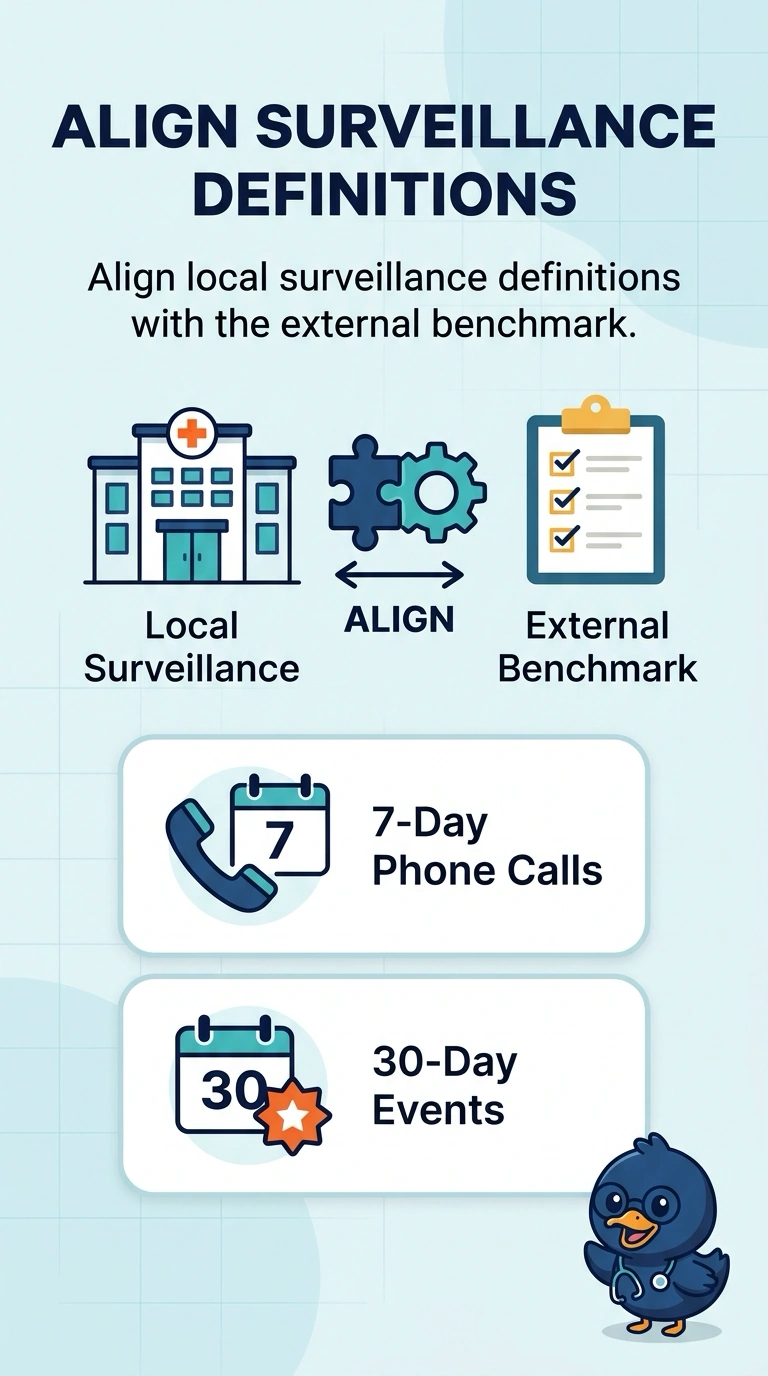
Comparing a 7-day phone check to a 30-day registry is like comparing your sprint time at the half-mile mark to someone else's full mile. Before you celebrate or panic over an external benchmark, make sure both numbers measure the exact same window and rules. The trap is trusting a flattering comparison built on mismatched definitions.
Full Explanation
Align local surveillance definitions with the external benchmark is essential because valid benchmarking requires identical numerators, denominators, exclusion criteria, and observation windows. A 7-day follow-up window misses late-onset surgical infections that a 30-day registry captures, making the facility's rate appear artificially low. Report the 7-day rate to the registry and footnote the shorter window leaves the comparison invalid because a footnote does not correct the missing cases and violates registry specifications. Shorten the call script to a single yes/no question about any problems since surgery narrows case finding further and reduces sensitivity for wound infection signs. Submit the center's current rate without changing the local follow-up window preserves the measurement mismatch and allows false reassurance to continue. As a caveat, extending surveillance to 30 days may cause reported infection rates to rise initially purely from improved case detection rather than worsening care. For an operational check, map each local data element against the registry specification manual and validate 30-day capture across inpatient, clinic, and readmission records.
Prefer to study offline? Printable PDF study book + test engine ($7.50, unofficial). These questions stay free here.