
A regional health system sees that two of its six outpatient clinics report much lower depression screening rates despite serving similar patients and using the same electronic health record. Before launching a clinical workflow redesign, what should the analytics team verify first?
Select an answer to reveal the explanation.
Short Explanation
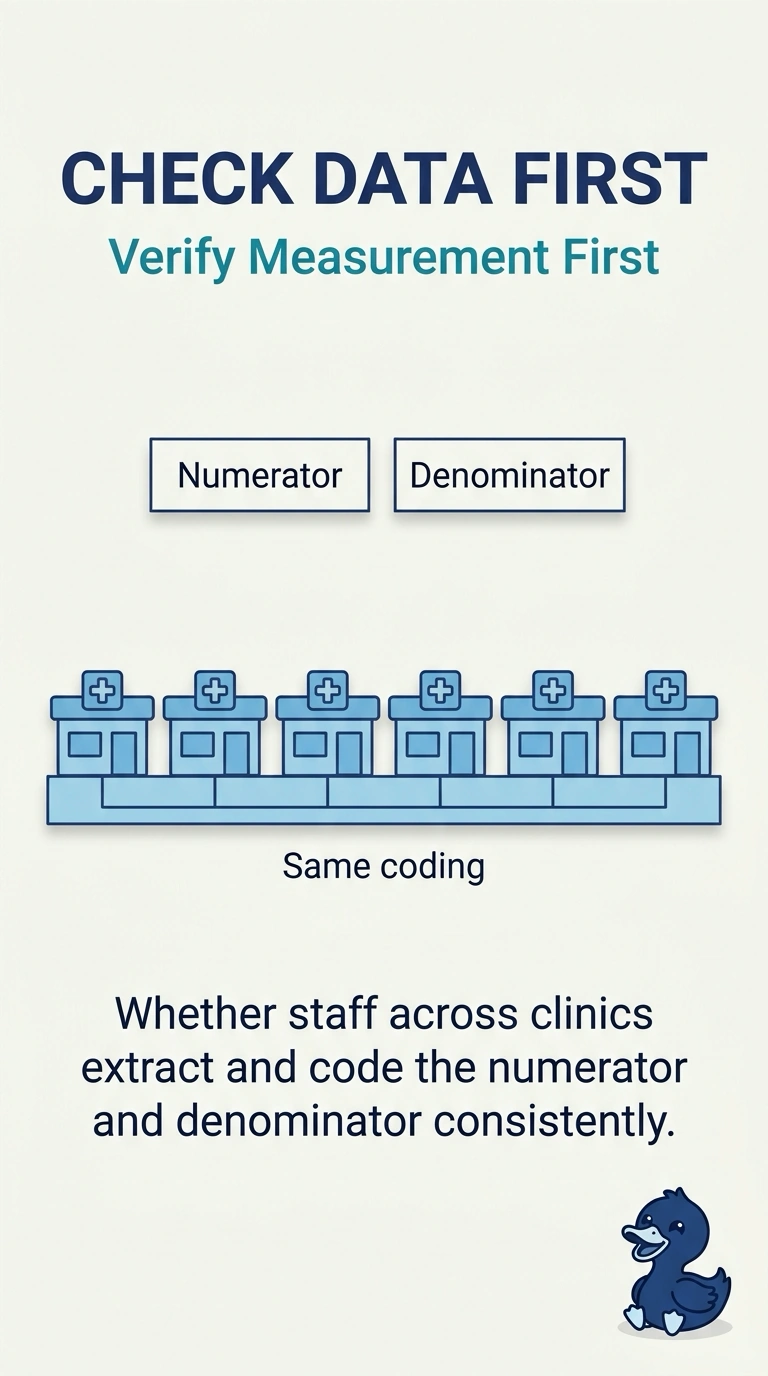
If two thermometers in the same room read ten degrees apart, you check calibration before adjusting the thermostat. Your analytics team should verify that every clinic is coding the numerator and denominator the same way, and the trap is jumping to blame managers or redesign workflows on faulty data.
Full Explanation
Whether staff across clinics extract and code the numerator and denominator consistently must be checked first because apparent performance gaps across sites using the same electronic health record frequently stem from inconsistent documentation fields, mapping rules, or measure definitions rather than true clinical differences. Whether clinic managers should be replaced for low performance jumps to punitive personnel action before confirming that the underlying data are valid and comparable. Whether patients in those clinics prefer paper forms over tablets addresses one narrow workflow preference without verifying how screening results enter the structured numerator field. Whether the two clinics should be scored only on patients who asked for a screening redefines the eligible population to a self-selected subset and would hide true gaps in universal screening rather than testing whether the current rates are measured comparably. As a caveat, data validation should be rapid and targeted so genuine care gaps are not left unaddressed during prolonged technical audits. For an operational check, pull a random sample of charts from both low-performing clinics and a high-performing peer site, compare manual chart abstraction against the automated report, and reconcile any discrepancies in EHR field mapping.
Prefer to study offline? Printable PDF study book + test engine ($7.50, unofficial). These questions stay free here.