
A sales rep is quoting a 7-kW home system where the customer compares two bids with different totals and asks what actually drives the final price beyond the panels and inverter on a simple shingle roof with no battery or trenching. Which identification of system price components best answers the cost question?
Select an answer to reveal the explanation.
Short Explanation
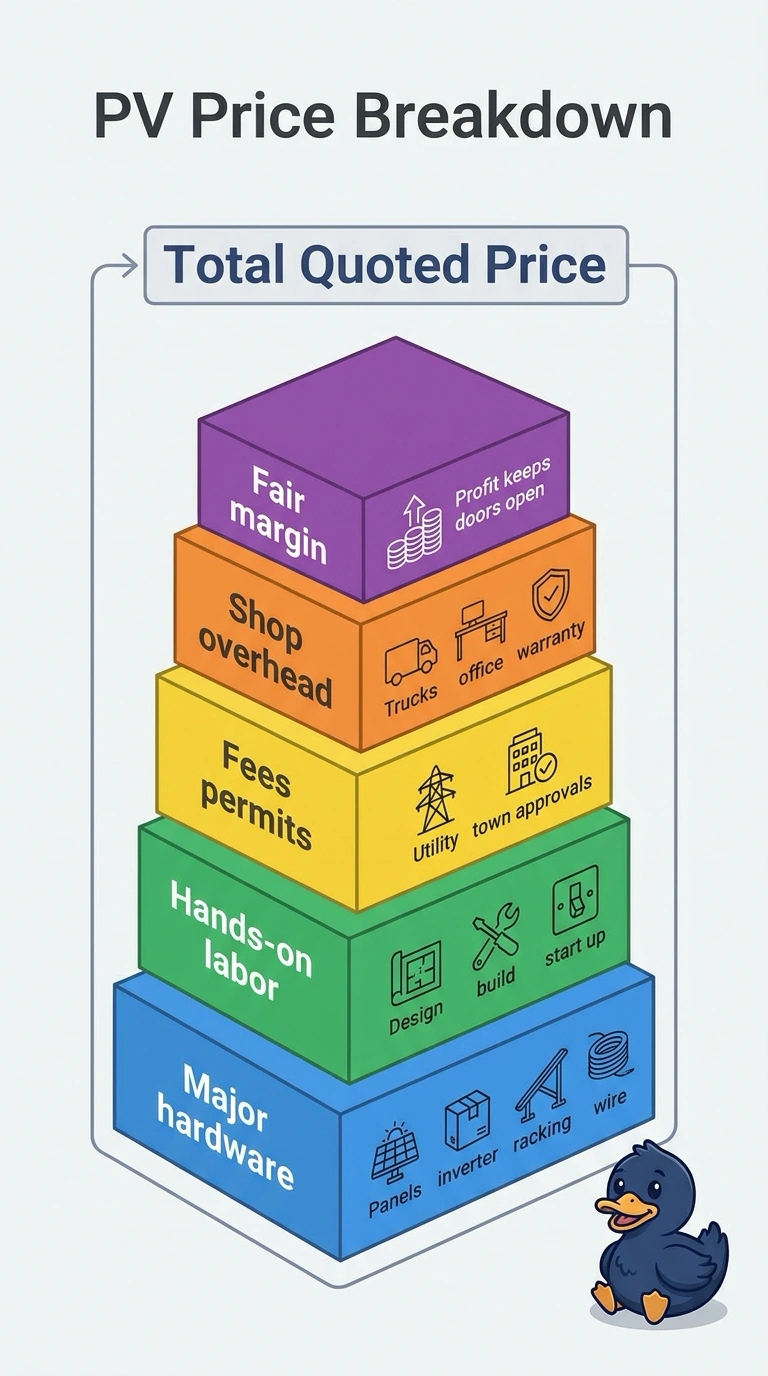
You can show the buyer why the total reflects more than the equipment. A complete price breakdown includes hardware, labor, permits, overhead, and margin, helping you compare bids fairly.
Full Explanation
The quoted total is not determined by hardware alone. A useful breakdown accounts for hardware, installation labor, permitting, business overhead, and the seller’s margin; together, these components explain the price of the straightforward roof-mounted system. The description that includes hardware, labor, permits, and overhead but tracks dealer margin separately can work for internal accounting, but it does not explain a customer-facing total that includes margin. The model that treats overhead as part of the labor burden uses a possible accounting convention, yet it obscures overhead as a distinct contributor and does not separately identify all five components. The quote that includes hardware, labor, overhead, and margin while handling permitting separately may reflect how a contractor presents fees, but it does not account for permits in the total project price. Exam caveat: overhead and margin are related business costs, but they are not interchangeable; overhead supports operations, while margin is the amount retained above costs. Practical check: ask for an itemized scope and confirm whether permits, labor, overhead allocation, and margin are included in the quoted total before comparing bids with different inclusions.