
An apprentice must cut strut and drill a weatherproof box on a windy rooftop where metal shavings fly, cords cross the walk path, and the panel edges are sharp while wearing gloves and glasses. Which hand and power tool safety practice best controls these cutting hazards?
Select an answer to reveal the explanation.
Short Explanation
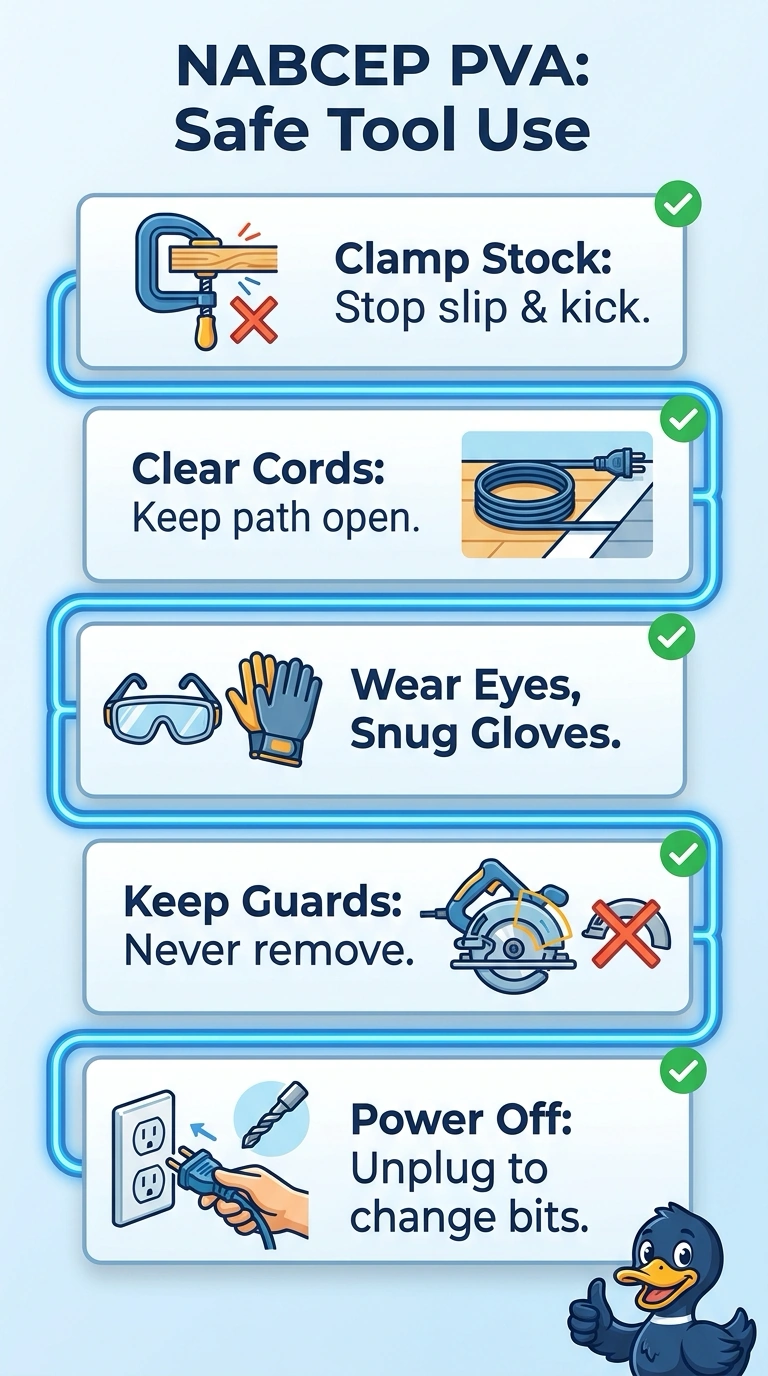
You keep the work steady and the walkway clear while protecting your eyes and keeping the tool’s safeguards in place. That combination gives you control over the main cutting hazards on the rooftop.
Full Explanation
Clamping the work, securing cords, wearing eye protection, and keeping guards and handles in place best control the hazards described. Clamping prevents the strut or box from shifting during cutting or drilling; securing cords keeps them out of the walk path; eye protection helps shield you from flying metal shavings; and intact guards and handles help control contact with moving parts. Supporting the strut on stable sawhorses, while securing cords and using eye protection and guards, does not positively restrain the work against movement, especially in windy conditions. Clamping the work and using eye protection, guards, handles, and a GFCI-protected supply addresses several risks, but does not secure cords away from the walkway; a GFCI reduces electrical shock risk, not trips or cord damage. Clamping the work, securing cords, wearing eye protection, and using a compatible blade with a firm grip still does not ensure the tool’s guards and handles remain in place; a suitable blade and grip are not substitutes for guarding. Exam caveat: gloves may protect against sharp panel edges, but must suit the task and stay clear of rotating equipment. Practical check: before starting, confirm the work is clamped, cords are routed out of traffic, guards and handles are present and secure, eye protection is on, and the cutting area is clear of people and loose material.