
A nursing facility's staff development coordinator asks whether experienced registered nurses and certified nursing assistants who completed Bloodborne Pathogens training during orientation two years ago need repeat instruction. Under OSHA regulations, what training frequency is required?
Select an answer to reveal the explanation.
Short Explanation
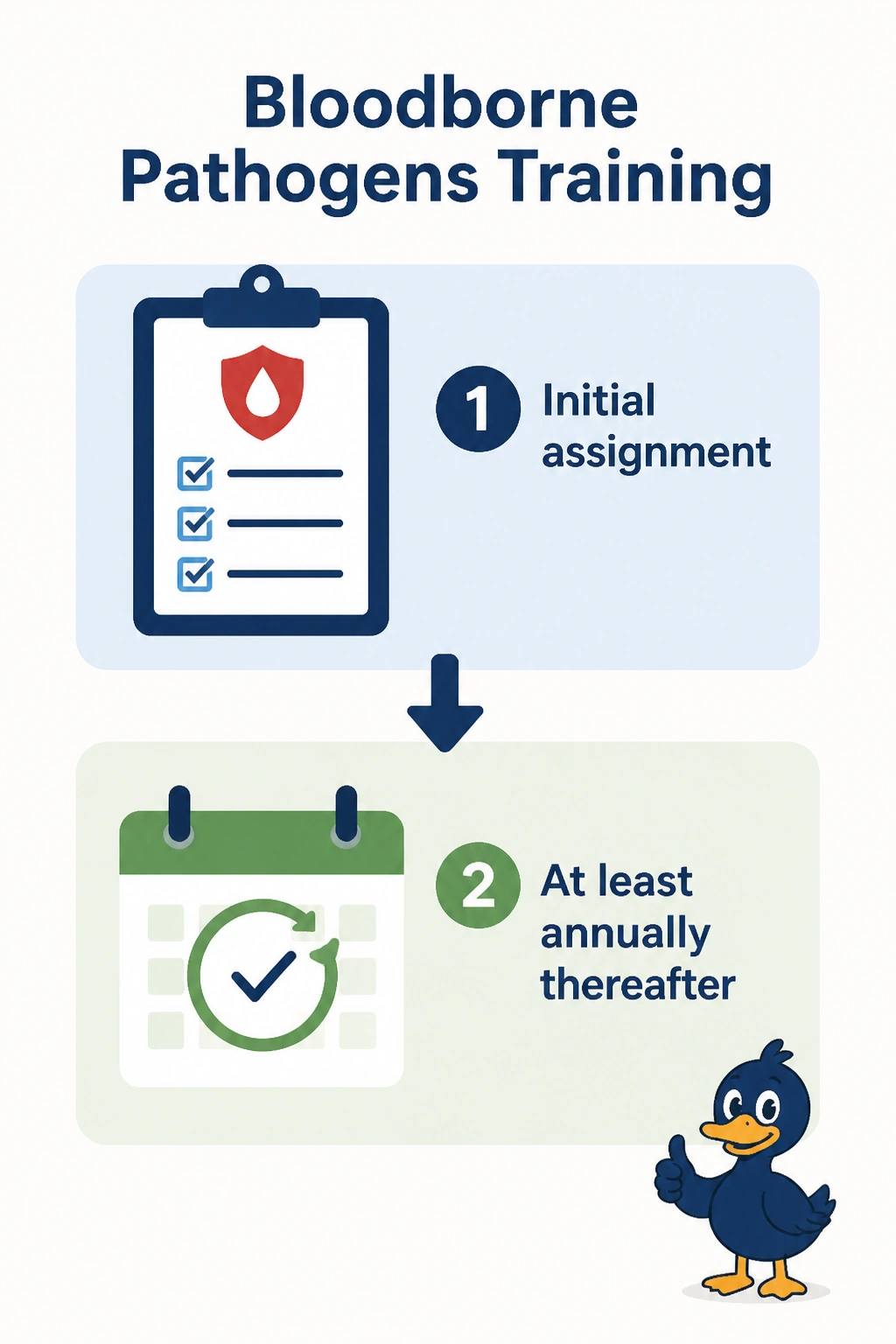
Bloodborne pathogens training is not a one-time orientation box you check and leave in the hiring file. The trap is thinking experienced nurses or staff who signed a vaccine form can skip yearly refreshers. Under OSHA rules, you must train every exposed employee at hire and at least once every year.
Full Explanation
Under the OSHA Bloodborne Pathogens Standard (29 CFR 1910.1030(g)(2)), employers must provide no-cost training during working hours to all employees with occupational exposure. Specifically, "Training is required at initial assignment and at least annually thereafter" within one year of the previous training session. Choosing "Repeat training is required only when a staff member sustains a percutaneous exposure" is dangerously reactive and violates OSHA's preventive annual training mandate. Selecting "Repeat training is required every three years for licensed nurses and annually for aides" invents a tiered exemption that does not exist, because licensed nurses and aides with occupational exposure follow the same annual schedule. Picking "Repeat training is optional once employees sign the Hepatitis B declination statement" confuses vaccination refusal with safety education, which remains mandatory regardless of vaccination status. As a caveat, additional training is also required whenever modified tasks, new safety-engineered sharps, or updated procedures affect an employee's exposure risk. Operationally, configure the learning management system to flag expiring Bloodborne Pathogens certifications 30 days before each employee's annual due date.
Prefer to study offline? Printable PDF study book + test engine ($7.50, unofficial). These questions stay free here.