
Before approving payment for a large delivery of enteral nutrition supplies and wound-care dressings, an accounting clerk compares the vendor's invoice against the approved purchase order and the receiving dock's signed packing slip, discovering that 10 cases were billed though only 7 arrived. Which internal control practice is the clerk applying?
Select an answer to reveal the explanation.
Short Explanation
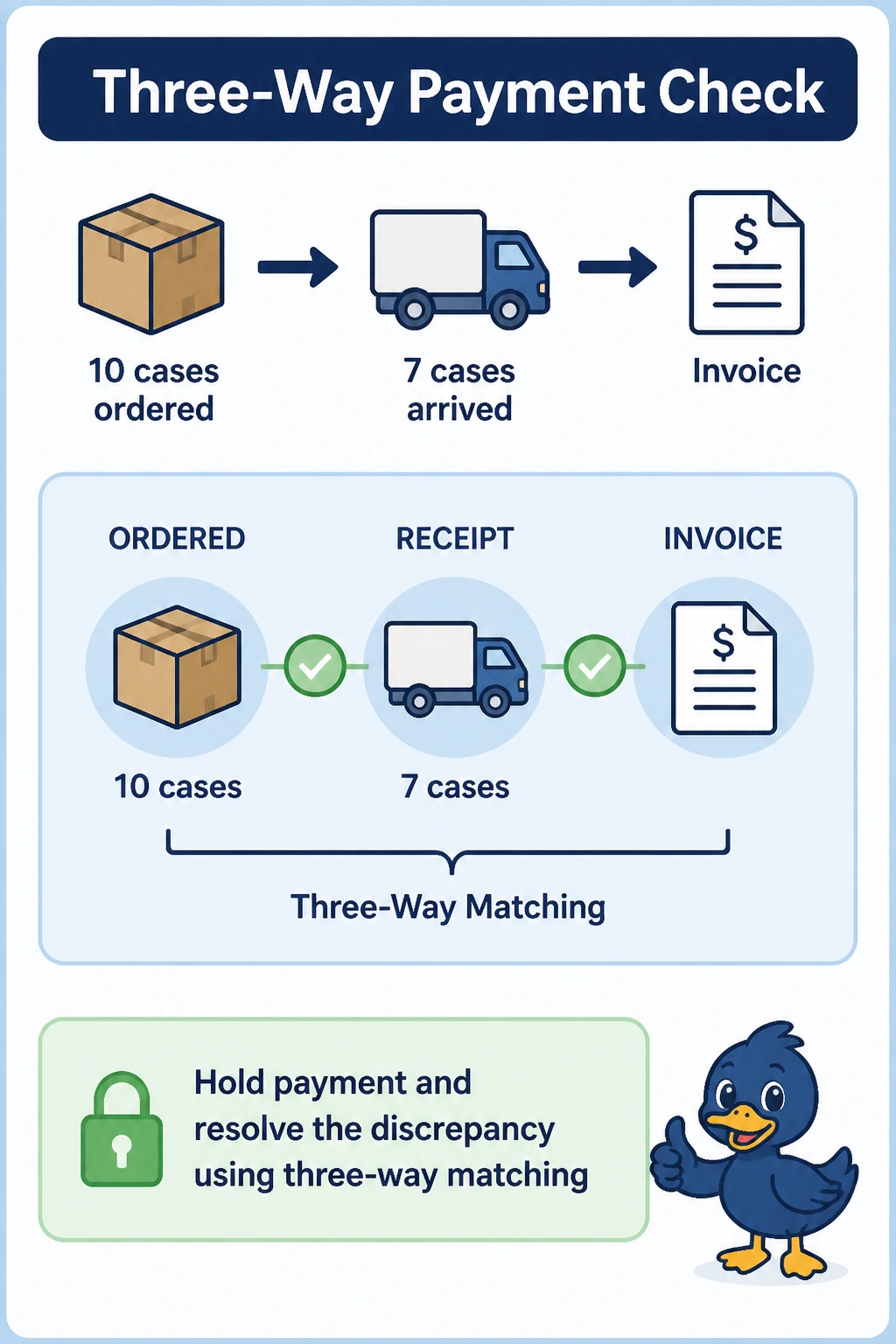
You protect your facility’s cash by checking what was ordered, what arrived, and what the vendor billed before approving payment. Three-way matching helps you resolve the shortage instead of paying the full invoice to preserve discounts, relying only on the purchase order, or recording missing cases without notifying anyone.
Full Explanation
Three-way matching is a foundational accounts payable control: before releasing payment, you compare the purchase order, the receiving report or signed packing slip, and the vendor invoice. Holding payment and resolving the discrepancy through this comparison ensures the facility pays only for goods actually ordered and received. Paying the full invoice immediately to preserve trade discounts and reconciling shortages next quarter sacrifices cash flow and weakens leverage to obtain vendor credit memos. Matching the invoice to the purchase order only and releasing full payment while treating the packing-slip shortage as a receiving delay defeats the control, because it ignores receipt evidence and authorizes payment for cases never received. Recording the three missing cases as shrinkage expense without notifying the supplier or purchasing manager overstates operating expenses and leaves the vendor overcharge uncorrected. One caveat: a partial delivery may require short-paying the invoice or issuing a formal debit memo, depending on vendor terms. As a practical check, sample paid supply invoices monthly and confirm that each disbursement file contains matching purchase order, receiving, and invoice documentation.
Prefer to study offline? Printable PDF study book + test engine ($7.50, unofficial). These questions stay free here.