
A non-exempt medical records clerk at a private, for-profit skilled nursing facility works 44 hours during one workweek to prepare for a survey. Rather than paying overtime, the department supervisor offers four hours of paid time off during the following workweek. How does federal wage-and-hour law apply?
Select an answer to reveal the explanation.
Short Explanation
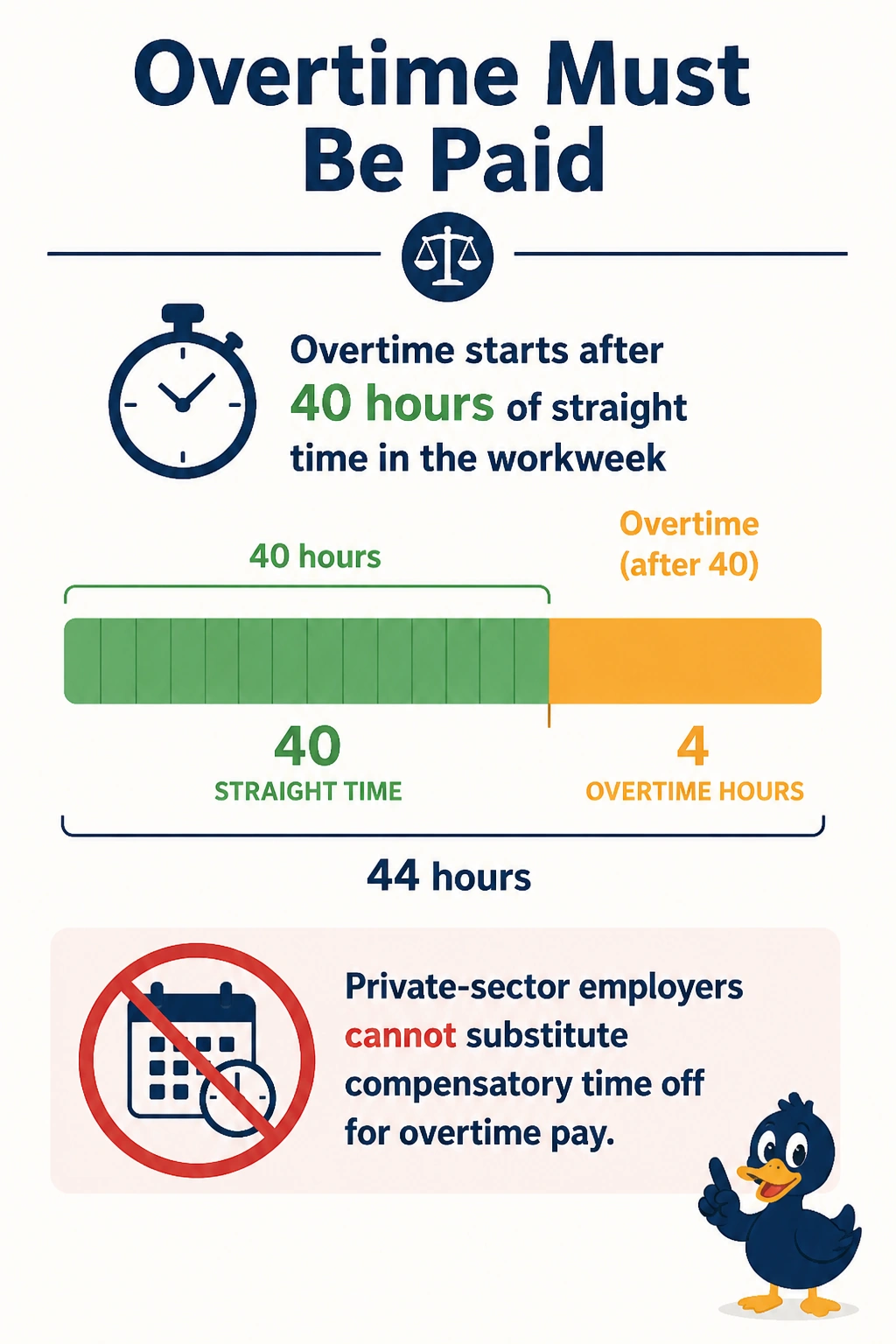
Compensatory time off sounds like a friendly trade, but in private-sector healthcare, it's a fast track to a wage-and-hour violation. Under the Fair Labor Standards Act, you must pay non-exempt employees overtime wages for hours over forty in a workweek rather than banking future time off. The trap is thinking a signed employee agreement or a 1.5-to-1 time swap makes private-sector comp time legal.
Full Explanation
Under the Fair Labor Standards Act (FLSA), The arrangement violates federal law because private-sector employers cannot substitute compensatory time off for overtime pay. Federal law restricts compensatory time off in lieu of monetary overtime to qualifying public-sector government agencies, so a private nursing facility must pay non-exempt workers at least one and one-half times their regular rate for hours worked over forty in a single workweek. Believing The arrangement is permissible if the clerk signs a voluntary written agreement before the extra hours are worked fails because employees cannot waive statutory FLSA overtime rights by private contract. Assuming The arrangement is permissible if the time off is granted at one and one-half hours for each overtime hour worked misapplies public-agency comp-time rules to a private employer. Claiming The arrangement is permissible as long as total hours across the two-week pay period do not exceed eighty hours confuses standard 40-hour workweek rules with a formally adopted Section 7(j) 8-and-80 healthcare system, which still requires overtime pay rather than banked time off. As a caveat, an employer may reduce an employee's hours within the same workweek to prevent total hours from exceeding forty. As an operational check, review timecards weekly so any hours over forty in a single workweek are paid as overtime wages on that pay period's payroll.
Prefer to study offline? Printable PDF study book + test engine ($7.50, unofficial). These questions stay free here.