
A 100-bed skilled nursing facility has 90 occupied beds on a given day and records 360 total direct-care nursing hours across all three shifts during that 24-hour period. How should the administrator calculate actual nursing hours per patient day (HPPD) for operational staffing analysis?
Select an answer to reveal the explanation.
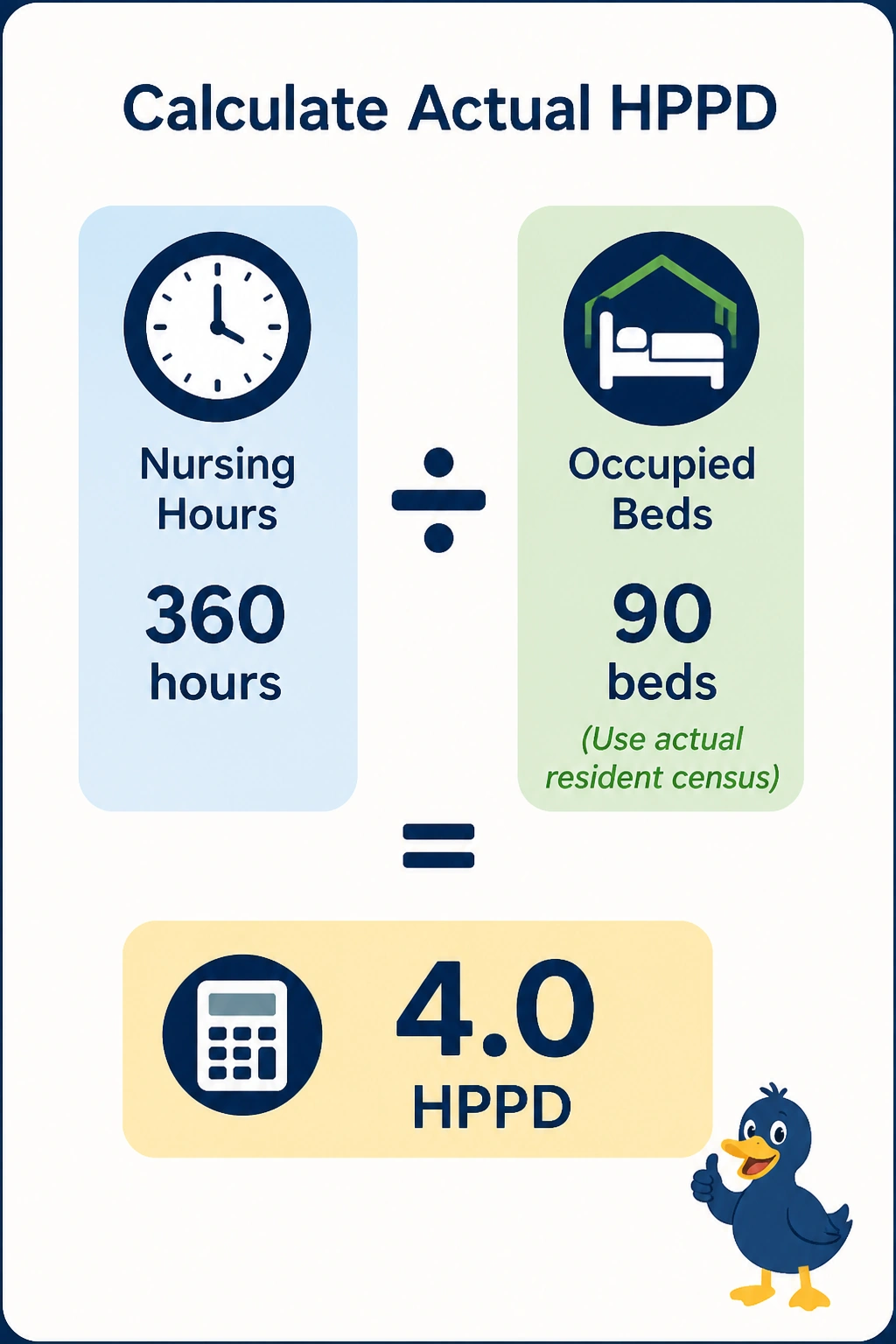
Short Explanation
HPPD measures how much nursing care each actual resident receives, not how many empty beds sit on the unit. The trap is dividing total nursing hours by licensed bed capacity, which artificially drags down your staffing metric whenever occupancy is below 100 percent. You always divide total direct-care hours by the actual daily census.
Full Explanation
To measure staffing intensity accurately, the administrator must Divide 360 nursing hours by 90 occupied beds to report 4.0 HPPD based on actual resident census. Hours per patient day (HPPD) is defined as total productive direct-care nursing hours worked in a 24-hour period divided by the number of residents actually present (patient days), giving leadership a true picture of bedside care delivery and labor efficiency. Choosing to Divide 360 nursing hours by 100 licensed beds to report 3.6 HPPD regardless of daily census distorts staffing ratios by including 10 unoccupied beds that require zero care. Choosing to Divide 360 nursing hours by 3 shifts to report 120.0 HPPD per shift across the nursing department calculates average nursing hours per shift rather than hours per resident. Choosing to Multiply 90 occupied beds by 24 hours and divide by 360 nursing hours to report 6.0 HPPD for the facility inverts the ratio and mixes resident-hours with staff-hours, producing a meaningless figure. As a caveat, productive HPPD excludes non-worked paid time off such as vacation or sick leave, and acuity-adjusted staffing must still reflect the Facility Assessment. Operationally, compare actual daily HPPD by skill mix (RN, LPN, CNA) against budgeted targets every morning.
Prefer to study offline? Printable PDF study book + test engine ($7.50, unofficial). These questions stay free here.