
After acquiring an older 95-bed nursing facility with bloated supply and contract expenses, an administrator asks department heads to justify every dollar of their upcoming annual budgets from scratch rather than adjusting last year's totals. Which budgeting approach is the administrator using?
Select an answer to reveal the explanation.
Short Explanation
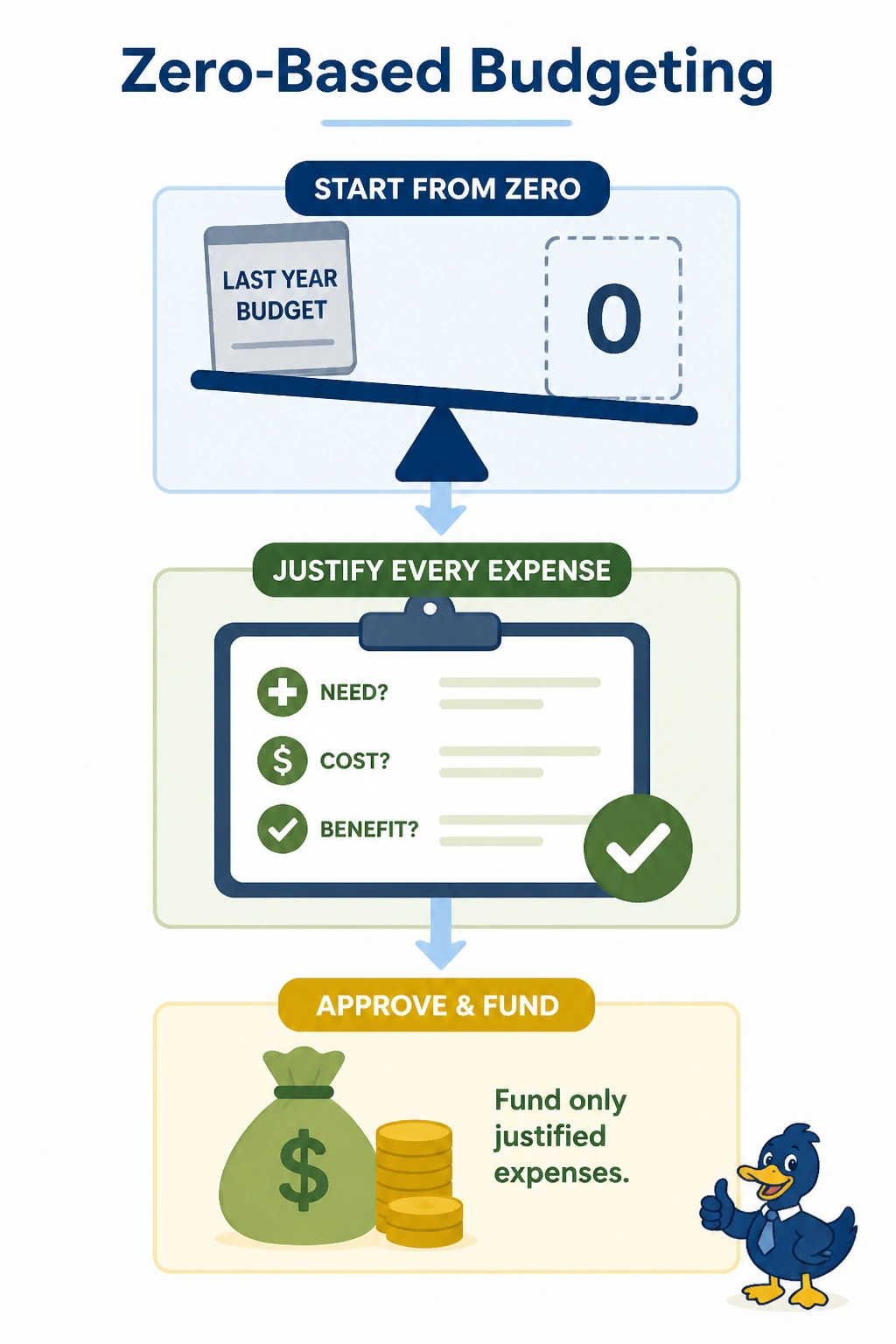
Starting with last year's budget is like copying an old grocery list without checking what's already in the pantry—waste just rolls forward. When you require department heads to justify every single line item from dollar zero, you're using zero-based budgeting. The trap is confusing this clean-slate rebuild with incremental budgeting, which merely tweaks prior-year numbers.
Full Explanation
Zero-based budgeting requiring full justification of all expenses starts each budget cycle from a base of zero rather than assuming prior-year funding automatically continues. Every department head must defend the necessity and cost-effectiveness of each program, contract, and supply line, making it especially useful after an acquisition when legacy inefficiencies exist. By contrast, Incremental budgeting based on prior-year historical spending takes last year's actual or budgeted figures and adds or subtracts a small percentage, which perpetuates existing bloat. Selecting Rolling capital budgeting focused exclusively on long-term asset purchases describes multi-period planning for major equipment and facility improvements rather than annual operating expense justification. Similarly, Static variance budgeting that locks revenue targets regardless of census refers to evaluating performance against a fixed original plan rather than building an operating budget from the ground up. As a caveat, zero-based budgeting demands significantly more administrative time and training from clinical and support managers than traditional methods. As an operational check, review each department's budget submission packet to verify that vendor contracts and discretionary supply lines include written workload drivers and competitive quotes.
Prefer to study offline? Printable PDF study book + test engine ($7.50, unofficial). These questions stay free here.