
A nursing facility confirms that an unencrypted laptop containing unsecured protected health information for 42 residents was stolen from an administrator's vehicle, and the risk assessment shows a non-low probability of compromise. What is the maximum federal timeframe to notify affected residents?
Select an answer to reveal the explanation.
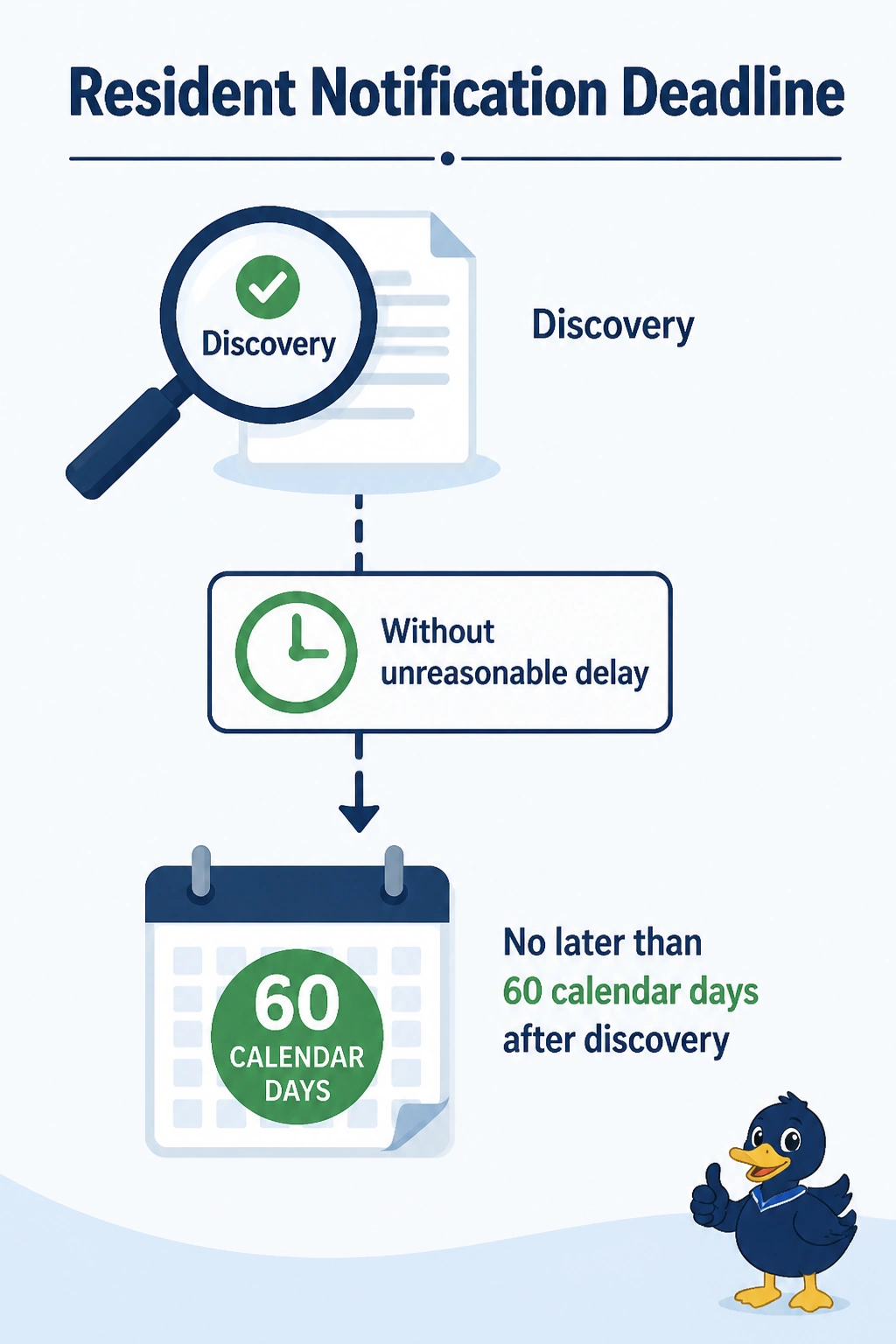
Short Explanation
Think of the HIPAA breach clock as a 60-day outer ceiling, not a permission slip for you to sit on your hands for two months. The trap you must avoid is either panicking into an impossible 24-hour deadline or waiting until an annual mailing, when federal law requires notice without unreasonable delay and within 60 calendar days.
Full Explanation
Under 45 CFR 164.404(b), notify affected individuals without unreasonable delay and no later than 60 calendar days after discovery once a breach of unsecured protected health information is discovered, with prompt action required rather than waiting the full period. By contrast, "Within 24 hours of discovering the theft, regardless of investigation status" imposes a rigid deadline not found in HIPAA, which allows reasonable time to identify affected records. Waiting until "At the next annual HIPAA privacy notice mailing cycle at the end of the year" violates the 60-day maximum and leaves residents uninformed of risks. Under 45 CFR 164.412, if a law enforcement official states that notice would impede a criminal investigation or harm national security, a written statement that specifies the time delays notice for that period; an oral statement must be documented and may delay notice no longer than 30 days unless a written statement is submitted during that time. Do not wait until the theft investigation closes or the data are recovered. Because fewer than 500 individuals are affected, log the breach for submission to HHS not later than 60 days after the end of the calendar year (45 CFR 164.408(c)). Verify encryption quarterly and document the discovery date.
Prefer to study offline? Printable PDF study book + test engine ($7.50, unofficial). These questions stay free here.