
During an annual financial audit of an 85-bed nursing facility, the external auditor notes that the same business office employee adds new vendors to the accounting system, approves vendor invoices, and signs disbursement checks. Which internal control improvement should the administrator implement?
Select an answer to reveal the explanation.
Short Explanation
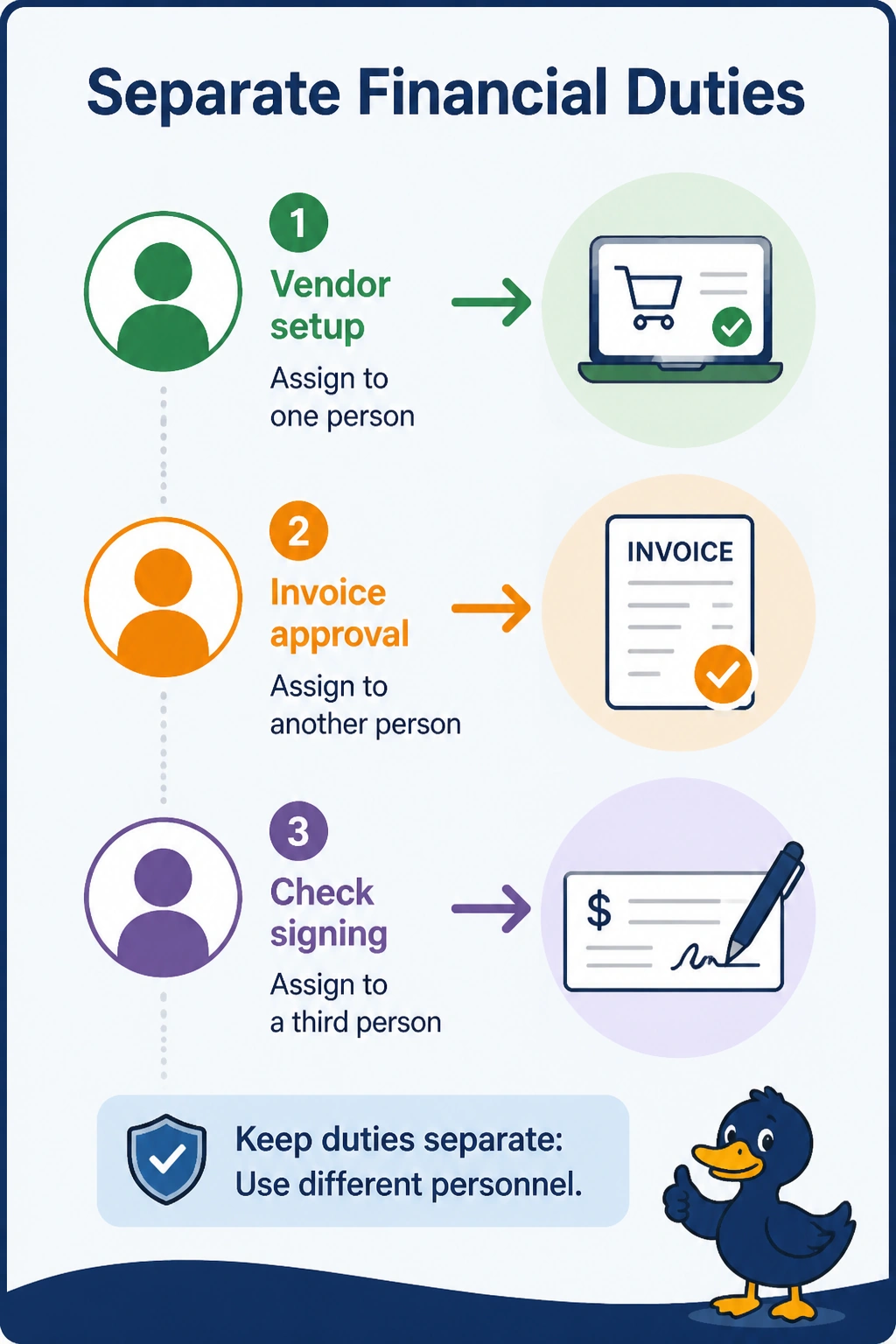
When one person controls every step of paying a bill, errors and fraud can hide in plain sight. You protect facility funds through segregation of duties: assign vendor setup, invoice approval, and check signing to different people. Verbal approval before mailing checks, monthly check runs, or a shared spreadsheet do not fix that single-point control gap.
Full Explanation
Sound financial internal controls require clear segregation of duties so no single individual can both initiate and conceal an improper payment. The administrator should separate vendor setup, invoice approval, and check signing among different personnel, ensuring independent checks at each stage. Requiring verbal approval from the department head before checks are mailed leaves no auditable authorization trail and still allows the same employee to create fictitious vendors and sign checks. Limiting check runs to once per month changes payment timing without removing the concentrated authority that creates fraud risk. Moving vendor files into a shared spreadsheet accessible to all office staff weakens data security and accountability rather than establishing independent verification. One caveat is that smaller facilities with lean office teams may find full separation difficult; in that case, the administrator or an independent reviewer should perform documented bank reconciliations and positive-pay reviews. As a practical check, review accounting-system user permissions quarterly and verify that check signers cannot create or edit vendor master records.
Prefer to study offline? Printable PDF study book + test engine ($7.50, unofficial). These questions stay free here.