
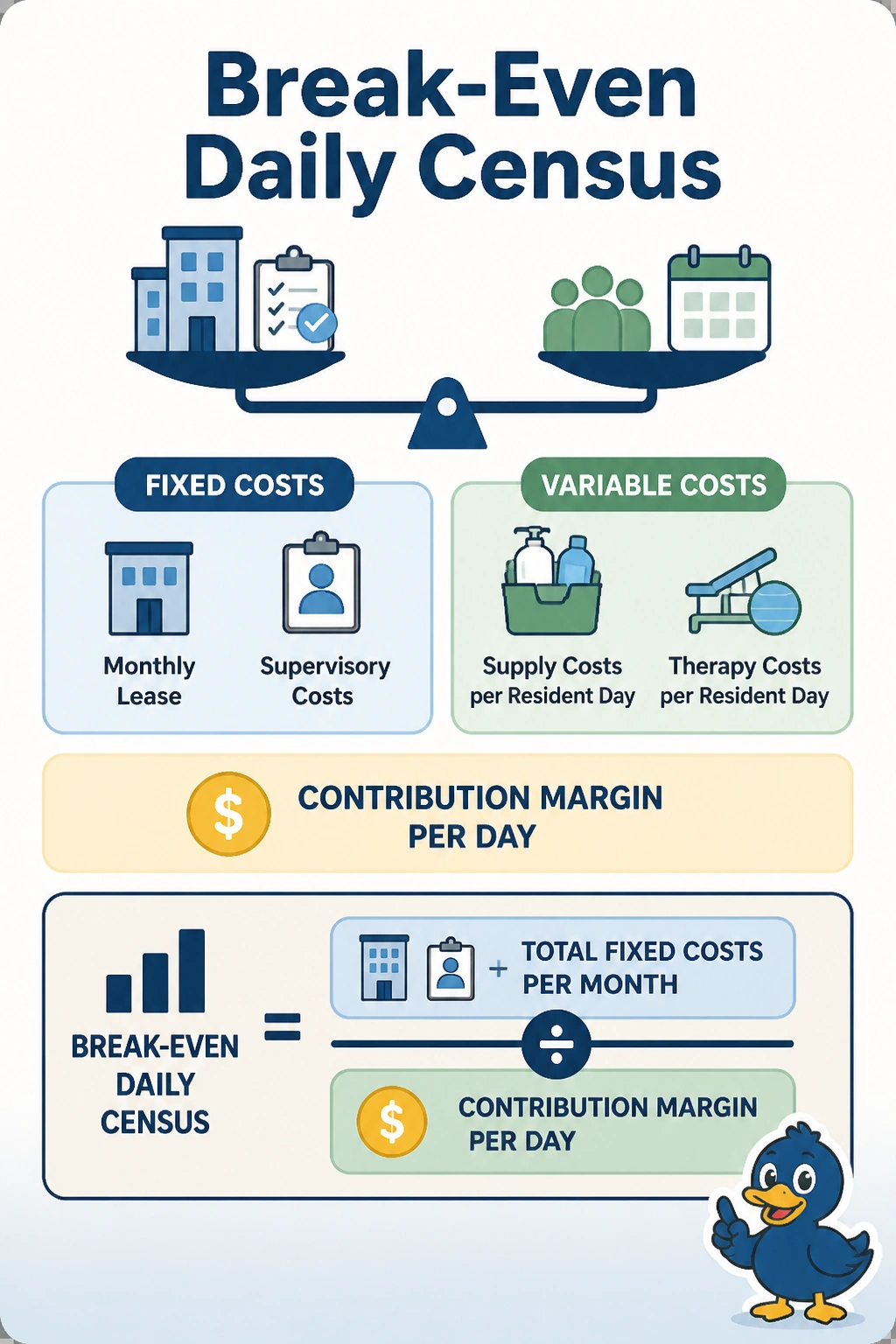
An administrator evaluates opening a dedicated short-stay orthopedic wing that carries fixed monthly lease and supervisory costs plus variable supply and therapy costs per resident day. Which financial method determines the minimum daily census needed to cover total costs?
Select an answer to reveal the explanation.
Short Explanation
Before launching a new unit, you need to know how many occupied beds it takes just to keep the lights on without losing money. Looking at last year's cash or isolated food costs misses the math; you use break-even analysis to weigh fixed costs against daily contribution margin.
Full Explanation
When evaluating a new clinical wing or service line, leadership must determine the occupancy volume at which total revenue equals total fixed and variable expenses by performing a break-even analysis comparing fixed costs to contribution margin per day. Contribution margin per resident day equals expected net per-diem revenue minus variable per-diem costs, and dividing fixed costs by that margin yields the break-even patient days. Choosing to rely on reviewing only the facility's prior-year cash balance to see if reserves can fund the launch shows liquidity for startup but does not reveal whether ongoing operations will be self-sustaining. Choosing to focus on dividing total annual depreciation expense equally across all twelve calendar months is an accounting allocation step, not a volume-profitability test. Choosing to focus on comparing budgeted dietary raw-food costs per day against the state Medicaid base rate omits major labor, therapy, and fixed overhead drivers. As a financial caveat, break-even projections must reflect realistic payer mix and denial adjustments rather than gross billed rates. Operationally, test sensitivity at multiple occupancy levels in the pro forma budget before signing vendor or space commitments.
Prefer to study offline? Printable PDF study book + test engine ($7.50, unofficial). These questions stay free here.