
While reviewing quarterly financial statements, an administrator notices that Medicaid and private-pay resident balances over 120 days old have doubled, yet net patient revenue has not been adjusted for expected non-collection. Which financial accounting practice should the facility apply?
Select an answer to reveal the explanation.
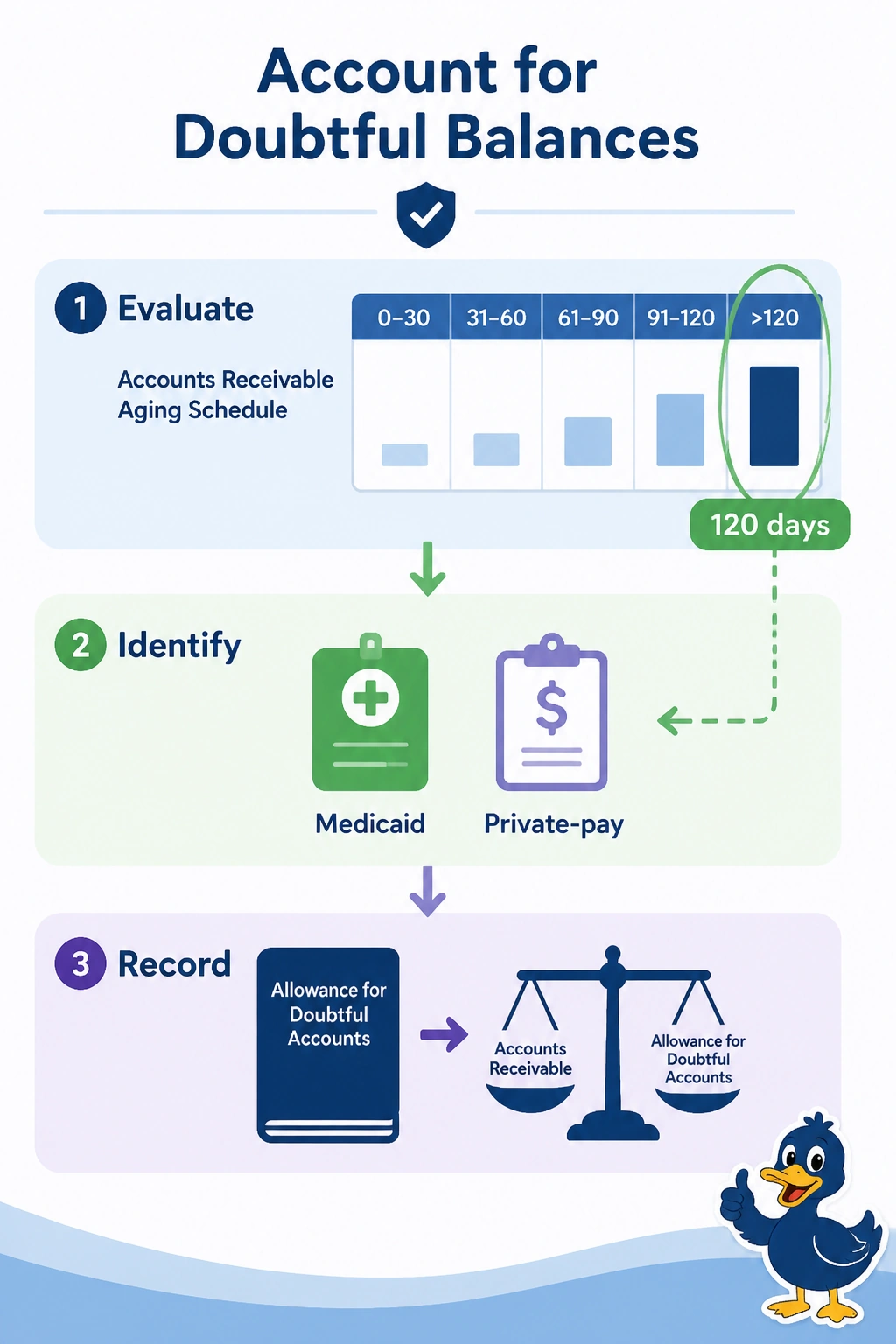
Short Explanation
An aging receivables report full of old balances is like counting fish you have not caught yet. You need an allowance for doubtful accounts so your financial statements reflect what the facility actually expects to collect. The trap is writing off every 30-day balance in full or waiting until year-end instead of estimating probable collection.
Full Explanation
Under accrual accounting principles, leadership should Evaluate the accounts receivable aging schedule and record an appropriate allowance for doubtful accounts. Reviewing receivables by aging buckets (such as 30, 60, 90, and over 120 days) allows finance staff to estimate probable credit losses in the same period the revenue was earned, keeping the balance sheet and income statement realistic. Trying to Reclassify all overdue resident receivables into long-term fixed assets until the business office finishes collection calls misstates asset categories because receivables are current financial claims, not physical property. Choosing to Wait until the end of the next fiscal year to recognize any collection losses so current operating margins appear stronger distorts monthly performance and violates accrual matching. Choosing to Write off every private-pay balance older than 30 days in full without estimating actual collection probability overstates bad debt because it assumes zero collection instead of estimating probable loss while continuing collection efforts. Remember that recording an allowance estimates expected non-collection without prematurely abandoning legitimate follow-up on valid claims. Operationally, review the accounts receivable aging report monthly with the business office manager to separate billing errors from true bad-debt exposure.
Prefer to study offline? Printable PDF study book + test engine ($7.50, unofficial). These questions stay free here.