
During a clerical office cleanup, a health information clerk gathers outdated resident face sheets, therapy progress notes, and billing ledgers scheduled for destruction under the facility's retention policy. Which disposal method complies with federal HIPAA privacy safeguards?
Select an answer to reveal the explanation.
Short Explanation
Once a clinical record reaches the end of its retention life, your job is to make sure nobody can ever read it again. The trap is trusting locked recycling bins or a black marker, both of which leave sensitive resident details exposed.
Full Explanation
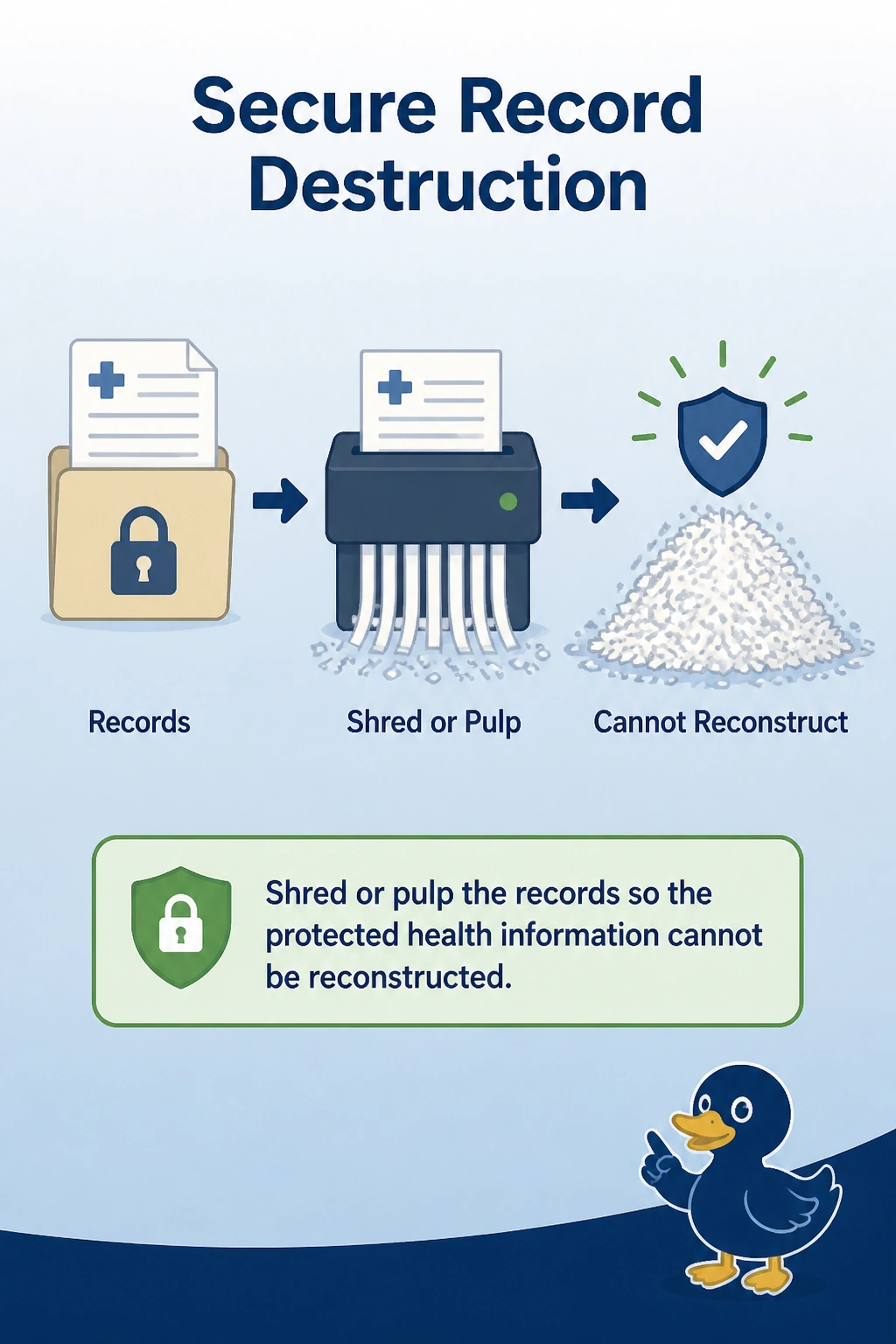
The HIPAA Privacy Rule requires covered entities to apply appropriate administrative, technical, and physical safeguards when disposing of protected health information. The compliant action is to "Shred or pulp the records so the protected health information cannot be reconstructed" using cross-cut shredding, pulverizing, or a contracted shredding vendor under a Business Associate Agreement. Choosing to "Place the intact pages into locked municipal recycling bins for standard paper pickup" exposes readable records to unauthorized sorting personnel once the bin is emptied. Attempting to "Cross out each resident's name with a black marker before discarding the pages in regular trash" fails because ink can be read through light and remaining clinical or billing details still identify the individual. Deciding to "Store the boxes in an unlocked basement room until an annual facility-wide cleanup" leaves sensitive paper files vulnerable to unauthorized access in the meantime. Caveat: always confirm state and federal record retention timelines have actually expired before destroying any clinical or financial file. Operational check: verify that locked shred consoles are stationed in medical records and billing offices and obtain certificates of destruction from disposal vendors.
Prefer to study offline? Printable PDF study book + test engine ($7.50, unofficial). These questions stay free here.