
A nursing facility replaces its commercial kitchen walk-in refrigeration system with a new unit expected to last twelve years, while also purchasing disposable paper goods for resident dining service. How should the finance director classify these two purchases?
Select an answer to reveal the explanation.
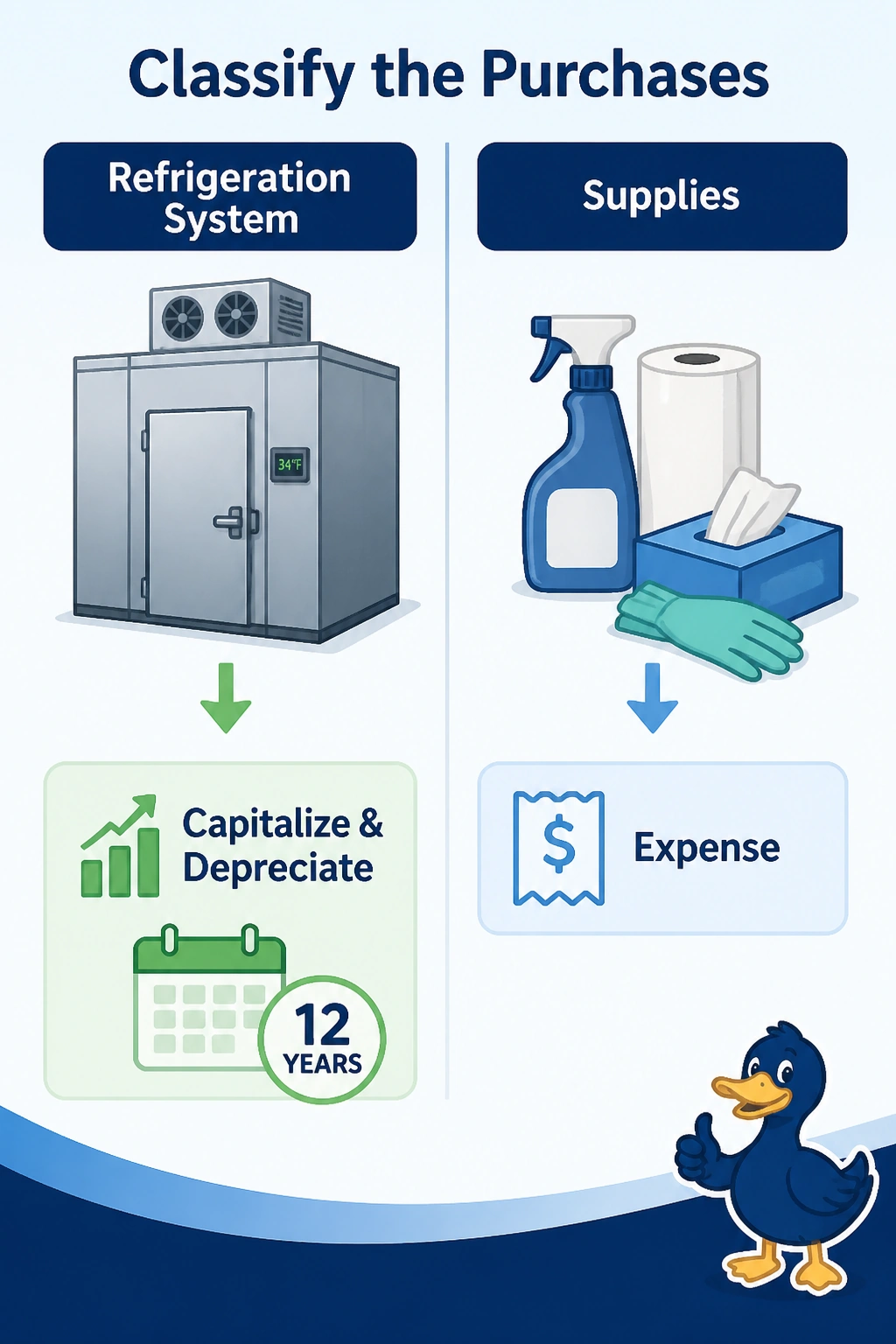
Short Explanation
Mixing up long-lived equipment with everyday supplies can distort your monthly operating margin overnight. You need to match the cost of multi-year assets to the years they actually serve your residents.
Full Explanation
Under generally accepted accounting principles, the finance director must Capitalize and depreciate the refrigeration system over its useful life while expensing the supplies because the walk-in unit is a long-lived fixed asset providing multi-year benefit, whereas disposable paper goods are routine operating consumables. Choosing to Expense both purchases immediately in full on the current month's income statement would artificially depress current-period net income and understate facility assets on the balance sheet. Attempting to Capitalize the paper supplies as inventory and expense the refrigeration unit immediately reverses proper accounting treatment by expensing a twelve-year capital asset at once. Deciding to Record both items as long-term liabilities until the vendor warranties expire confuses asset and expense classification with debt obligations, which depend on financing terms rather than warranty length. As a caveat, facilities establish a written capitalization threshold policy so minor long-lived items below that dollar floor can be expensed consistently without excessive administrative tracking. Operational check: review the monthly accounts payable coding report to verify that equipment invoices exceeding the capitalization threshold are posted to fixed-asset accounts with assigned depreciation schedules.
Prefer to study offline? Printable PDF study book + test engine ($7.50, unofficial). These questions stay free here.