
A nurse sustains a percutaneous needlestick injury while disposing of a used insulin pen needle from a resident's room. After immediately washing the puncture site with soap and water, what must the facility provide next under federal OSHA bloodborne pathogen standards?
Select an answer to reveal the explanation.
Short Explanation
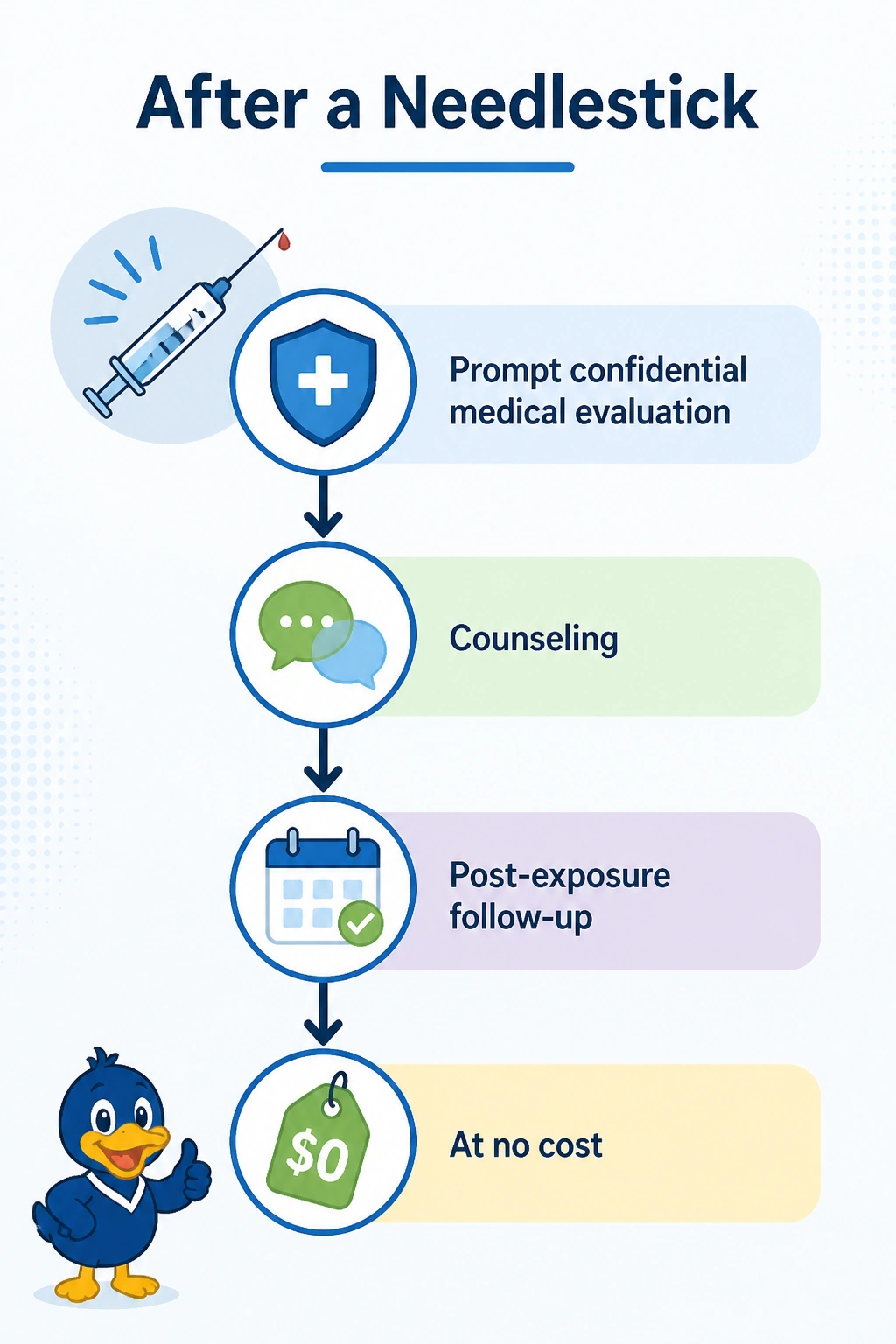
When a needlestick happens, your clock starts ticking on confidential medical care, not blame or billing. Delaying evaluation for a warning or charging you for care violates federal OSHA bloodborne pathogen rules.
Full Explanation
Under OSHA’s Bloodborne Pathogens Standard (29 CFR 1910.1030), a needlestick exposure triggers employer duties to protect your health and privacy. The facility must promptly provide confidential medical evaluation, counseling, and post-exposure follow-up at no cost, at a reasonable time and place, through a licensed healthcare professional. Deducting the emergency clinic copay from your paycheck under workers’ compensation violates the requirement that post-exposure evaluation and prophylaxis be provided entirely free to you. Requiring disclosure of the source resident’s full medical chart to all nursing unit staff breaches resident privacy under HIPAA and employee confidentiality rules; access to source information must be handled confidentially. Issuing a written disciplinary warning before arranging medical evaluation delays time-sensitive care and can discourage incident reporting. A caveat: the facility must also record the percutaneous injury on its OSHA sharps injury log while protecting employee privacy. Practical check: confirm that charge nurses have an up-to-date, 24-hour post-exposure evaluation protocol and clinic contact posted at every nurses’ station.
Prefer to study offline? Printable PDF study book + test engine ($7.50, unofficial). These questions stay free here.