
A 100-bed skilled nursing facility reports positive net operating income for the quarter, yet the administrator struggles to cover biweekly payroll because Medicaid and managed care claims are aging past 90 days. Which financial reports should the administrator examine first to address the immediate liquidity shortage?
Select an answer to reveal the explanation.
Short Explanation
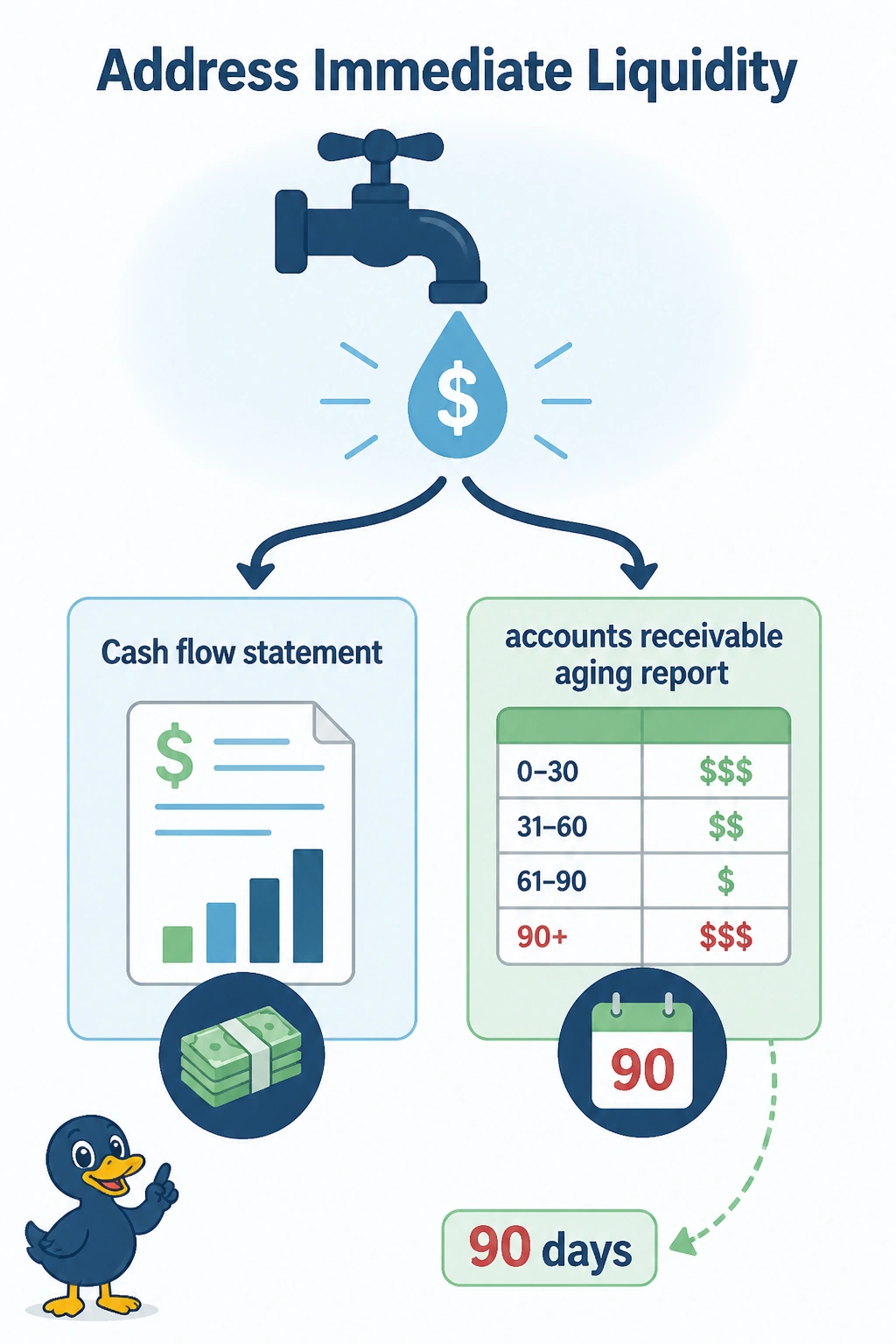
You can show positive income and still be short on cash when reimbursements are stuck in billing limbo. Focus first on liquidity: the cash flow statement and accounts receivable aging report reveal cash timing and which claims are delayed.
Full Explanation
Accrual-basis profitability measures earned revenue minus incurred expenses, not the cash actually available in the bank. To address an immediate payroll squeeze, examine the cash flow statement and accounts receivable aging report: together, they show when cash enters and leaves the facility and help pinpoint which payers or denied claims are tying up working capital. The fixed asset depreciation schedule and long-term capital budget focus on non-cash depreciation and multi-year equipment plans, not short-term cash collection. The annual statement of retained earnings and equity distributions summarizes cumulative ownership equity over a year but does not detail delayed payer collections. The dietary food-cost variance report and per-patient-day supply log track departmental operating expenses; they do not explain why billed revenue has not converted into cash. Exam caveat: persistent collection delays may also warrant reviewing billing edit queues and line-of-credit covenants. Practical check: review accounts receivable aging buckets and the weekly cash-on-hand forecast with the business office manager every Monday.
Prefer to study offline? Printable PDF study book + test engine ($7.50, unofficial). These questions stay free here.