
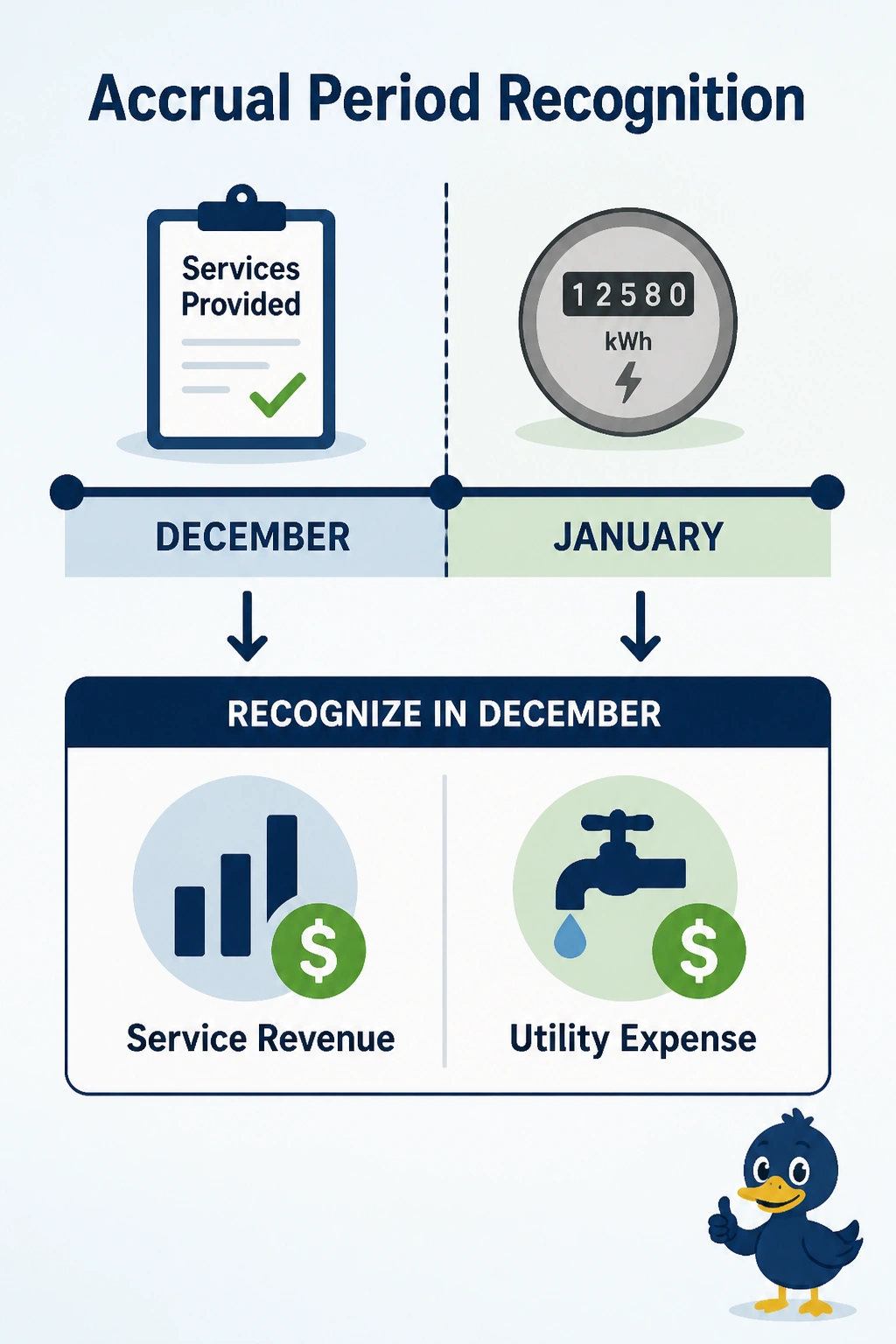
A skilled nursing facility provides resident care in December, receives the managed care reimbursement in January, and receives the December electric utility bill in January. Under accrual-basis accounting, how should both items be recorded?
Select an answer to reveal the explanation.
Short Explanation
Accrual accounting is like matching your December grocery receipt to December's budget even if your credit card bill arrives in January. The trap is mixing cash timing with service timing, which distorts your monthly operating margin.
Full Explanation
Under generally accepted accounting principles and accrual accounting, revenues and expenses are matched to the period in which services are delivered or resources are consumed, so you must Recognize both the service revenue and the utility expense in December's period regardless of when cash changes hands. Recording December resident care revenue and December utility costs together gives leadership an accurate picture of December's true operating margin. Choosing to Record the revenue in January when cash arrives and the utility expense in December mixes cash-basis revenue with accrual-basis expense, artificially depressing December income and inflating January results. Trying to Record both the managed care revenue and the utility expense in January when settled reflects cash-basis accounting rather than accrual matching. Attempting to Defer both entries until the annual cost report is submitted to the fiscal intermediary delays monthly financial reporting and violates period-cutoff controls. As an accounting caveat, if the exact utility invoice is not yet available at month-end close, an estimated accrual is recorded and trued up later. For an operational check, review the general ledger accounts receivable and accrued expense schedules at month-end close.
Prefer to study offline? Printable PDF study book + test engine ($7.50, unofficial). These questions stay free here.