
A seasoned nurse catches a look-alike medication packaging error before administering the dose and reports the near-miss to the unit manager, who wants to issue a formal disciplinary warning. Which leadership approach best supports a safety culture?
Select an answer to reveal the explanation.
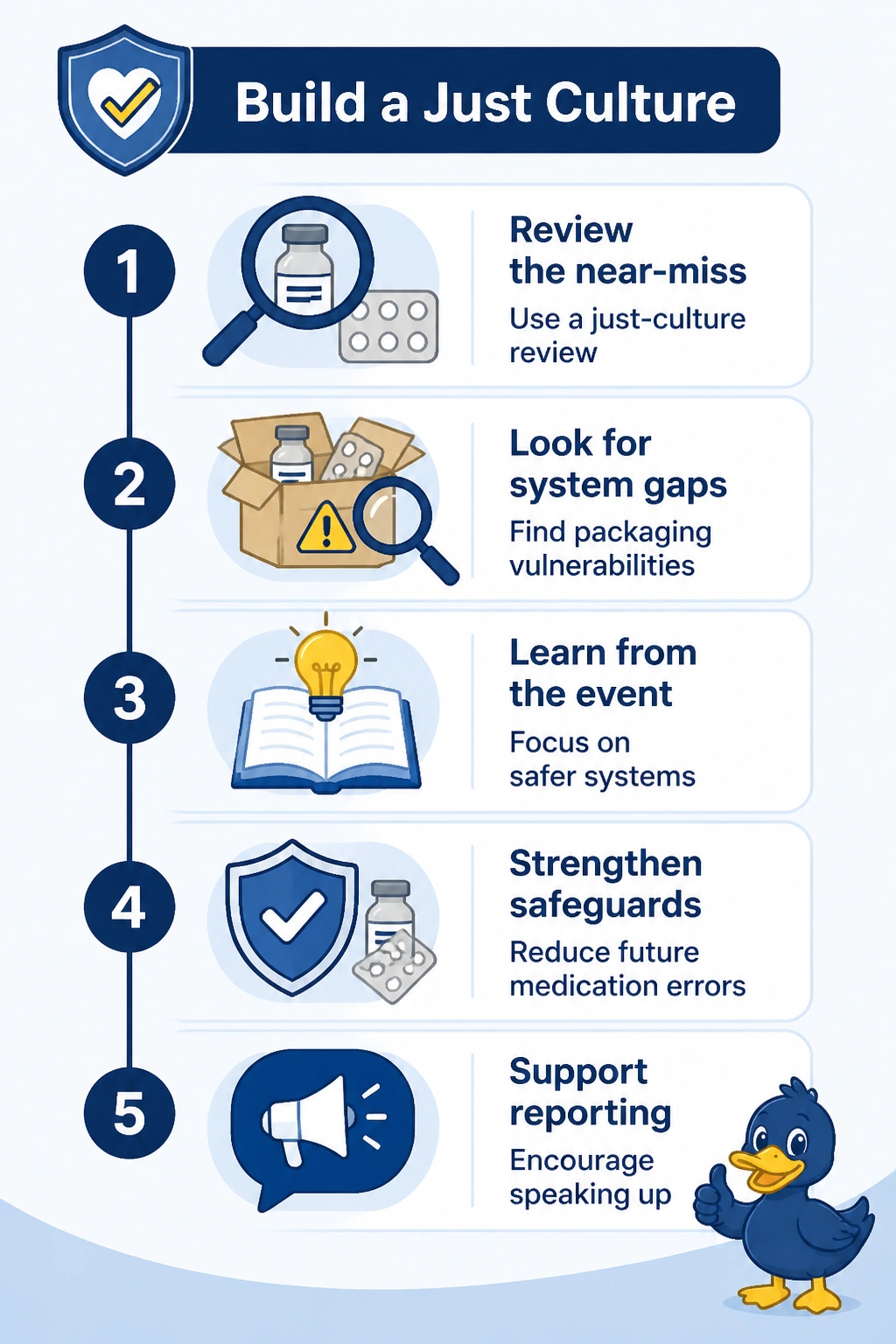
Short Explanation
Think of near-miss reports like smoke alarms that warn you before a fire starts, not excuses to blame the person who pulled the handle. The trap is treating an honest human slip caught in time as a disciplinary failure, which drives errors underground instead of fixing unsafe workflows.
Full Explanation
Applying a just-culture framework encourages staff to report close calls so leadership can fix upstream hazards such as look-alike packaging, storage layout, or barcode workflows. Because the nurse followed safety checks and intercepted the error before it reached the resident, "Apply a just-culture review to address system vulnerabilities without punishing the nurse" supports psychological safety and system-level learning. By contrast, "Require the unit manager to issue a verbal coaching note while keeping the near-miss off quality logs" hides valuable trend data from QAPI and still discourages transparency. Choosing to "Suspend the nurse briefly pending a pharmacy audit to reinforce strict medication vigilance" punishes a conscientious reporter for a system design flaw, fueling fear of retaliation. Similarly, "Reassign medication passes exclusively to agency nurses until the pharmacy changes vendors" disrupts continuity of care with staff less familiar with residents and ignores the root packaging hazard. Caveat: just-culture protection applies to human error and at-risk system gaps, not reckless disregard or intentional falsification. Operational check: review QAPI near-miss logs monthly against pharmacy dispensing audits and verify storage separation for look-alike drugs.
Prefer to study offline? Printable PDF study book + test engine ($7.50, unofficial). These questions stay free here.