
During an evening safety walk-through of a 90-bed nursing facility, the maintenance supervisor notices that two illuminated corridor exit signs have burned-out bulbs and a tall decorative plant partially blocks a third exit sign from view. What must the facility do to maintain Life Safety Code compliance?
Select an answer to reveal the explanation.
Short Explanation
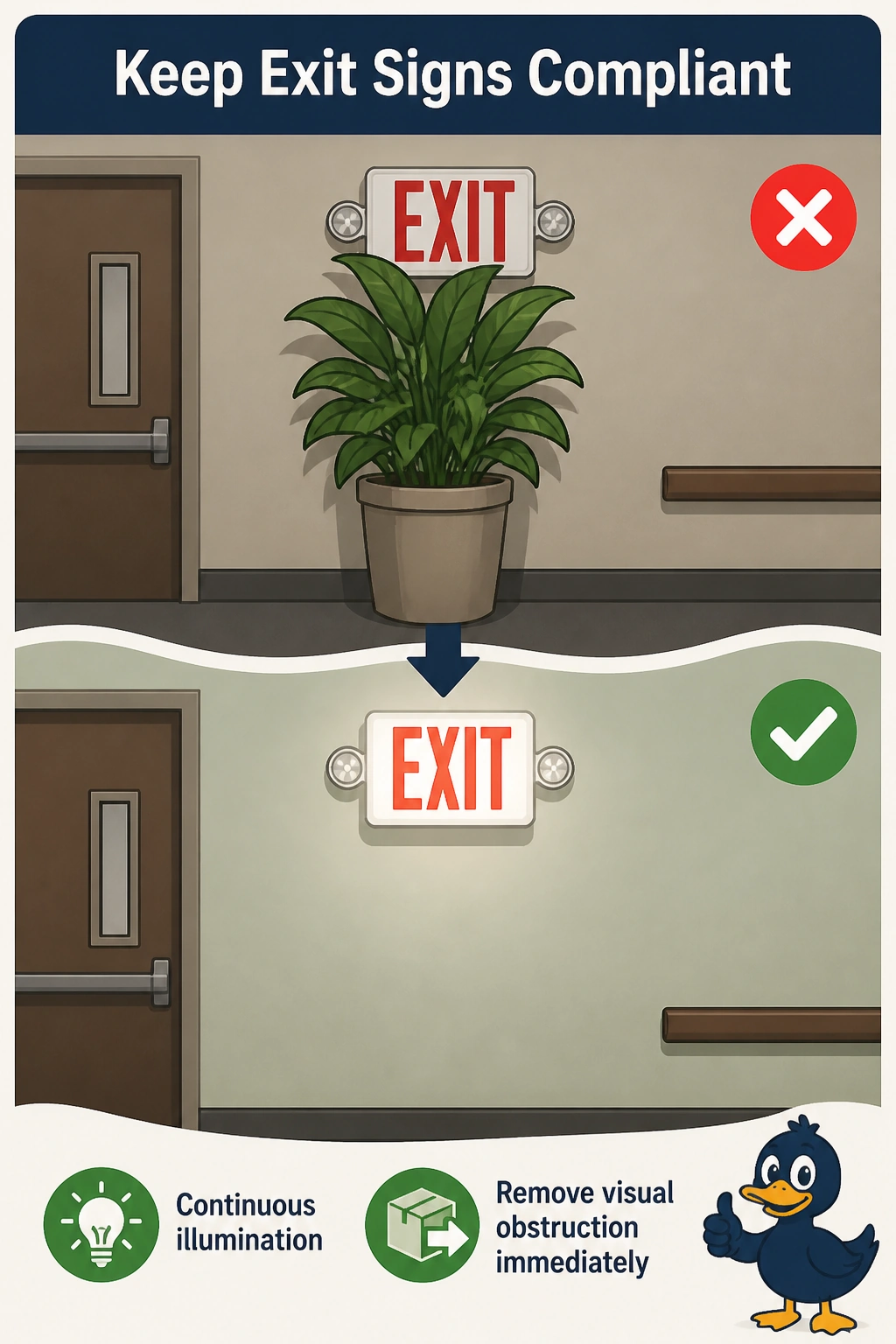
In a smoke-filled hallway, an exit sign is the lighthouse that guides your staff and residents to safety. The trap is treating a burned-out bulb or an overgrown plant as a cosmetic detail that can wait for the next scheduled inspection. You must restore clear, lit exit signage right away because emergencies never wait for maintenance cycles.
Full Explanation
NFPA 101 Life Safety Code standards require that means-of-egress exit signs remain continuously illuminated and readily visible from any direction of exit access. Choosing "Restore continuous exit sign illumination and remove the visual obstruction immediately" ensures that residents, visitors, and staff can locate exits rapidly during smoke, fire, or power loss. Waiting to "Replace the bulbs during the next annual life-safety inspection and trim the plant leaves" leaves an active life-safety deficiency uncorrected for months and risks resident disorientation in an emergency. Choosing to "Keep the corridor overhead ceiling lights turned on at full brightness during nighttime hours" fails to provide directional exit marking and does not substitute for dedicated illuminated exit signs on emergency power. Attempting to "Post a temporary paper arrow on the wall beneath each darkened sign until parts arrive" creates a non-compliant makeshift marker that lacks illumination and visibility in smoke. As a caveat, exit sign batteries and emergency-circuit connections must also be tested during routine monthly and annual checks so signs stay lit during utility outages. For an operational check, walk every corridor and stairwell at dusk with maintenance staff to confirm every exit sign is bright, unobstructed, and documented on the life-safety log.
Prefer to study offline? Printable PDF study book + test engine ($7.50, unofficial). These questions stay free here.