
An administrator plans to transition a 120-bed nursing facility to a person-centered dining program, but long-tenured dietary and nursing staff express concern about workflow disruptions. Which leadership approach best supports sustainable adoption?
Select an answer to reveal the explanation.
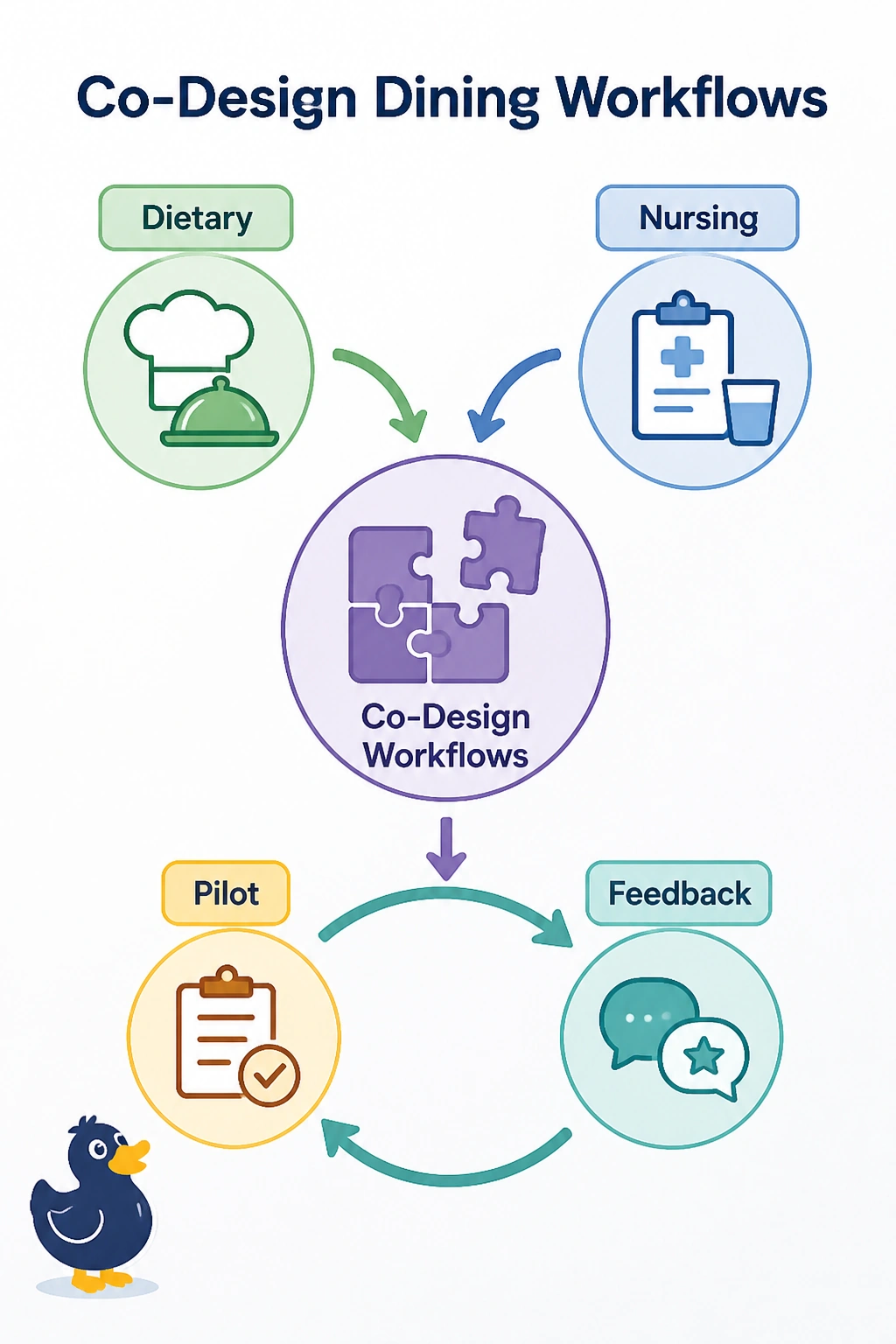
Short Explanation
Change management in a nursing home succeeds when your frontline team helps build the new routine rather than having it dropped on them overnight. The trap is trying to force compliance from the top down or handing a cross-departmental project to a single department head.
Full Explanation
Sustainable culture change depends on shared ownership across departments, so the administrator should Engage frontline dietary and nursing staff in co-designing workflows and piloting feedback before full rollout. When meal delivery, tray passing, and resident assistance intersect between nursing and food service, frontline caregivers spot bottlenecks early and champion practical solutions among peers. Choosing to Mandate immediate compliance with written policies and penalize missed targets triggers passive resistance and workarounds without resolving real workflow friction. Trying to Delegate implementation solely to the dietary director without nursing input creates silos because nursing staff manage dining room positioning, feeding assistance, and medication timing around meals. Attempting to Delay the dining program indefinitely until turnover replaces resistant staff stalls person-centered care improvements and wastes experienced staff knowledge. As a leadership caveat, co-design does not mean abandoning clear goals; leadership still sets the vision, timeline, and quality metrics while teams shape how work gets done. For an operational check, hold brief post-meal huddles during a single-unit pilot to capture staff feedback and adjust meal-pass timing before expanding house-wide.
Prefer to study offline? Printable PDF study book + test engine ($7.50, unofficial). These questions stay free here.