
During a life-safety walk-through of a 115-bed skilled nursing facility, the maintenance director finds cardboard supply boxes stacked on top of metal shelving just four inches below the ceiling sprinkler deflectors in the central supply room. What corrective action must the facility take to comply with federal Life Safety Code standards?
Select an answer to reveal the explanation.
Short Explanation
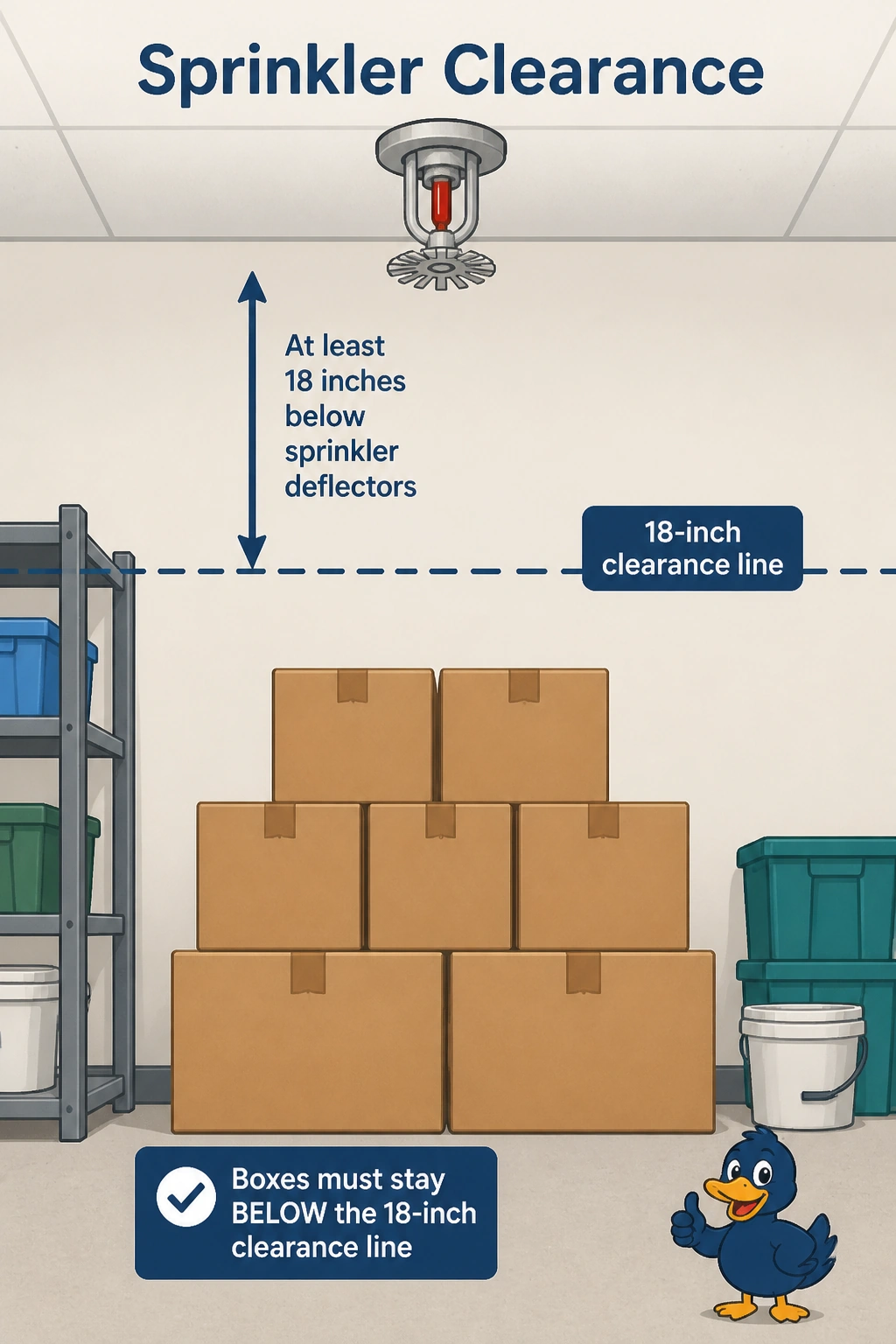
Think of a ceiling sprinkler like an umbrella in reverse: if you block it near the top, the water cannot fan out to reach a fire below. You must keep supplies at least 18 inches below the sprinkler deflectors; guards or plastic totes do not fix a clearance violation, and smoke detectors do not replace sprinkler coverage.
Full Explanation
Under 42 CFR 483.90 and the NFPA 101 Life Safety Code, which incorporates NFPA 13 sprinkler standards, the facility must lower the stacked supplies to maintain at least 18 inches of vertical clearance below the sprinkler deflectors. Sprinklers need an unobstructed, umbrella-shaped spray pattern to wet surrounding surfaces and suppress flames; items stored too close to the ceiling can deflect water downward in a narrow column, leaving nearby areas dry. Installing wire mesh guards around the sprinkler heads may protect them from mechanical damage, but it does not restore the required spray geometry. Asking the local fire marshal for a written variance based on smoke detectors is not a substitute for the required automatic sprinkler protection, since smoke detection does not provide fire suppression. Replacing cardboard cartons with lidded plastic totes while keeping shelves filled to the ceiling also fails: the totes still block sprinkler discharge and add fuel load near the ceiling. As a caveat, the 18-inch clearance rule applies around and below deflectors in sprinklered rooms, though NFPA 13 may provide specific exceptions for wall-mounted shelving along the perimeter when it is not directly beneath a sprinkler head. As a practical check, mark an 18-inch clearance line below the ceiling in each supply and storage room, then verify it during monthly environmental rounds.
Prefer to study offline? Printable PDF study book + test engine ($7.50, unofficial). These questions stay free here.