
During a wound-dressing change, a nurse's gloved hands become contaminated when a glove tears, leaving visible drainage on the skin after glove removal. Which hand-hygiene method must the nurse perform before touching clean supplies?
Select an answer to reveal the explanation.
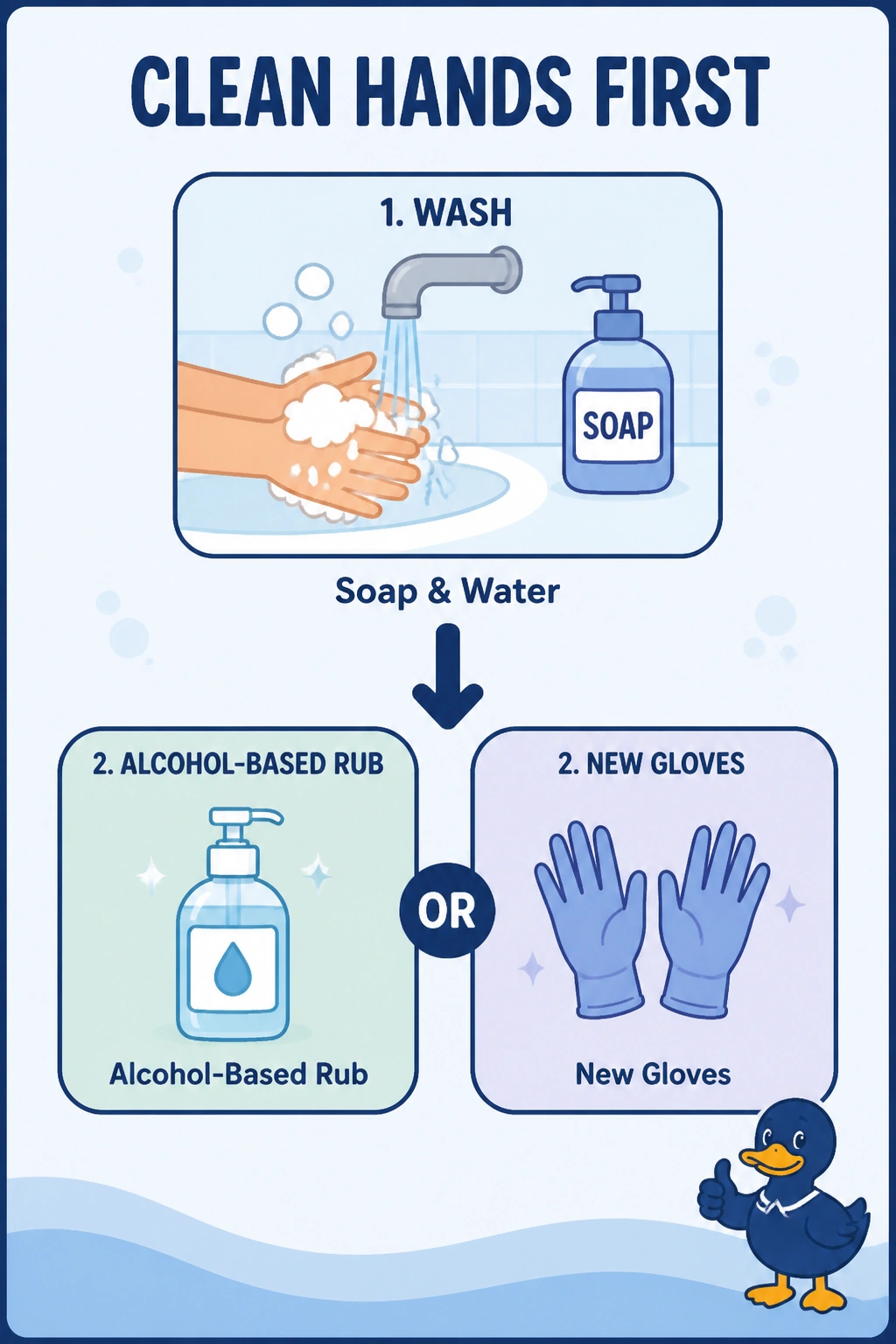
Short Explanation
Alcohol hand rub is fast and convenient, but it cannot cut through visible blood or wound drainage—you have to head to the sink. The trap is reaching for the wall-mounted sanitizer dispenser out of habit, when CDC and CMS infection rules require soap and water first.
Full Explanation
Under 42 CFR 483.80 and CDC hand hygiene guidelines, alcohol-based hand rubs are inactivated or blocked by organic matter, so the nurse must wash hands thoroughly with soap and water before using any alcohol-based rub or donning new gloves. Mechanical friction with soap and running water physically removes proteinaceous debris, blood, and wound drainage that alcohol alone cannot penetrate. Choosing to apply an alcohol-based hand rub for 15 seconds and immediately put on a fresh pair of disposable gloves leaves organic residue and pathogens trapped on the skin, risking cross-contamination of clean dressings. Choosing to wipe the visible drainage off with a dry paper towel and apply an alcohol-based hand sanitizer gel smears microscopic contaminants without achieving proper decontamination. Choosing to rinse hands briefly under warm running water without soap and air-dry them before continuing care lacks the surfactant action needed to lift oils and microorganisms from the skin. As an exam caveat, soap and water is also mandatory after caring for residents with infectious diarrhea such as Clostridioides difficile and before eating or after using the restroom. Operationally, observe wound-care rounds monthly to verify staff perform full soap-and-water washes whenever hands are visibly soiled.
Prefer to study offline? Printable PDF study book + test engine ($7.50, unofficial). These questions stay free here.