
During an annual review of a nursing facility's emergency preparedness plan, the administrator notices the plan addresses food, water, and backup lighting, but has no provision for heating or cooling during an extended utility outage. What must the emergency plan include under federal regulations?
Select an answer to reveal the explanation.
Short Explanation
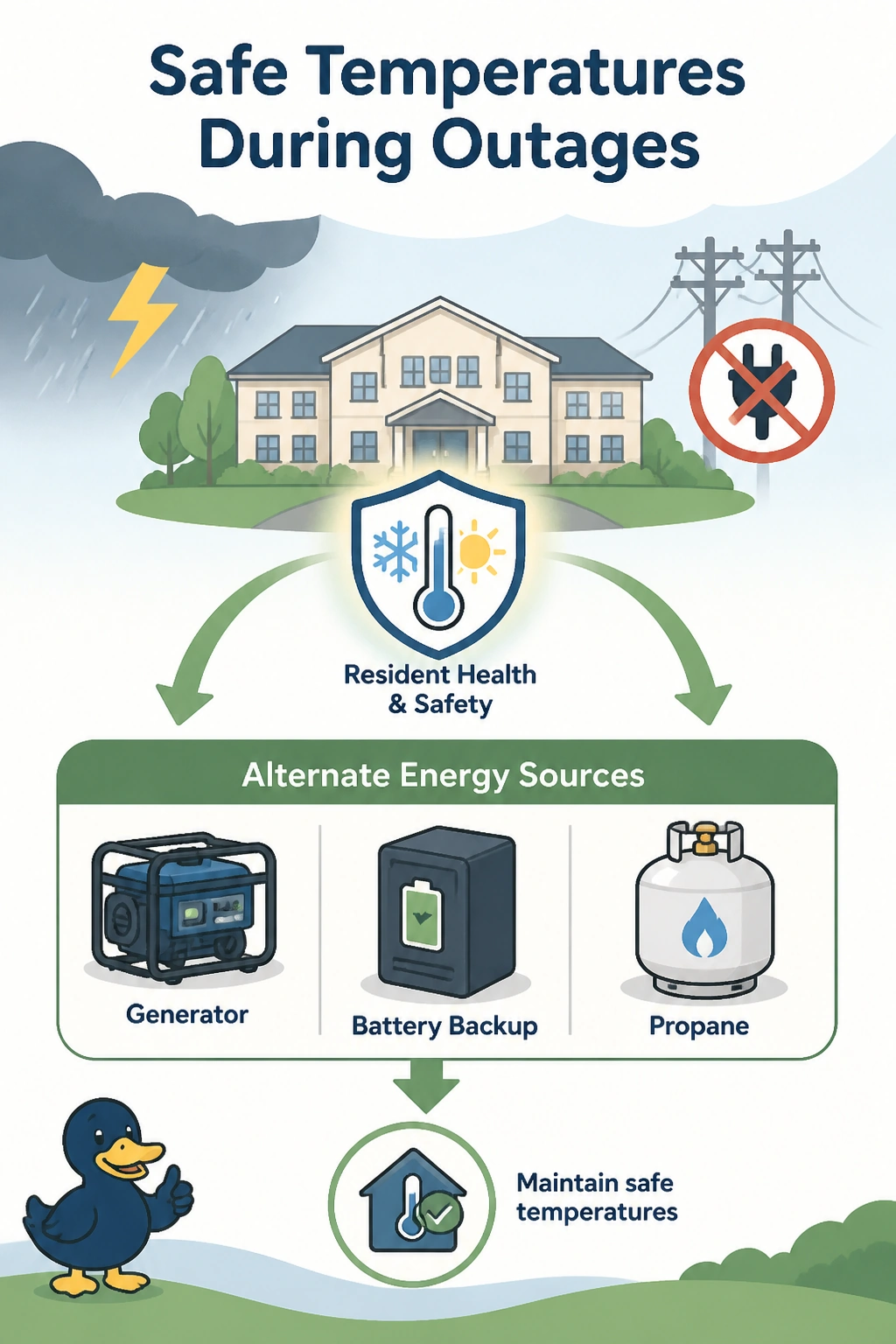
You’re right to look beyond backup lighting: extreme heat or cold can become a medical emergency for frail residents during an extended outage. Federal rules require alternate energy sources to maintain safe temperatures; transferring everyone to hospitals or plugging in space heaters is not a reliable substitute.
Full Explanation
Under 42 CFR 483.73, a nursing facility’s emergency preparedness plan must address subsistence needs for staff and residents, including alternate energy sources to maintain safe temperatures during an emergency or utility failure. A policy transferring all residents to acute hospitals whenever outside power fails is impractical and noncompliant: hospitals may be overwhelmed during regional disasters, so the facility must be prepared to shelter residents safely. A waiver allowing indoor temperatures to fluctuate freely is also incorrect; the regulations require protection from dangerous thermal extremes rather than suspension of temperature standards. Portable space heaters plugged into standard wall outlets create serious fire and electrical hazards under the Life Safety Code, and they may not work when those outlets lack backup power. The plan must provide alternate energy to maintain safe temperatures for residents and stored provisions. One caveat: CMS does not require a generator sized for every heating or cooling zone or the entire building; safe temperatures may be maintained in areas selected through the risk assessment. As a practical check, confirm the plan identifies how alternate energy will keep those designated areas at safe temperatures during an extended utility outage. A fuel plan under 483.73(e)(3) applies only if the facility keeps an onsite fuel source for an emergency generator.
Prefer to study offline? Printable PDF study book + test engine ($7.50, unofficial). These questions stay free here.