
A short-stay rehabilitation resident wears a rigid ankle-foot orthosis (AFO) brace for foot drop following a stroke and reports mild tingling over the lateral ankle bone. Which nursing intervention best prevents a medical device-related pressure injury?
Select an answer to reveal the explanation.
Short Explanation
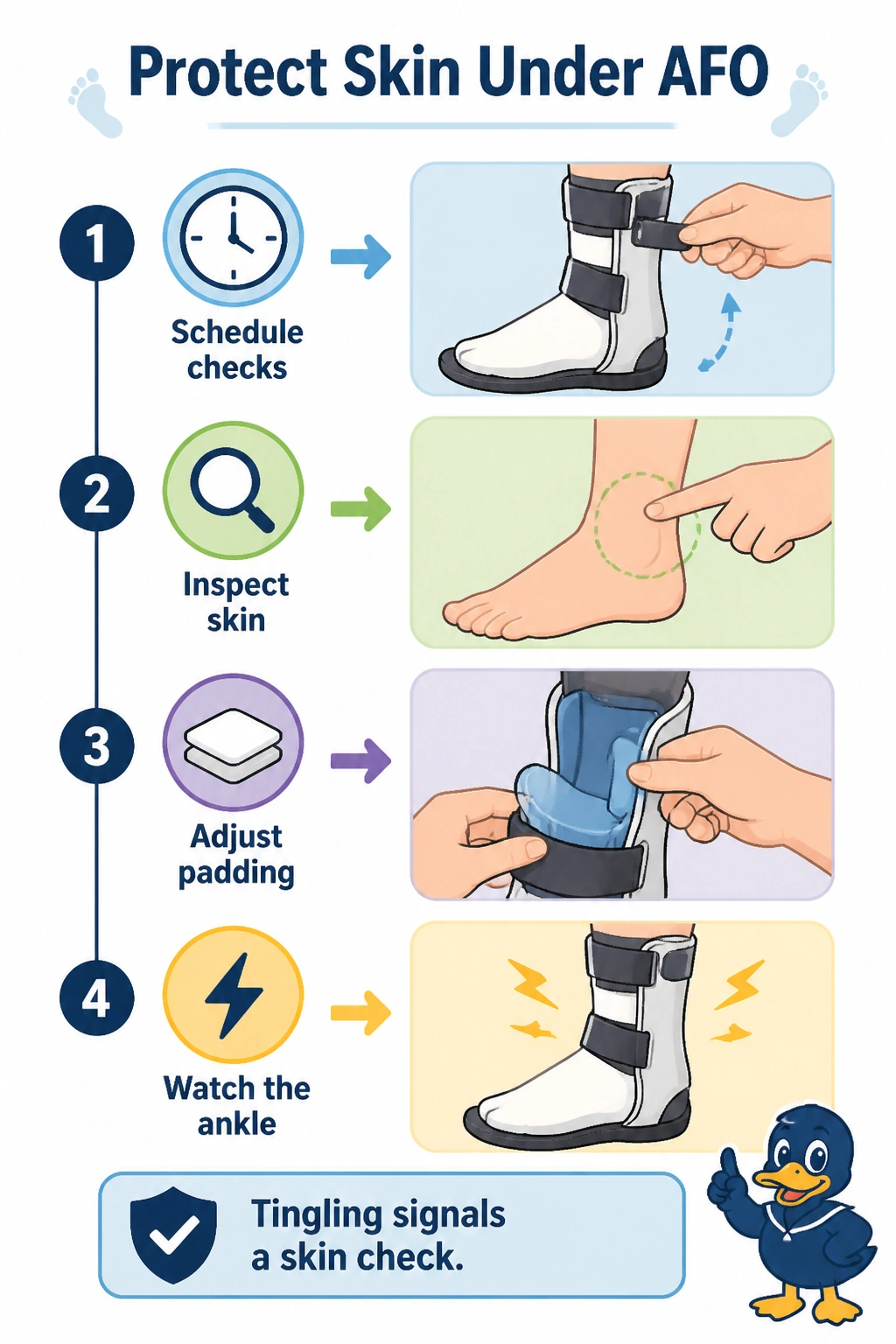
A rigid brace protects a healing limb, but left unchecked it can quietly press through fragile skin like a stone in a shoe. You prevent device-related pressure injuries by taking the brace off regularly to inspect bony prominences and relieve pressure, not by leaving it strapped tight.
Full Explanation
Under 42 CFR 483.25, facilities must ensure residents do not develop avoidable pressure injuries, including medical device-related pressure injuries caused by splints, braces, oxygen tubing, or casts. The best preventive practice is to Remove the brace at scheduled intervals to inspect skin under pressure points and adjust padding so redness, friction, or nerve compression is caught before tissue breakdown occurs. Choosing to Leave the brace fastened continuously for 48 hours so the ankle stays aligned during early recovery traps moisture and sustained pressure against the malleolus, accelerating ulceration. Choosing to Apply a thick layer of petroleum jelly under the brace straps without inspecting the skin beneath adds moisture and fails to detect early non-blanchable erythema. Choosing to Discontinue the brace permanently without consulting physical therapy or the attending physician risks contractures or falls without addressing proper device fit. As an exam caveat, tingling or numbness under an orthosis is an early warning sign of excessive pressure that requires immediate reassessment. As an operational check, include brace-removal skin checks on the CNA and nursing treatment sheets for every shift.
Prefer to study offline? Printable PDF study book + test engine ($7.50, unofficial). These questions stay free here.