
A long-stay resident with heart failure develops sudden shortness of breath, new confusion, and a drop in oxygen saturation during the evening shift. After initiating immediate nursing assessment and oxygen support, whom must the nurse promptly notify under federal regulations?
Select an answer to reveal the explanation.
Short Explanation
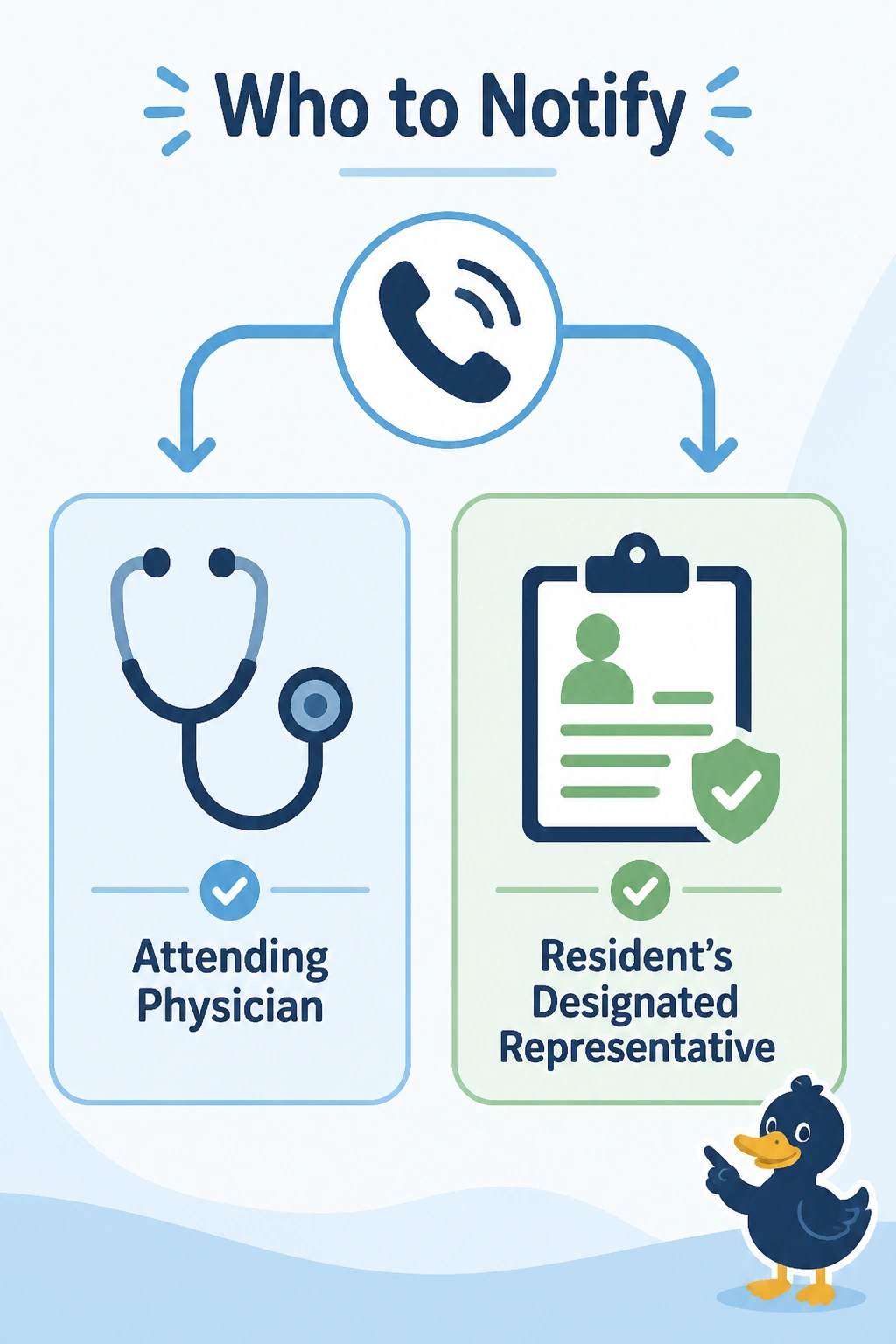
When a resident's condition suddenly takes a turn for the worse, keeping the news at the nurses' station until morning isn't an option. You must promptly notify both the attending physician and the resident's representative so medical orders and family decisions happen in real time.
Full Explanation
Under 42 CFR 483.10(g)(14), a nursing facility must immediately inform the resident, consult with the resident's physician, and notify the resident's representative when there is an accident involving injury or a significant change in the resident's physical, mental, or psychosocial status. Therefore, notifying The resident's attending physician and the resident's designated representative fulfills the dual clinical and communication mandate. Waiting to inform Only the Director of Nursing during the next morning stand-up meeting delays urgent medical intervention and violates prompt notification duties. Notifying Only the consultant pharmacist during the next monthly medication regimen review is wholly inappropriate for an acute clinical deterioration. Reporting to The state survey agency within five working days via the incident portal confuses abuse-investigation reporting with clinical change-in-condition notifications. As an exam caveat, facilities must also document the exact time of notification and the physician's response in the medical record. As an operational check, audit change-of-condition nursing notes weekly to verify both physician and representative notifications are documented.
Prefer to study offline? Printable PDF study book + test engine ($7.50, unofficial). These questions stay free here.