
A long-stay resident with severe osteoarthritis reports persistent knee pain rated 7 out of 10 during morning transfers despite taking scheduled acetaminophen. Which interdisciplinary care-plan update best reflects federal pain management standards?
Select an answer to reveal the explanation.
Short Explanation
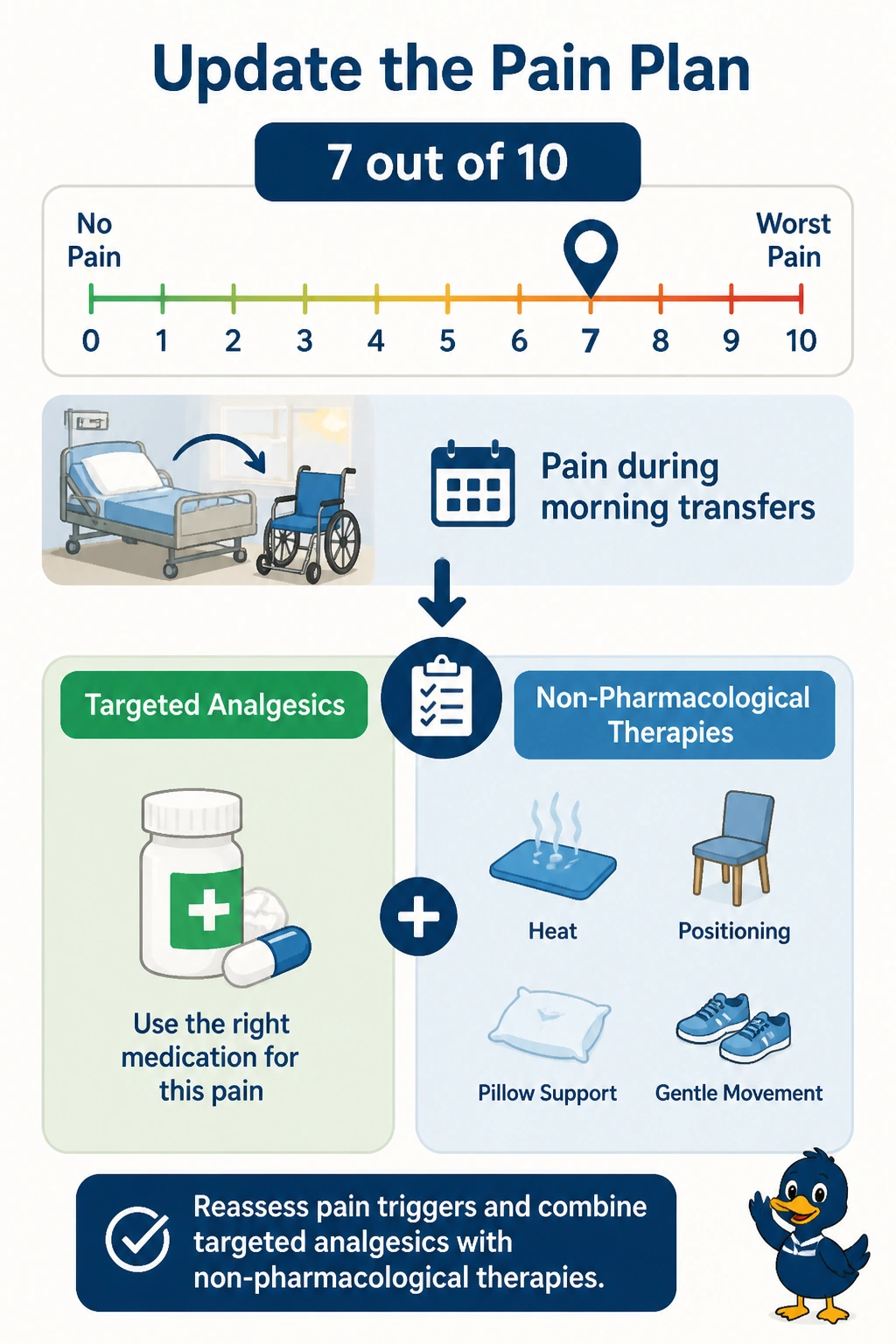
Unmanaged pain steals a resident's mobility, sleep, and dignity faster than almost anything else. The trap is accepting persistent 7-out-of-10 pain as normal aging or waiting weeks for a routine meeting. You need to reassess what triggers the pain and blend targeted medication with non-drug relief.
Full Explanation
Federal quality-of-care regulations at 42 CFR 483.25(k) require facilities to ensure residents receive pain management consistent with professional standards and resident goals, so the team should Reassess pain triggers and combine targeted analgesics with non-pharmacological therapies. Evaluating movement-related pain allows the team to adjust medication timing before transfers, consult the prescriber on additional analgesics or topical agents, and integrate heat, cold, positioning, or gentle range-of-motion support. Choosing to Discontinue physical therapy transfers and keep the resident in bed to avoid joint discomfort causes avoidable functional decline, contractures, and deconditioning. Choosing to Tell the resident that mild joint pain is an unavoidable part of aging and requires no change dismisses a high pain rating and violates person-centered care standards. Choosing to Wait until the next quarterly care conference in ten weeks before notifying the prescriber leaves the resident in uncontrolled pain for months. As a clinical caveat, monitor for side effects whenever adjusting analgesics and reassess pain effectiveness after each intervention. For an operational check, audit pain-reassessment documentation within one hour of PRN or adjusted pain interventions.
Prefer to study offline? Printable PDF study book + test engine ($7.50, unofficial). These questions stay free here.