
A cognitively intact long-stay resident who enjoys tidying up is asked by an evening nursing assistant to fold clean dining-room linens and wipe down tables after dinner, and the resident says she does not want to do chores. How must the facility respond under federal resident rights rules?
Select an answer to reveal the explanation.
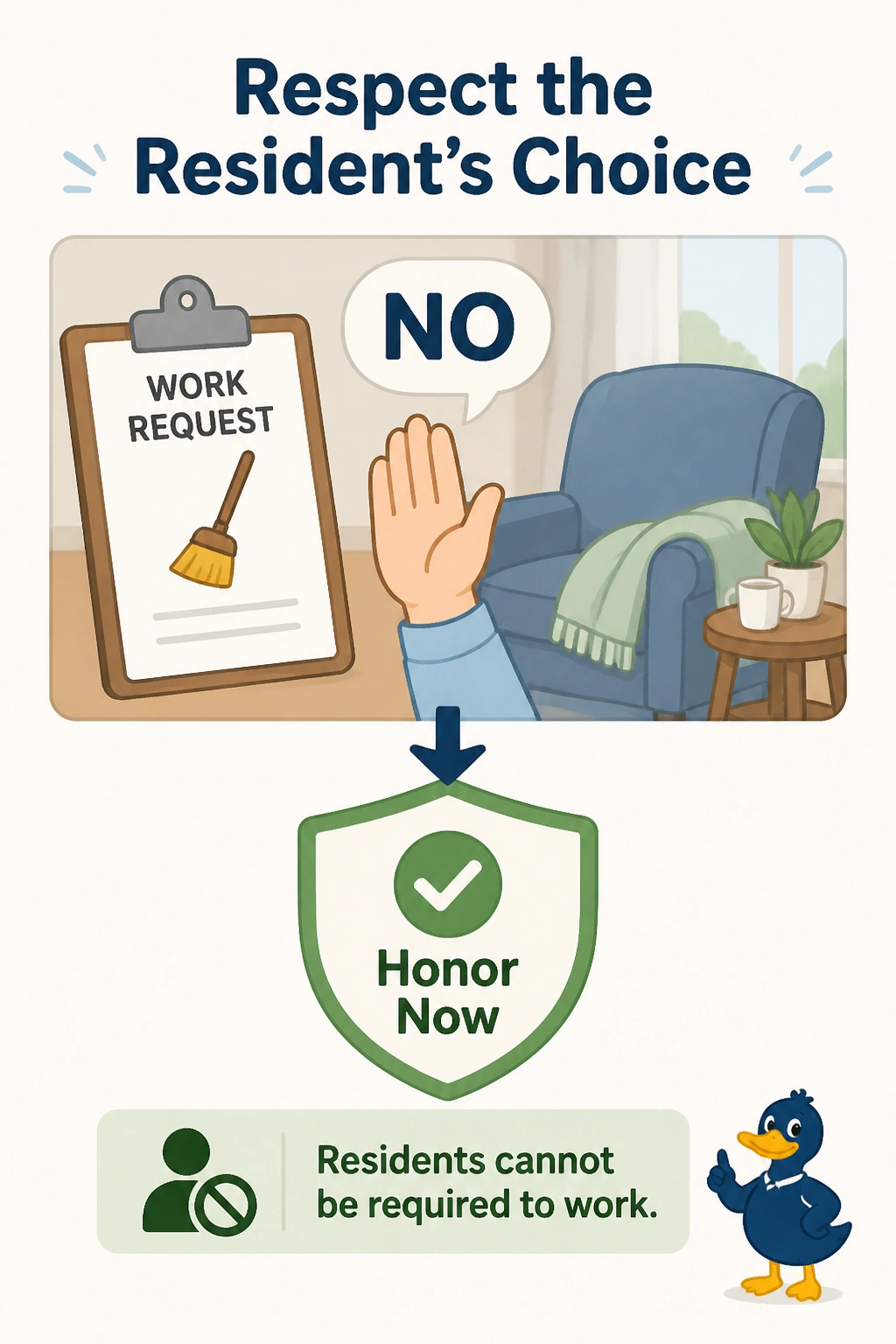
Short Explanation
A nursing home is a resident's home, not an unpaid workplace where chores come with the rent. You must respect a resident's choice to decline facility tasks, even when staff think light work would keep them busy. The trap is disguising routine staff labor as therapeutic activity without genuine consent.
Full Explanation
Under federal resident rights regulations in 42 CFR 483.10, a resident has the right to refuse to perform services for the facility, so staff must honor the resident's refusal immediately because residents cannot be required to work. 42 CFR 483.10(f)(9) allows the resident to perform services only when the resident chooses; the care plan documents the need or desire for the work; the plan states the nature of the services and whether they are voluntary or paid; compensation for paid services is at or above prevailing rates; and the resident agrees. Unpaid work is allowed when the plan specifies that it is voluntary. Attempting to allow the chores only when a physician orders light activity misses the core principle that resident autonomy and voluntary consent, rather than a medical order alone, govern whether a resident performs facility tasks. Trying to require light housekeeping if it is listed in the admission packet is unlawful because admission contracts cannot waive federal resident rights or impose mandatory labor. Similarly, choosing to assign the tasks as unpaid therapy to preserve upper-body strength misuses therapy labels to extract unpaid operational labor from a resident who has already declined. As a caveat, even when a resident genuinely volunteers to help with light tasks, staff must ensure the activity never replaces required facility staffing or creates safety hazards. As an operational check, review care plans and staff training quarterly to confirm any resident-performed tasks are strictly voluntary and properly documented.
Prefer to study offline? Printable PDF study book + test engine ($7.50, unofficial). These questions stay free here.