
A social worker notices that a resident with moderate dementia has unpaid personal laundry and hair-salon bills, while the resident's nephew—who holds power of attorney—recently stopped visiting and withdrew large sums from the resident's checking account for personal use. What action must the facility take?
Select an answer to reveal the explanation.
Short Explanation
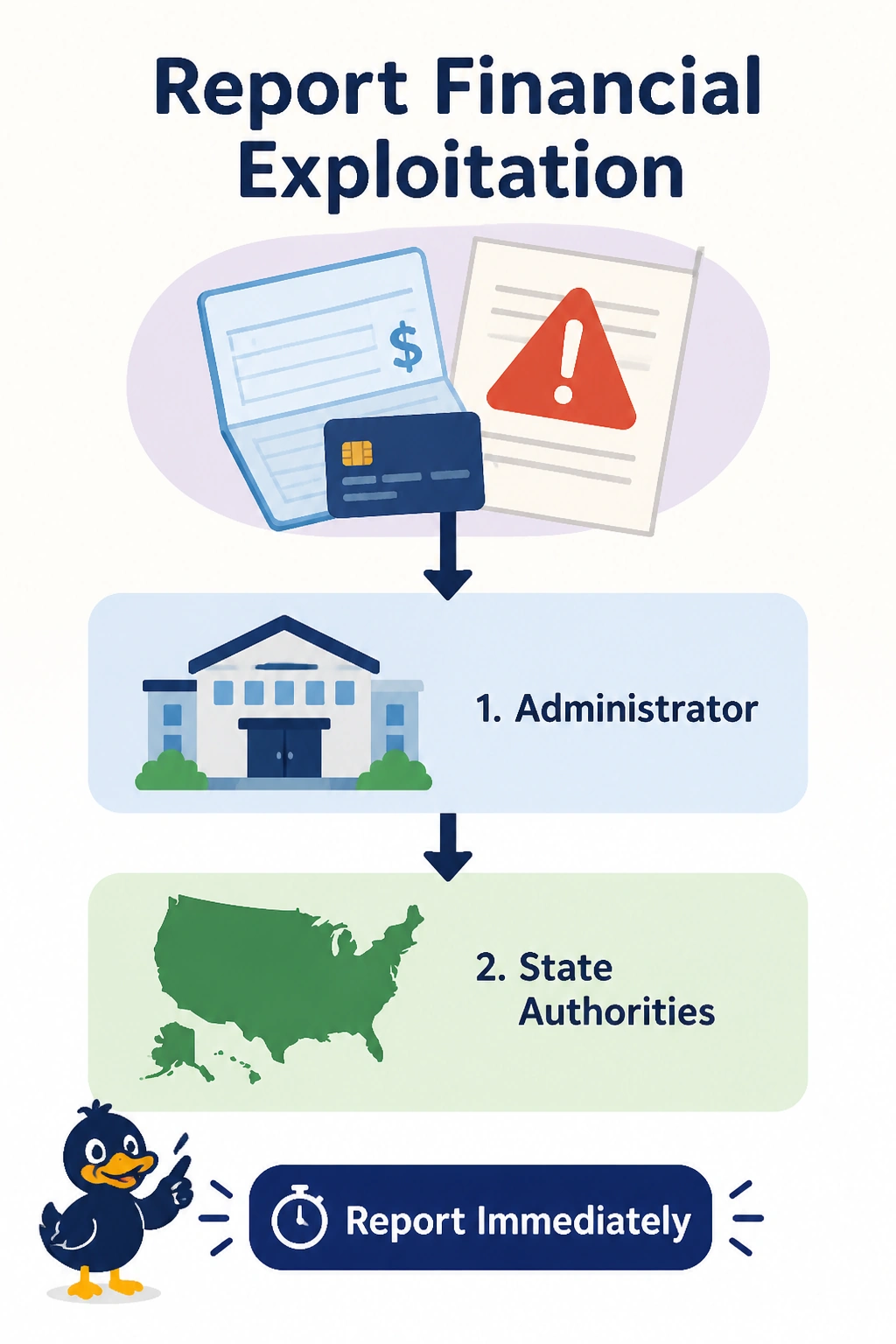
When a resident's money vanishes while their basic personal needs go unpaid, silence makes the facility complicit. You must report suspected financial exploitation immediately to the administrator and appropriate state authorities. The trap is treating a power-of-attorney abuse as a private family dispute instead of a reportable protection issue.
Full Explanation
Under 42 CFR 483.12, facilities must protect residents from all forms of abuse, neglect, and exploitation, including financial exploitation by a family member or legal representative. When staff observe indicators such as unexplained withdrawals paired with unpaid personal expenses, they must report suspected financial exploitation immediately to the administrator and state authorities, including adult protective services and the state survey agency as required. Choosing to suspend the resident's salon services until the nephew pays the balance penalizes the resident for someone else's potential misconduct without addressing the underlying exploitation. Attempting to ask the resident to sign a new power-of-attorney form naming another relative is outside the facility's legal authority and inappropriate when the resident has moderate dementia and may lack capacity to execute legal instruments. Deciding to wait for the bank to flag unusual withdrawals before taking any action leaves the resident's assets unprotected and violates mandatory reporting duties once reasonable suspicion arises. As a caveat, staff should document objective observations—such as dates, statements, and unpaid items—without confronting the suspected individual in a way that compromises an investigation. As an operational check, train business office, social services, and nursing staff annually to recognize red flags of external financial exploitation and follow the facility's immediate reporting chain.
Prefer to study offline? Printable PDF study book + test engine ($7.50, unofficial). These questions stay free here.