
A resident with mild cognitive impairment frequently calls out for assistance getting to the bathroom during the busy evening meal hour, and a charge nurse asks the attending physician for a standing sedative order to keep the resident quiet in her room. How should the interdisciplinary team respond to this request?
Select an answer to reveal the explanation.
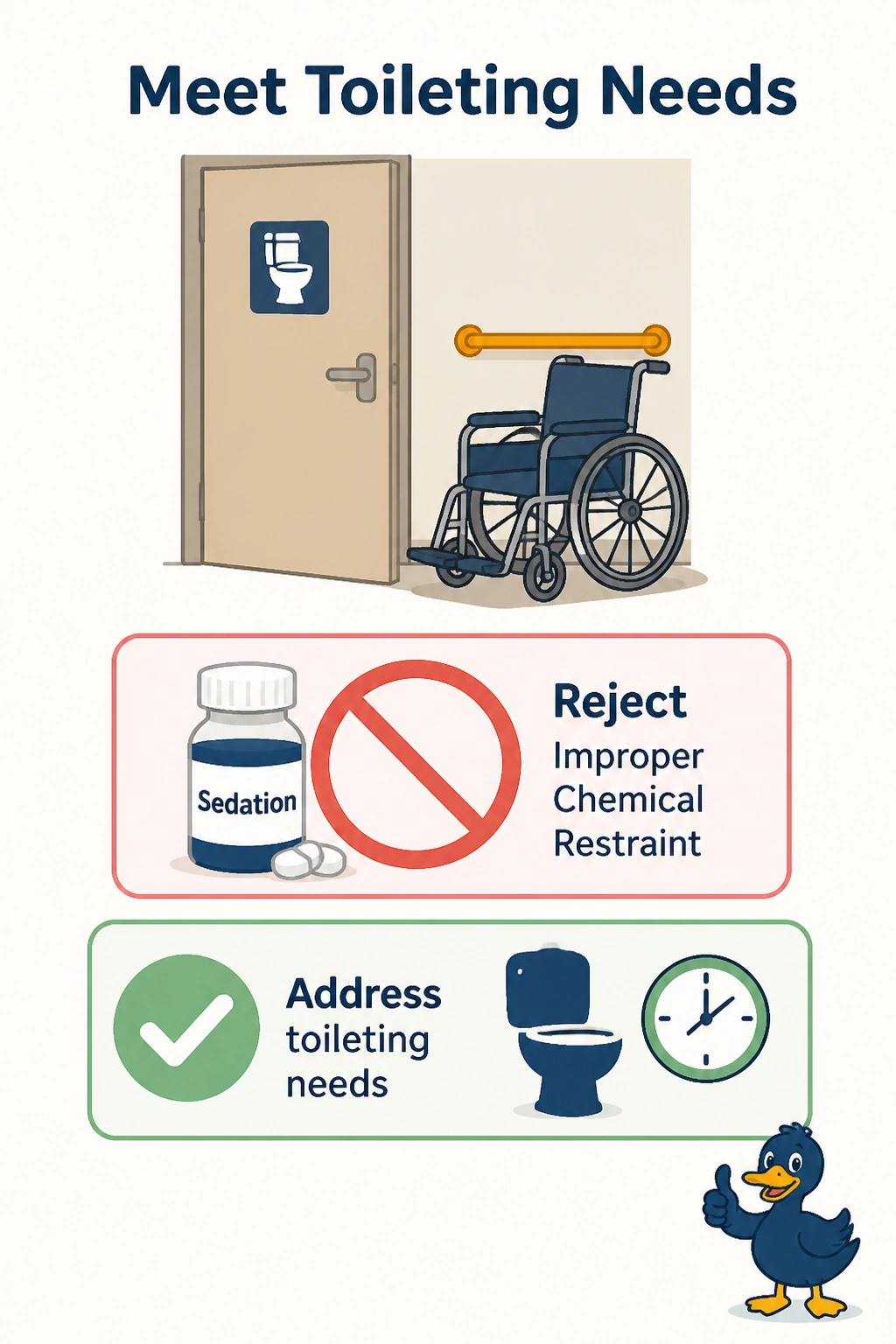
Short Explanation
Medicating a resident so staff can finish dinner service undisturbed is a classic compliance trap. Federal rules protect residents from chemical restraints used for convenience, so you must look past the noise and solve the underlying toileting need.
Full Explanation
Under 42 CFR 483.10 and 42 CFR 483.45, residents have the right to be free from chemical restraints imposed for discipline or convenience and not required to treat medical symptoms, and each drug regimen must be free from unnecessary drugs. The team must Reject the request as an improper chemical restraint and address the resident's toileting needs by scheduling proactive toileting rounds before dinner. Choosing to Approve a low-dose sedative during dinner hours to reduce hallway noise and keep staff available for meal trays directly violates resident rights and exposes the resident to sedation, falls, and functional decline. Attempting to Delegate the sedative decision solely to the evening charge nurse without physician or interdisciplinary review bypasses prescriber authority, informed consent, and clinical assessment. Choosing to Request a 14-day dinner-hour sedative and record mealtime noise as the clinical indication still constitutes a chemical restraint for convenience, because mealtime noise is not a medical symptom and a time-limited order does not make an unnecessary drug necessary. As a clinical caveat, even when a resident has a legitimate psychiatric diagnosis, sedatives require specific clinical indications and ongoing monitoring. For an operational check, review evening call-light response times and scheduled toileting logs during QAPI meetings to eliminate convenience-driven medication requests.
Prefer to study offline? Printable PDF study book + test engine ($7.50, unofficial). These questions stay free here.