
A resident with moderate dementia repeatedly shouts in the activity room during an afternoon program, and a charge nurse directs staff to wheel the resident into her bedroom and hold the door shut from the outside until she becomes quiet. Which federal resident right violation does this action represent?
Select an answer to reveal the explanation.
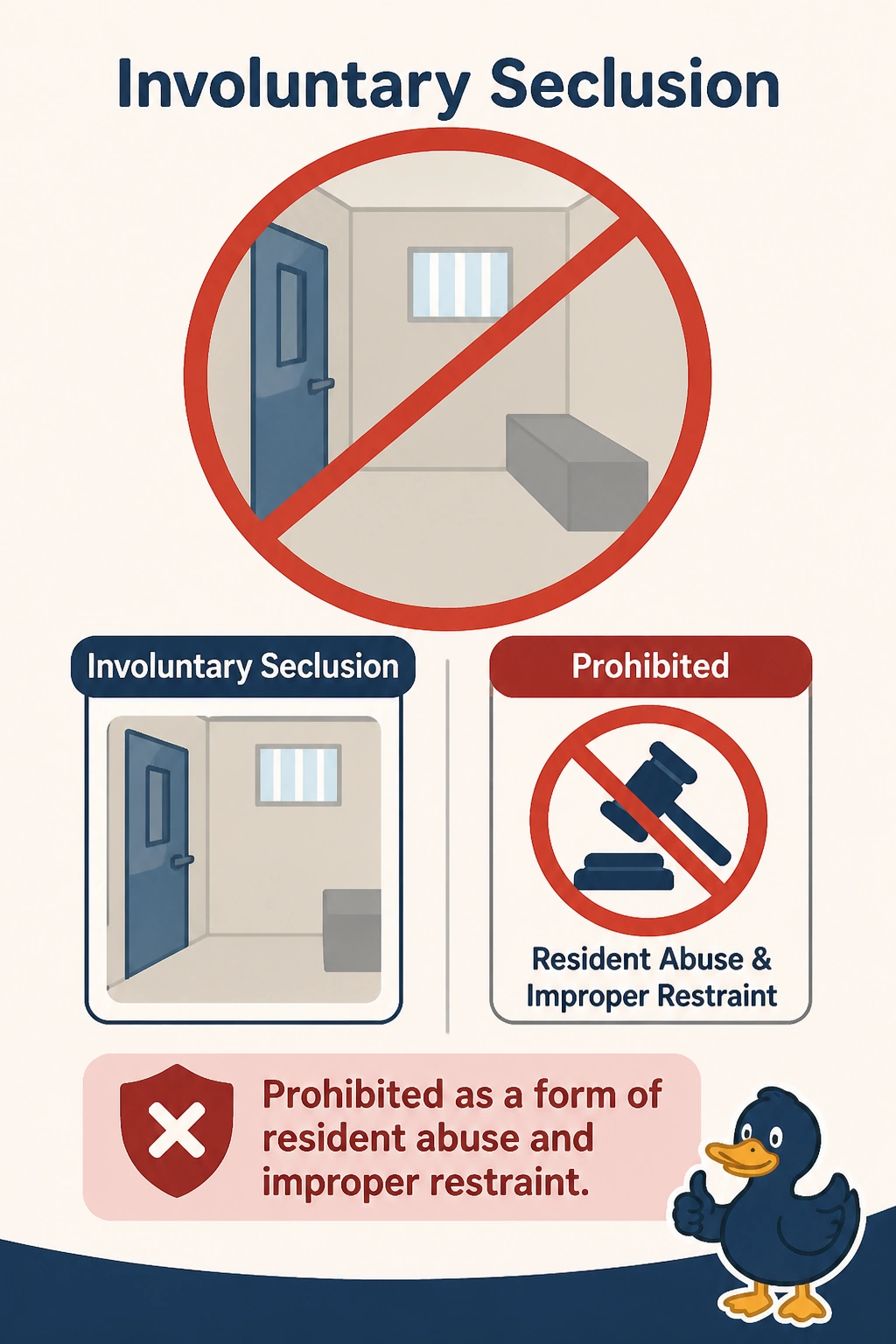
Short Explanation
Holding a resident's door shut from the outside doesn't manage a behavior—it locks a person in a box for staff convenience. The trap is treating temporary isolation as a harmless cooling-off technique. Under federal resident rights, you must recognize forced confinement in a room as prohibited involuntary seclusion and address the behavior with person-centered care.
Full Explanation
Under 42 CFR 483.12, residents have the fundamental right to be free from abuse, neglect, misappropriation of property, and involuntary seclusion. Selecting Involuntary seclusion, which is prohibited as a form of resident abuse and improper restraint correctly identifies that confining a resident to a room against their will—whether by locking a door or physically holding it shut—is an unlawful restriction of freedom. Describing the incident as Failure to provide a written 30-day room-change notice to the resident's representative mischaracterizes temporary forced confinement as a permanent room reassignment. Calling it Denial of the resident's right to participate in Resident Council meetings is inaccurate because an afternoon activity program is distinct from Resident Council governance. Labeling it Unauthorized modification of the resident's prescribed therapeutic diet order is unrelated to confinement or behavioral management. As a caveat, even brief isolation intended to calm an agitated resident qualifies as involuntary seclusion if the resident is prevented from leaving; staff must instead assess unmet needs such as pain, noise overstimulation, or toileting. Operationally, immediately end the confinement, assess the resident for distress, initiate an abuse investigation, and retrain staff on non-pharmacological behavioral interventions.
Prefer to study offline? Printable PDF study book + test engine ($7.50, unofficial). These questions stay free here.