
Several adult children of residents on a memory care unit ask the administrator to form a Family Council and request a private meeting room on weekday evenings without staff present unless invited. How must the facility respond under federal resident rights rules?
Select an answer to reveal the explanation.
Short Explanation
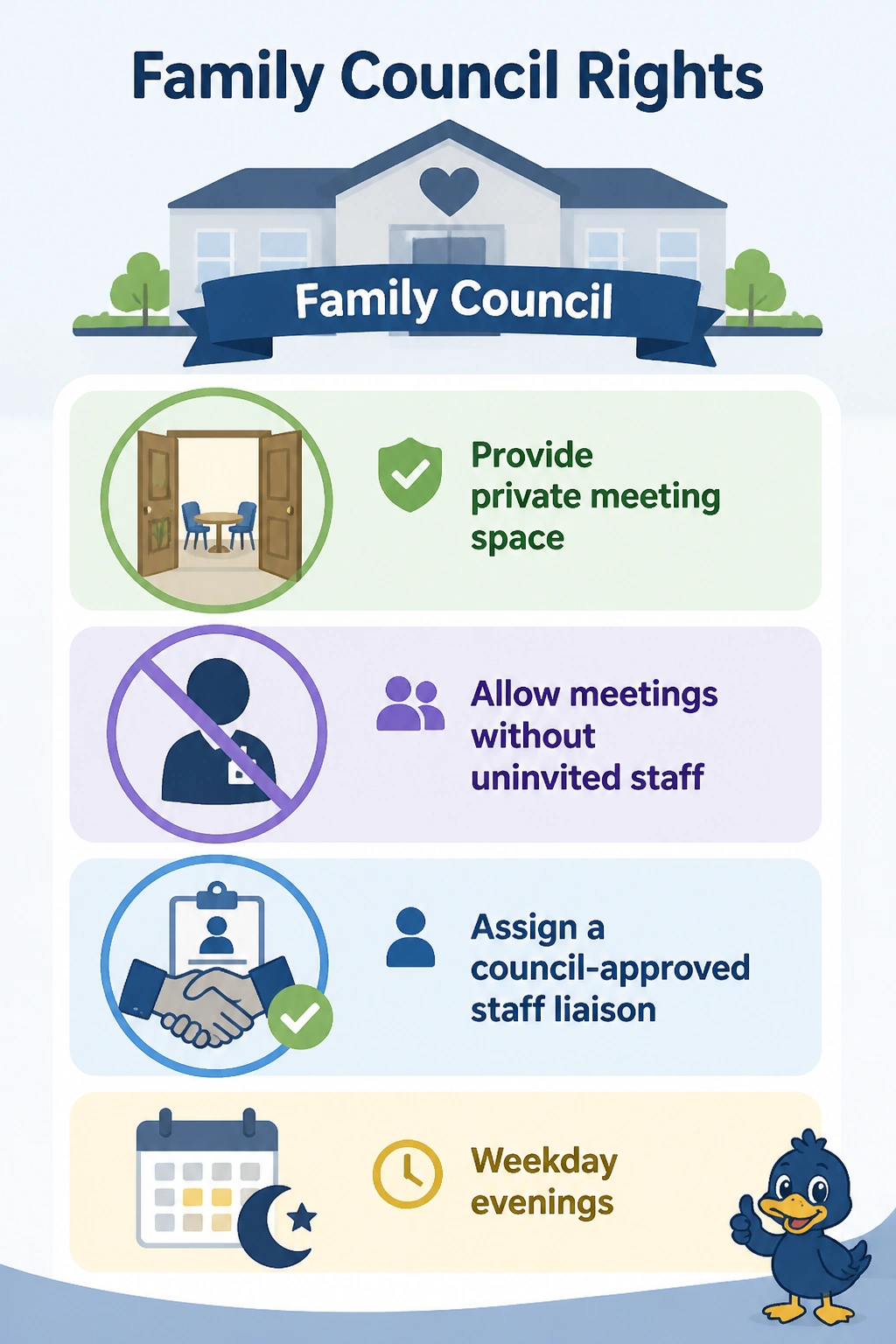
You can help families organize without turning their council into a staff-run meeting: they get private space, and staff attend only if invited. The key is family autonomy—the facility must also provide a liaison approved by the council.
Full Explanation
Federal resident-rights rules protect families’ ability to organize and participate in a Family Council. The facility must provide private meeting space, allow meetings without staff who have not been invited, and assign a staff liaison approved by the council. It must also consider the council’s views and act promptly on its grievances or recommendations about resident care and facility life. Requiring the administrator or social worker to attend every meeting to record official minutes undermines the group’s privacy; staff and visitors may attend only when invited. Declining the request because a monthly Resident Council already meets is also improper: family groups and resident groups have distinct rights. Restricting meetings to weekday business hours creates an unreasonable barrier for family members who cannot attend then. One exam caveat: the facility need not force families to form a council, but must support one when families choose to organize. As a practical check, post meeting notices in common areas and track the facility’s responses to council recommendations.
Prefer to study offline? Printable PDF study book + test engine ($7.50, unofficial). These questions stay free here.