
A cognitively intact resident newly diagnosed with early-stage heart failure asks the attending nurse about his echocardiogram results, but his adult daughter privately demands that staff withhold the diagnosis so he does not worry. How must the facility respond under federal resident rights rules?
Select an answer to reveal the explanation.
Short Explanation
Imagine someone holding back your own bank statement because a relative thinks the balance might stress you out. Under federal resident rights, you must ensure a decisionally capable resident is fully informed of their health status, regardless of family discomfort. The trap is deferring to well-meaning relatives when the resident has not been declared incapacitated and has the right to direct their own care.
Full Explanation
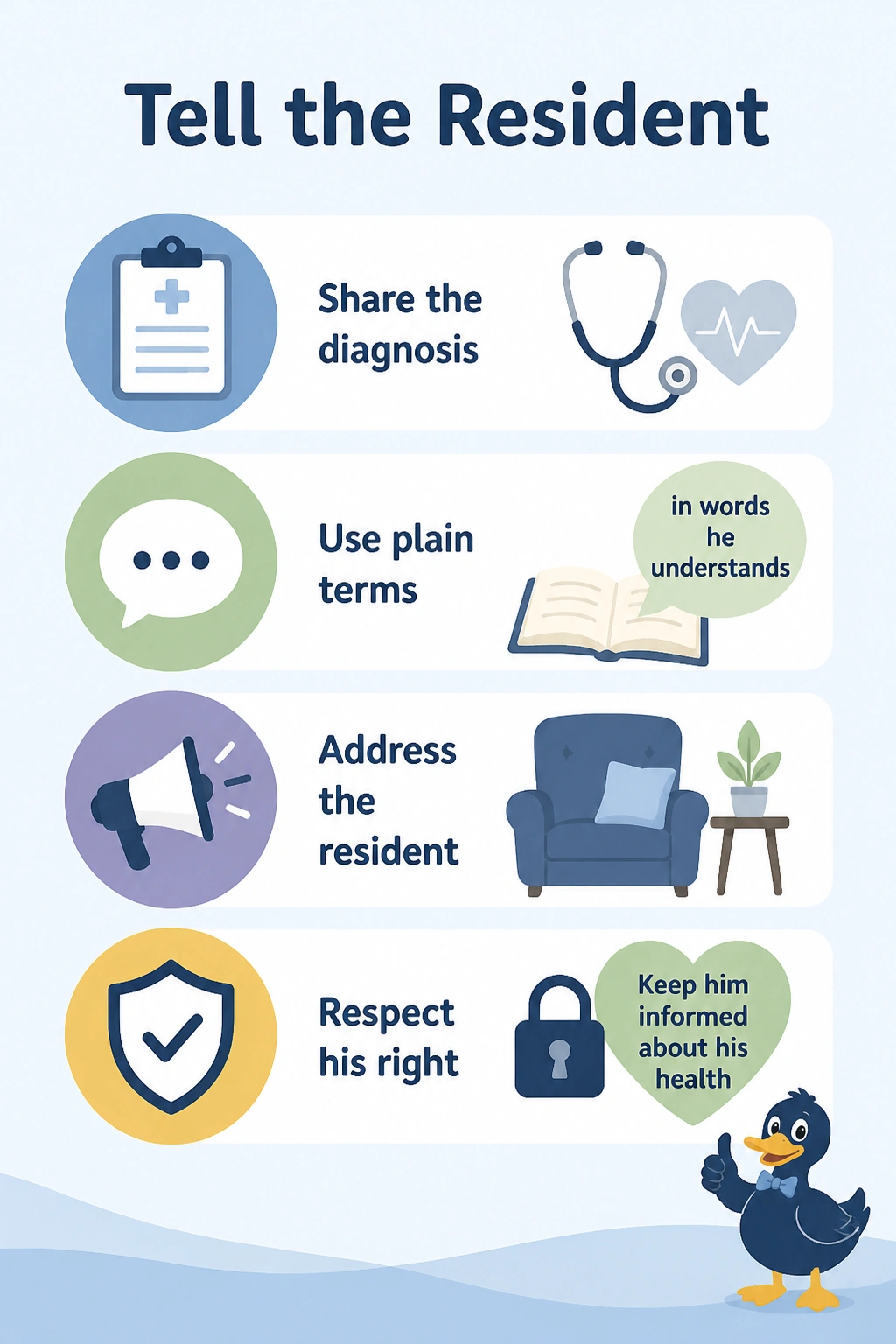
Under 42 CFR 483.10, every resident has the right to be fully informed in a language they can understand of their total health status, including medical conditions, so the care team must Inform the resident of his diagnosis in plain terms he can understand. Decision-making authority belongs to the resident unless a court has determined incapacity or a valid healthcare proxy has been activated according to state law, meaning family preferences cannot override a capable resident's right to know. Choosing to Honor the daughter's request until she agrees to a joint family care meeting improperly delays and restricts the resident's statutory access to his own clinical information. Choosing to Refer the resident's question to the social worker for emotional screening avoids answering a direct clinical inquiry and treats normal curiosity about a test result as a barrier to disclosure. Choosing to Share the clinical details only with the daughter as his emergency contact violates both resident rights and HIPAA privacy protections, because an emergency contact has no automatic right to exclude a capable resident from medical discussions. As a caveat, staff should offer to include the daughter in future care-plan conversations only if the resident consents. As an operational check, verify admission and clinical records to confirm whether any legal representative or proxy is actually active before routing health updates through family members.
Prefer to study offline? Printable PDF study book + test engine ($7.50, unofficial). These questions stay free here.