
A cognitively intact long-stay resident reports difficulty falling asleep for the past two weeks, and a night nurse asks the attending physician to order a nightly benzodiazepine sedative. What should the interdisciplinary team prioritize first under federal unnecessary-medication standards?
Select an answer to reveal the explanation.
Short Explanation
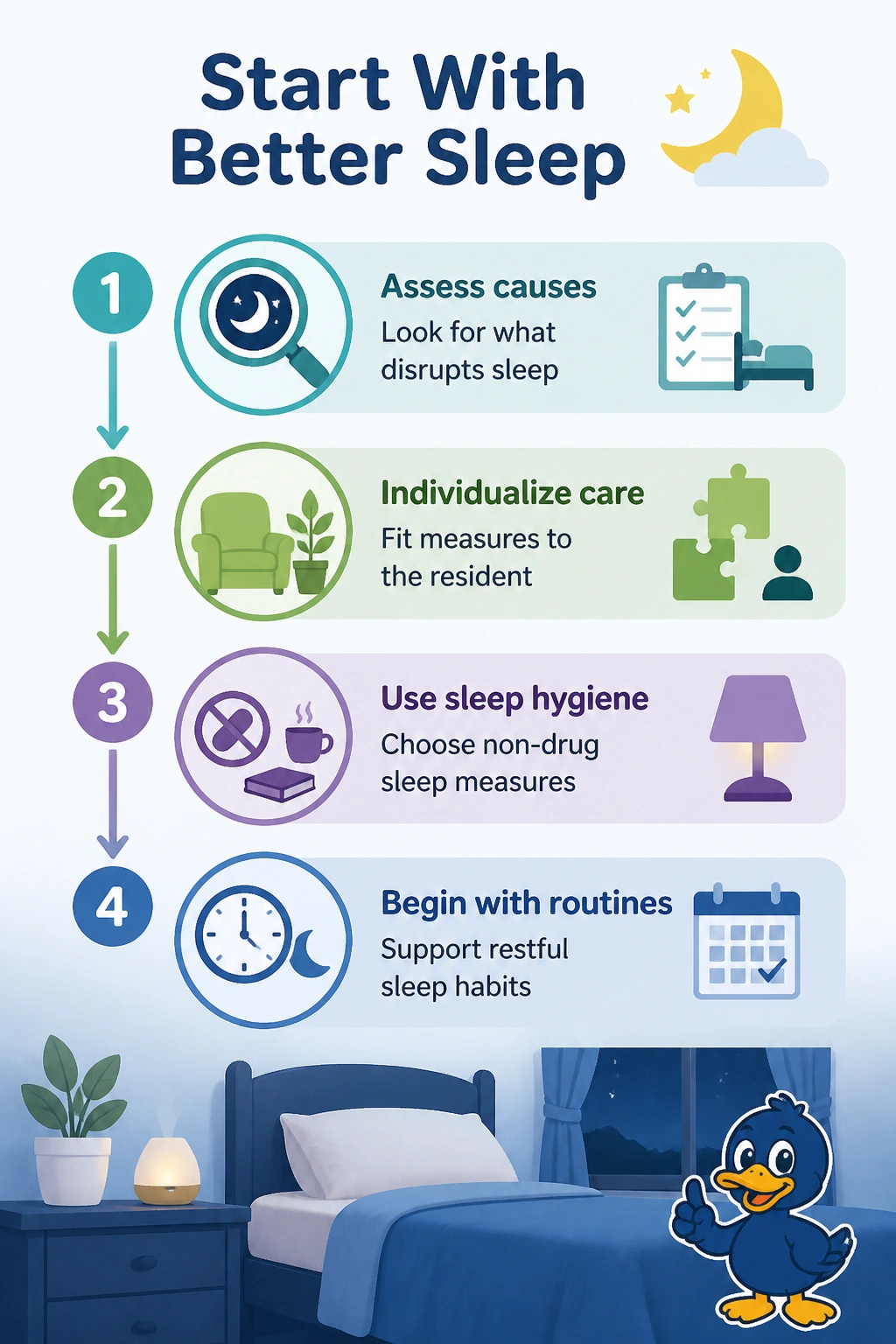
Sleep meds in older adults often trade one problem for a bigger fall risk. Before reaching for a sedative, you want the team to uncover what is disrupting rest and try non-drug strategies first. The trap is jumping straight to a prescription or forcing rigid schedule rules, so look for the resident-centered assessment.
Full Explanation
Under federal unnecessary-medication and pharmacy-services standards, the team must Assess underlying causes of insomnia and implement individualized non-pharmacological sleep hygiene measures before considering sedative-hypnotic drugs. Choosing to Initiate a low-dose sedative-hypnotic immediately and schedule a reassessment in ninety days bypasses clinical root-cause evaluation and exposes the resident to heightened risks of falls, daytime sedation, and delirium. Deciding to Restrict the resident from daytime napping without evaluating current evening routines is overly directive, ignores resident choice, and misses reversible triggers such as pain, caffeine, nocturia, or ambient noise. Opting to Relocate the resident to a single room near the nurses' station for closer nighttime observation can actually worsen sleep fragmentation due to hallway lighting and staff activity while failing to treat the insomnia itself. One clinical caveat is that if non-pharmacological approaches fail and a sleep medication is later prescribed, the prescriber must document the specific clinical indication and plan for ongoing monitoring and gradual dose reduction. As an operational check, audit new hypnotic orders during monthly medication regimen reviews to verify documented sleep-hygiene trials.
Prefer to study offline? Printable PDF study book + test engine ($7.50, unofficial). These questions stay free here.