
A resident admitted for short-term rehabilitation after knee surgery arrives with an indwelling urinary catheter placed during the hospital stay, and the resident now reports discomfort and wants it removed. There is no documented medical indication such as urinary retention or a sacral wound requiring diversion. What is the most appropriate clinical action?
Select an answer to reveal the explanation.
Short Explanation
Leaving an unnecessary catheter in place is like keeping training wheels on a bike long after you know how to ride—it only creates new hazards. Federal rules strictly prohibit keeping indwelling catheters without a valid clinical reason because they drive infections and discomfort. Do not fall for convenience-based excuses like fall prevention or waiting until discharge.
Full Explanation
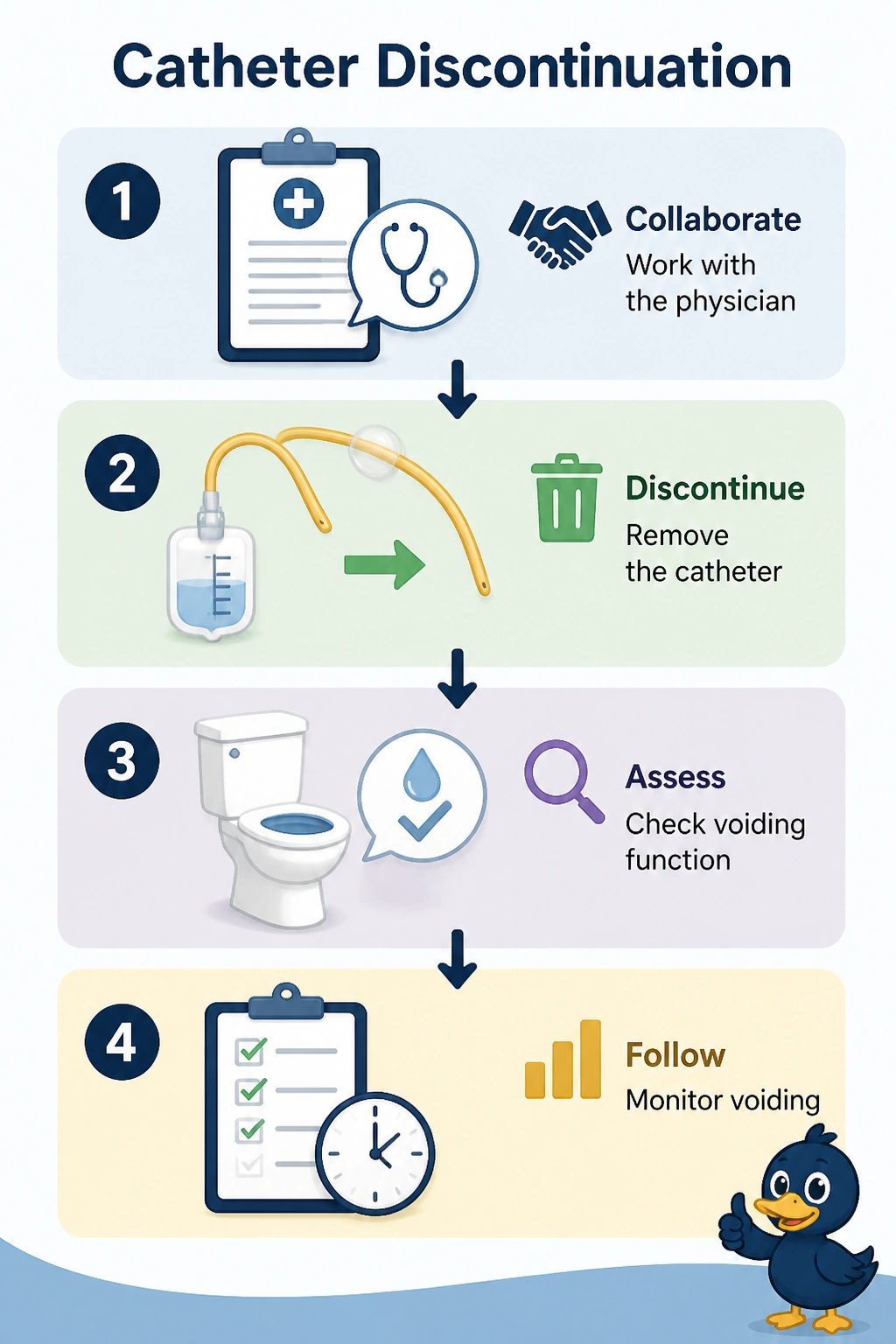
Under 42 CFR 483.25(e), a facility must ensure that a resident who enters without an indwelling catheter is not catheterized unless clinically indicated, and that a resident admitted with one is assessed for removal as soon as possible. When no medical indication exists and the resident is uncomfortable, the team must Collaborate with the physician to discontinue the catheter and assess voiding function to reduce catheter-associated urinary tract infection risk and restore dignity. Choosing to Maintain the catheter for two more weeks to prevent postoperative falls during nighttime ambulation is inappropriate because fall prevention or staff convenience is never a valid clinical justification for catheterization. Opting to Switch to a larger-gauge catheter and schedule routine bladder irrigations every evening increases urethral trauma and introduces pathogens unnecessarily. Deciding to Keep the catheter in place until the resident completes physical therapy and discharges home violates resident rights and federal urinary continence standards. Caveat: after removal, nursing staff must monitor post-void output and bladder fullness closely so transient urinary retention is caught early. Operational check: audit admission orders within twenty-four hours for every incoming catheter to confirm either a documented clinical indication or an active removal order.
Prefer to study offline? Printable PDF study book + test engine ($7.50, unofficial). These questions stay free here.