
During a routine kitchen inspection, the dietary manager finds raw poultry thawing on an upper refrigerator shelf directly above uncovered gelatin desserts, and cooked soup cooling on the prep counter at room temperature for four hours. Which federal dietary requirement is being violated?
Select an answer to reveal the explanation.
Short Explanation
A single drip of raw poultry juice or a pot of lukewarm soup can turn lunch into a facility-wide outbreak. Your dietary team has to treat vertical shelf order and rapid cooling as non-negotiable safety barriers.
Full Explanation
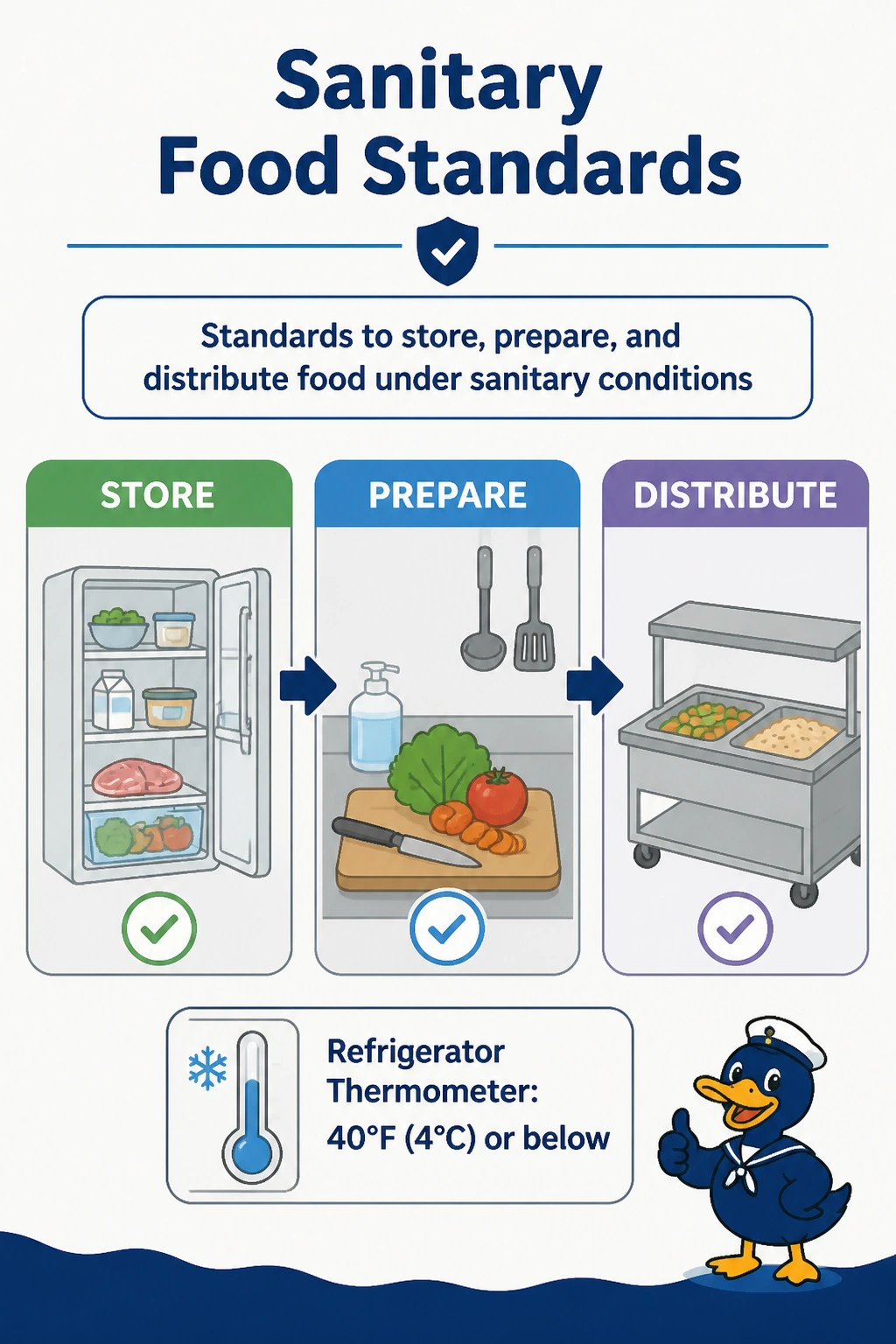
Under 42 CFR 483.60(i), nursing facilities must follow professional food service Standards to store, prepare, and distribute food under sanitary conditions, which prohibits storing raw poultry above ready-to-eat items where drips cause cross-contamination and forbids holding cooked soup in the temperature danger zone at room temperature. Citing a Requirement to serve all resident meals within a single thirty-minute dining window invents a rigid mealtime rule that does not exist and misses the foodborne illness hazard. Claiming a Mandate to purchase only pre-cooked frozen entrees for skilled nursing kitchens is false because scratch cooking is permitted when safe handling and cooling controls are followed. Referencing a Rule requiring residents to eat all meals in the main communal dining room contradicts resident choice and has no connection to kitchen sanitation. As a caveat, both items observed—the uncovered desserts beneath raw poultry and the soup held uncooled for four hours—must be discarded immediately rather than re-served. Operational check: require dietary staff to log refrigerator shelf-order checks and rapid-cooling time-temperature logs during every meal preparation shift.
Prefer to study offline? Printable PDF study book + test engine ($7.50, unofficial). These questions stay free here.