
A long-stay resident completes physical therapy after a hip fracture and prepares to return home with family support and outpatient services. Which elements must the interdisciplinary team include in the written discharge summary to comply with federal regulations?
Select an answer to reveal the explanation.
Short Explanation
Sending a resident home without a complete clinical handoff is like handing someone a map with the destination torn off. Your discharge summary must bridge the gap between facility care and home routines so nothing falls through the cracks.
Full Explanation
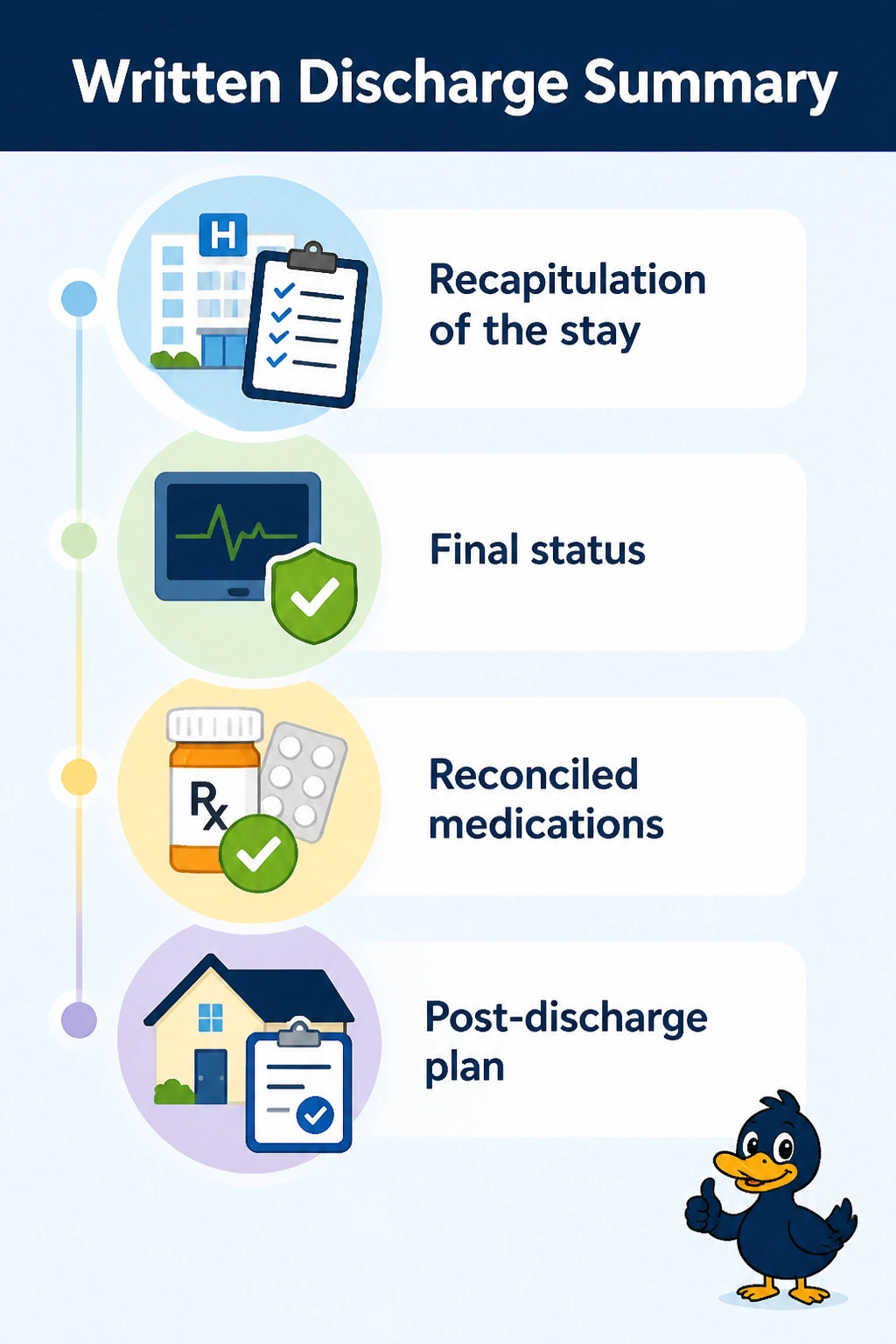
Under 42 CFR 483.21, a facility's discharge summary must contain A recapitulation of the stay, final status, reconciled medications, and post-discharge plan developed with the resident and their representative to support safe continuity of care at home. Providing Only the final physical therapy progress note and the signed discharge transportation receipt omits medical, nursing, dietary, and medication reconciliation details needed by primary care providers. Including A copy of the resident's complete billing ledger and the facility's general visitation policy supplies administrative paperwork rather than clinical handoff information. Relying on The original admission history and physical without updating for new home care instructions fails to capture clinical progress, current functional status, and updated medication regimens. As a caveat, the post-discharge plan of care must be documented in plain, understandable terms for the resident and family and transmitted promptly to receiving providers. Operational check: use a standardized electronic discharge checklist that blocks final chart closure until medication reconciliation, final status, and follow-up appointments are verified.
Prefer to study offline? Printable PDF study book + test engine ($7.50, unofficial). These questions stay free here.