
A resident tells the morning charge nurse that a night-shift employee yelled at them and shoved their arm during a transfer. Before the full internal investigation is completed, what is the facility's immediate first priority?
Select an answer to reveal the explanation.
Short Explanation
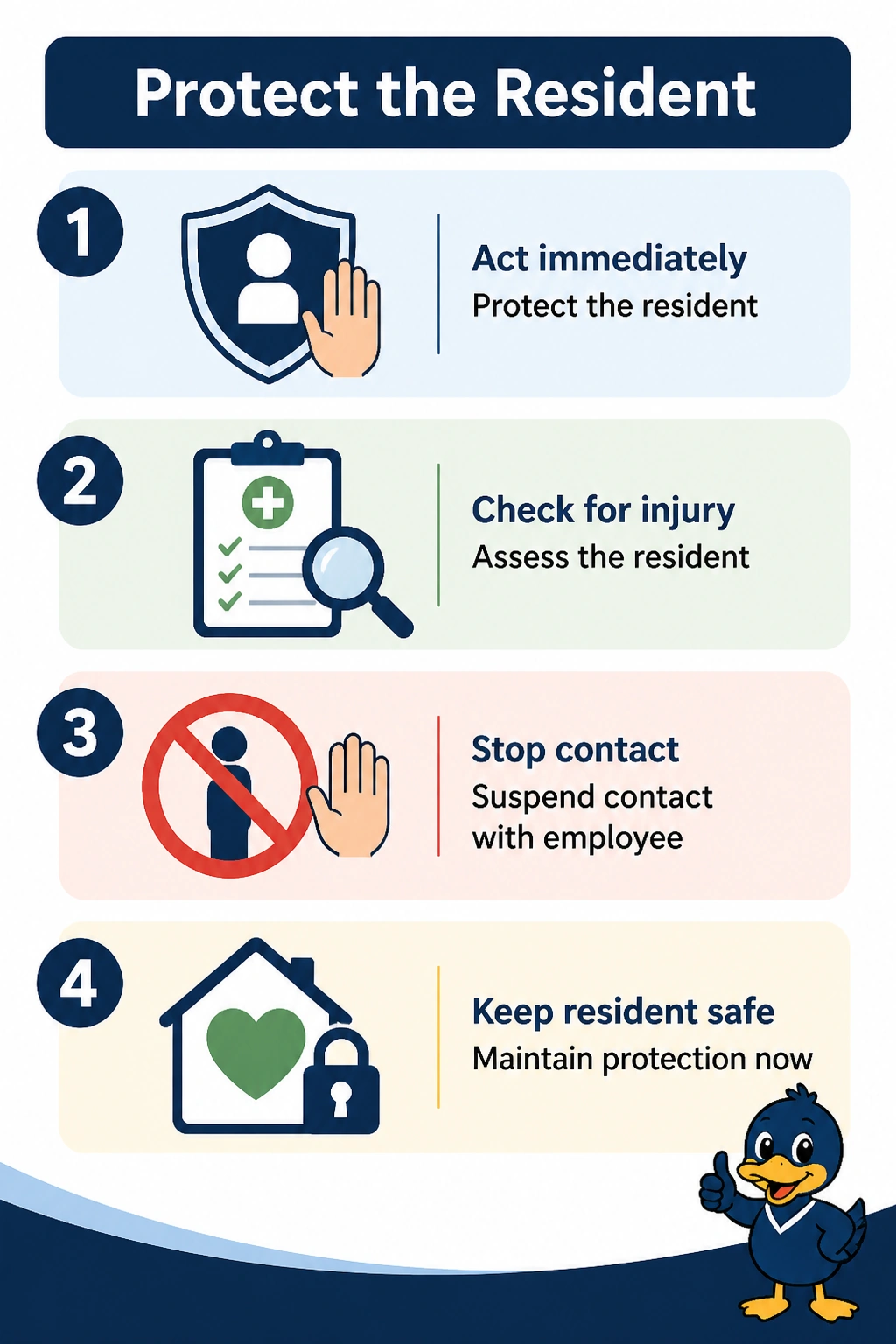
When an abuse allegation surfaces, you protect the resident first—not play detective before taking action. Safety comes before witness statements or proof, so separate the accused employee from resident care while you assess the resident.
Full Explanation
Federal abuse-prevention regulations require facilities to protect residents immediately upon any allegation of abuse, mistreatment, or neglect. You must protect the resident, assess for injury, and suspend contact with the accused employee right away. Securing safety and arranging clinical assessment come before fact-finding, so no resident remains exposed to potential harm during the investigation. Waiting for the accused employee’s next scheduled shift to gather a written statement leaves a safety gap and risks retaliation or further mistreatment if the employee returns to the unit. Asking the resident’s roommate to mediate before notifying leadership is inappropriate, violates confidentiality, and delays mandatory reporting and clinical evaluation. Holding off on reporting the allegation to state authorities until internal proof is confirmed violates federal reporting rules, which require timely reporting of allegations—not only substantiated findings—to the administrator and state survey agency. As a compliance caveat, even an allegation that initially sounds like a misunderstanding must trigger immediate protection and reporting protocols. For a practical check, audit incident logs for immediate suspension timestamps, nursing assessments, and timely agency notifications.
Prefer to study offline? Printable PDF study book + test engine ($7.50, unofficial). These questions stay free here.