
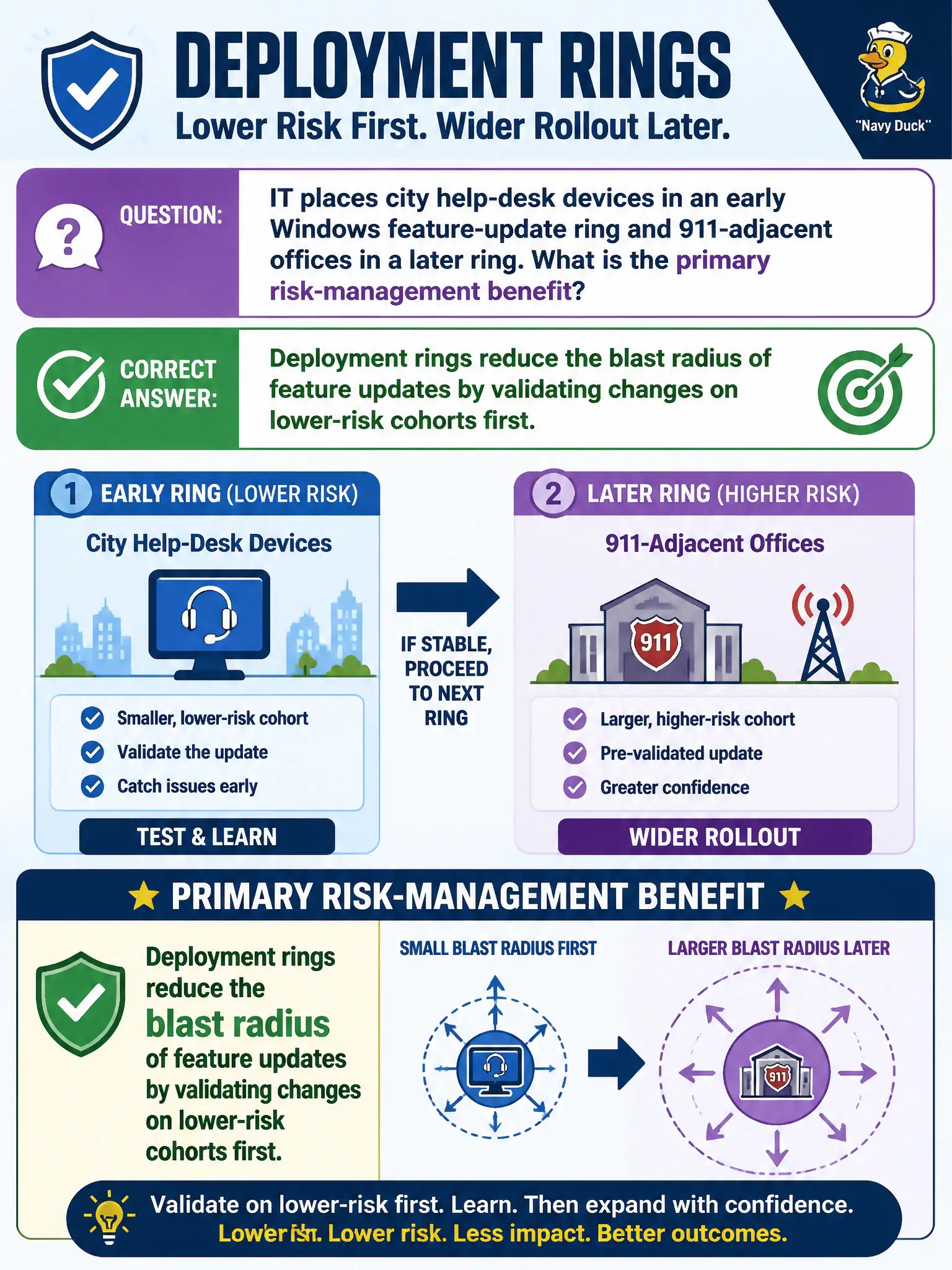
IT places city help-desk devices in an early Windows feature-update ring and 911-adjacent offices in a later ring. What is the primary risk-management benefit?
Select an answer to reveal the explanation.
Short Explanation
Put the adventurous devices first and the life-safety desks later—that’s ring risk management in plain clothes. You shrink how far a bad update can travel. Rings don’t delete identity or Defender.
Full Explanation
IT placing city help-desk devices in an early Windows feature-update ring and 911-adjacent offices in a later ring primarily reduces the blast radius of feature updates by validating changes on lower-risk cohorts first. Early rings absorb surprises on machines that can tolerate troubleshooting; public-safety-adjacent cohorts move only after confidence grows. That sequencing is the risk-management benefit rings exist to provide in municipal estates.
Claiming early rings permanently disable Microsoft Defender for later rings fails because rings are not a license to turn off security for emergencies—Defender remains part of the security baseline. Claiming later rings automatically convert every PC into a Windows 365 Cloud PC without admin approval invents an unrelated transformation. Claiming rings replace Entra ID entirely so 911 staff no longer need organizational accounts fails identity fundamentals.
Exam caveat: rings sequence risk; they do not disable Defender, auto-convert devices to Cloud PCs, or delete Entra ID. Keep the blast-radius teaching point clean.
Operational check: document why help desk is early and 911-adjacent is late, define exit criteria to promote rings, monitor health signals before widening, brief public-safety IT that delayed rings are protective—not punitive—and reject any runbook that disables Defender as a “ring feature.”