
A county still runs Microsoft Configuration Manager for many PCs and servers but also wants cloud Intune management in the same estate. Which concept describes using both together?
Select an answer to reveal the explanation.
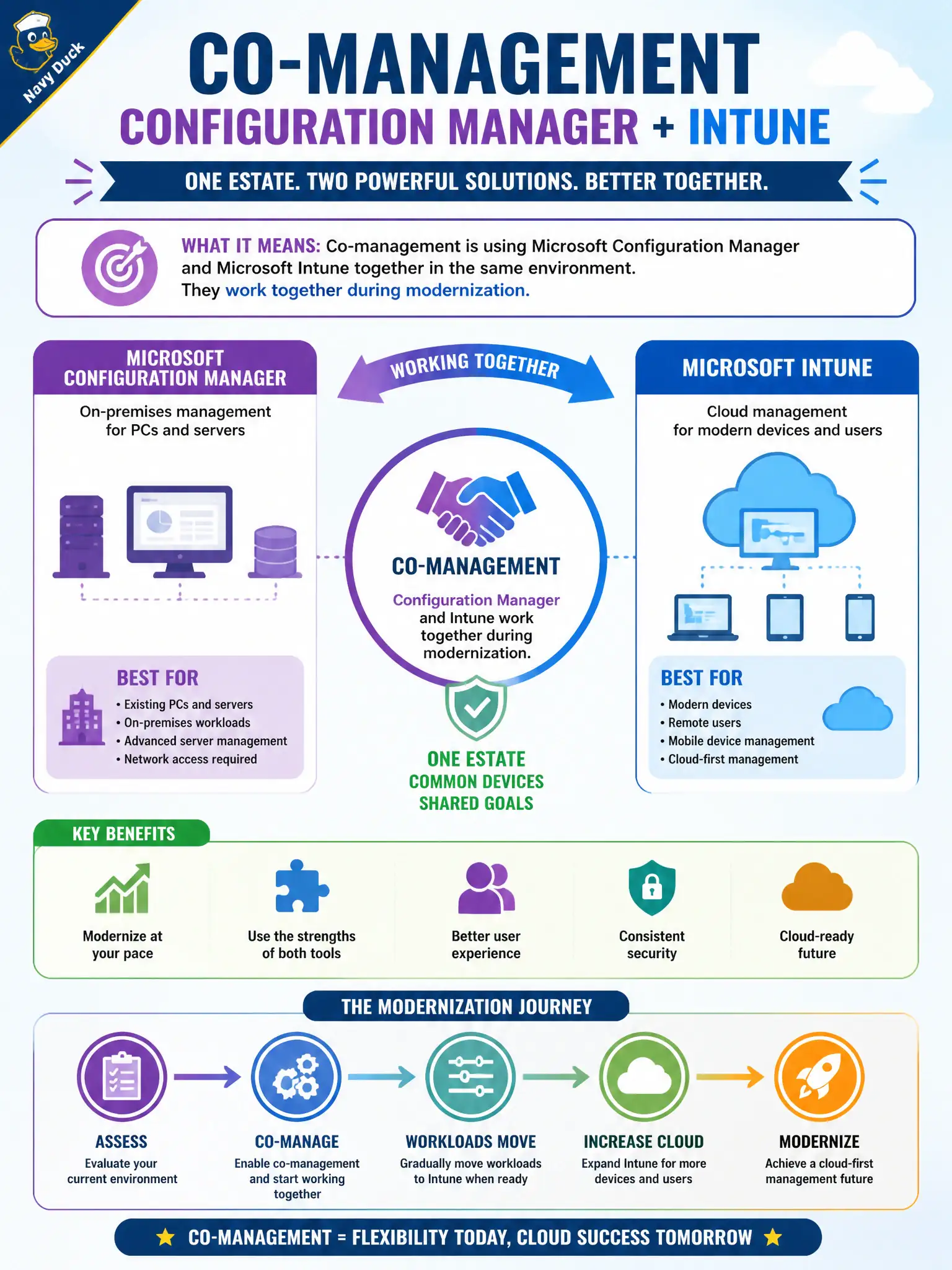
Short Explanation
Keep the familiar workshop while opening a cloud garage bay next door. Co-management lets ConfigMgr and Intune share the workload instead of a risky rip-and-replace. That's the modernization bridge—not Teams Phone or Loop uninstalling site servers.
Full Explanation
A county still running Configuration Manager for many PCs and servers while also wanting cloud Intune management should recognize co-management, where Configuration Manager and Intune work together during modernization. Co-management is the side-by-side bridge: workloads can shift gradually instead of demanding a cliff-edge cutover that municipal IT rarely survives politically or operationally.
Windows 365 personal Cloud PCs as a full overnight replacement for every ConfigMgr server role fails because Cloud PCs are personalized desktops, not a complete ConfigMgr retirement plan by themselves. Teams Phone softphone licensing fails as the bridge between ConfigMgr and Intune. Loop components that automatically uninstall Configuration Manager site servers invent a fantasy automation path.
Exam caveat: co-management means both participate during transition—not that nothing changes, and not that everything must move on day one.
Operational check: enable co-management for pilot collections, choose which workloads move to Intune first, communicate the gradual path to ConfigMgr-centric admins, keep Phone and Loop out of the migration design, and measure success by stable management—not by overnight demolition of ConfigMgr.