
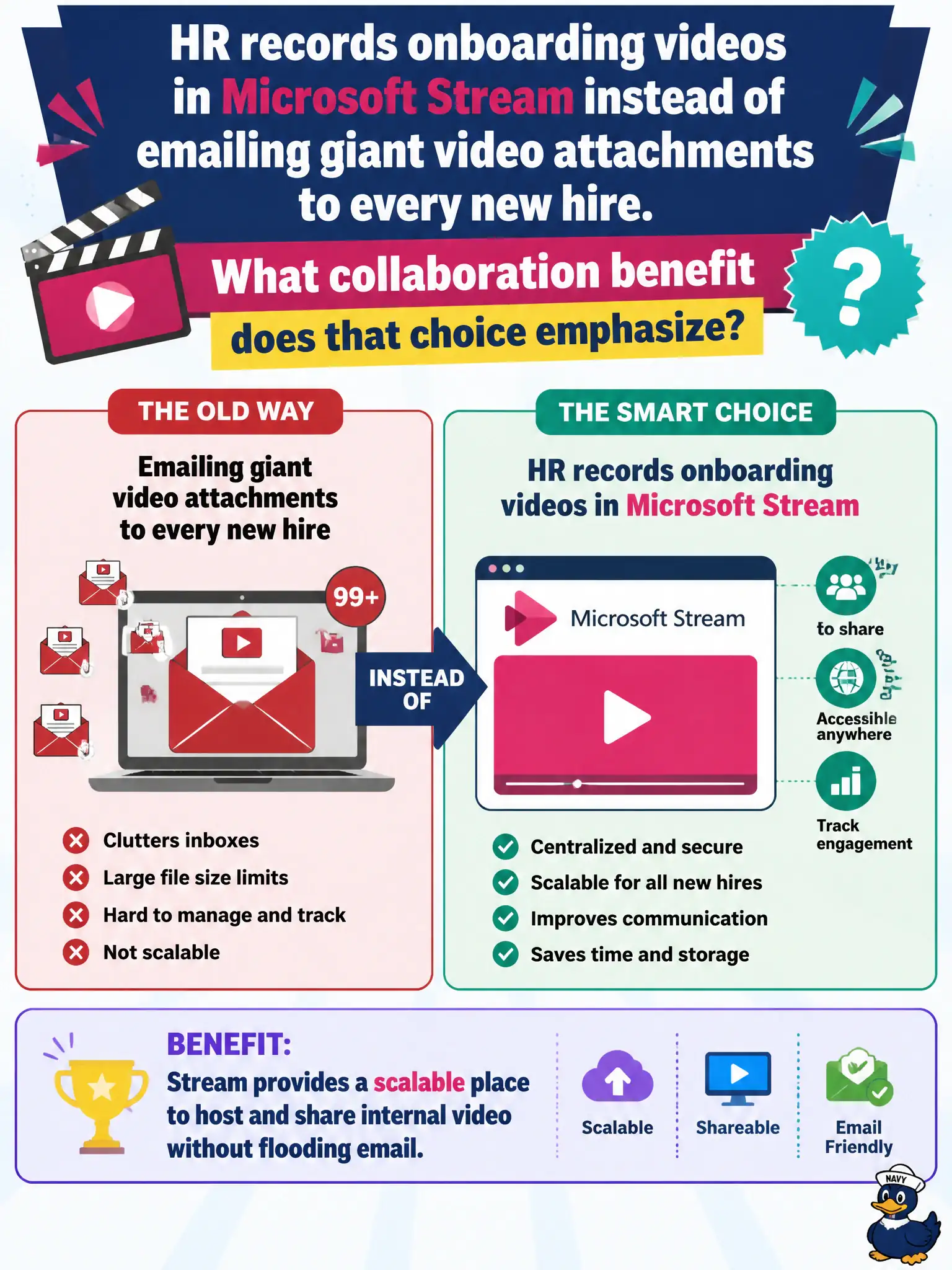
HR records onboarding videos in Microsoft Stream instead of emailing giant video attachments to every new hire. What collaboration benefit does that choice emphasize?
Select an answer to reveal the explanation.
Short Explanation
Shipping a movie on a USB stick to every mailbox is a bad postal plan. Stream parks the onboarding video in one shareable place so new hires watch without choking inboxes. That's scalable internal video—not Intune, and not a SharePoint PDF prerequisite.
Full Explanation
HR recording onboarding videos in Microsoft Stream instead of emailing giant attachments emphasizes that Stream provides a scalable place to host and share internal video without flooding email. New hires stream content on demand; mailboxes stay within size norms; and the academy can update a single hosted asset instead of resending huge files. That is a collaboration and content-delivery benefit at describe depth.
Claiming Stream replaces Microsoft Intune as the city’s only endpoint management service fails because video hosting is not MDM/MAM. Claiming Stream is required before any SharePoint library can store PDF documents fails because SharePoint stores documents independently of Stream. Claiming Stream only works for live Teams Phone call recording billing reports fails because Stream’s learning/internal video role is broader than phone billing artifacts.
Exam caveat: Stream for internal video does not retire SharePoint for documents or Intune for endpoints. Pair Stream with SharePoint pages when you need a learning portal, but do not make Stream a prerequisite for PDFs.
Operational check: publish onboarding videos to Stream (or the current Stream-in-SharePoint experience at describe level), link them from HR onboarding pages, stop emailing large video attachments as the primary method, verify new-hire permissions, and keep Intune and telephony billing out of the video-hosting design.