
An enterprise AI platform team needs to implement a secure software supply chain for their AI models. The team wants to ensure that model artifacts (trained model files, ONNX exports) have not been tampered with between training and deployment. Which Azure capability supports model artifact integrity verification?
Select an answer to reveal the explanation.
Short Explanation
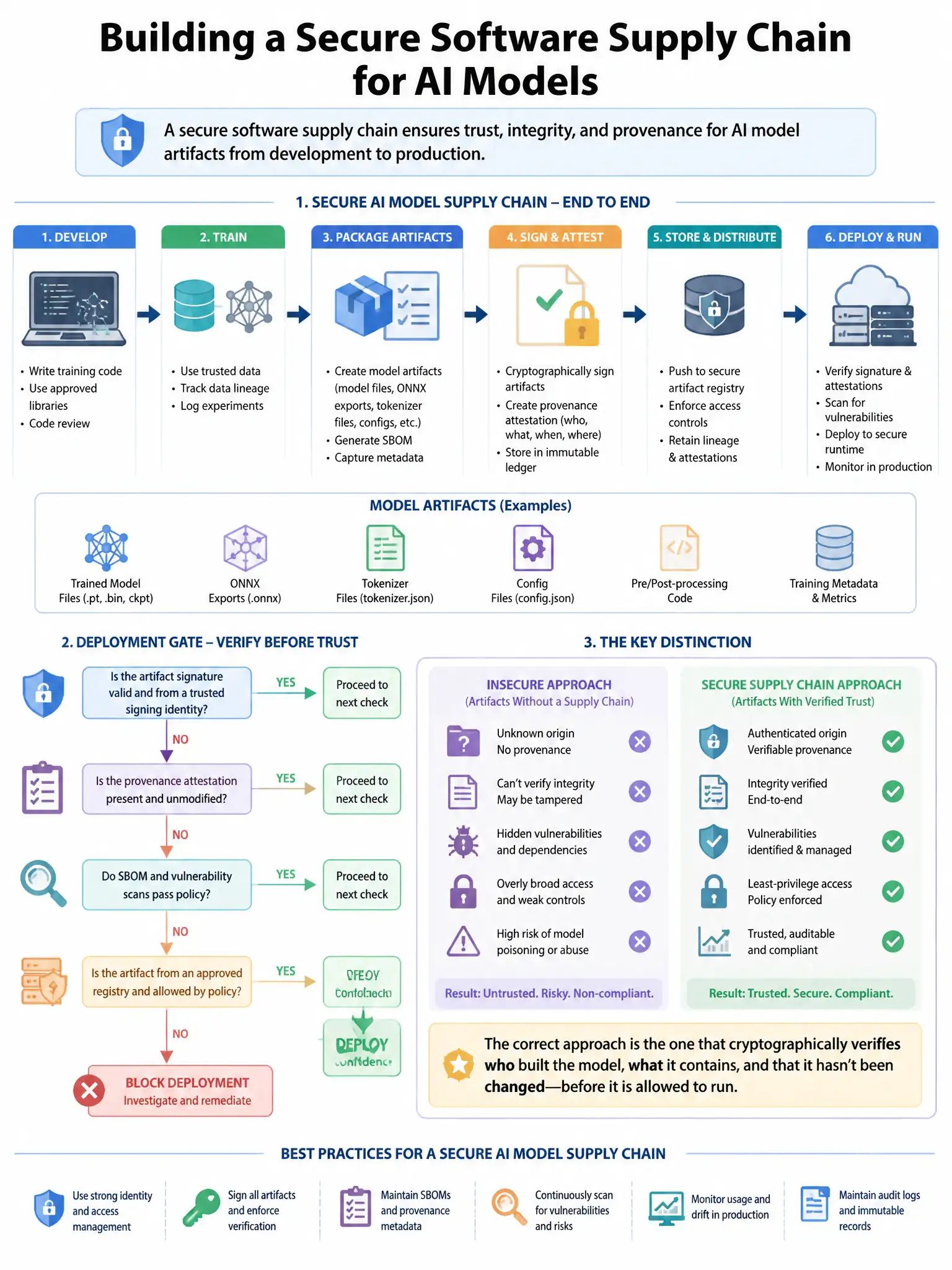
Here's the deal — you need cryptographic integrity, so use Azure Container Registry with Docker Content Trust for model container images and verify SHA256 digests at deployment. DCT signs the image, and digest checks prove the model container wasn't tampered with between registry and deployment.
Full Explanation
The Azure Container Registry with Docker Content Trust (DCT) option is correct because when AI models are packaged in container images (as is common for inference deployments), Azure Container Registry with Docker Content Trust (DCT) using Notary V1/V2 enables cryptographic signing of container images. Verifying SHA256 digests at deployment time ensures the model container has not been tampered with between the registry and deployment. The Blob Storage versioning and checksum comparison option is incorrect because checksum comparison in Blob Storage can detect changes but does not provide cryptographic signing with a trusted key; a compromised pipeline could also update the stored checksum. The Azure Machine Learning Model Registry signing with code signing certificates from Azure Key Vault option is incorrect because Azure Machine Learning Model Registry does not currently support code signing of model artifacts via Key Vault certificates as a built-in feature. The Azure DevOps pipeline gates requiring manual approval option is incorrect because manual approval gates provide a process control but not cryptographic integrity verification of the model artifact.