
A security engineer is reviewing Microsoft Entra ID sign-in logs for an AI pipeline service account. The logs show sign-ins using 'Seamless Single Sign-On' from an IP address in an unexpected country. The service account is supposed to run only in Azure datacenters. What is the most appropriate immediate action?
Select an answer to reveal the explanation.
Short Explanation and Infographic
Here's the deal — a is correct because Seamless SSO sign-ins use Kerberos tickets issued by on-premises Active Directory and the AZUREADSSOACC computer account. A Seamless SSO sign-in from an unexpected international location for a service account that should only authenticate from Azure datacenters indicates potential on-premises AD compromise or Kerberos ticket forgery.
Full explanation below image
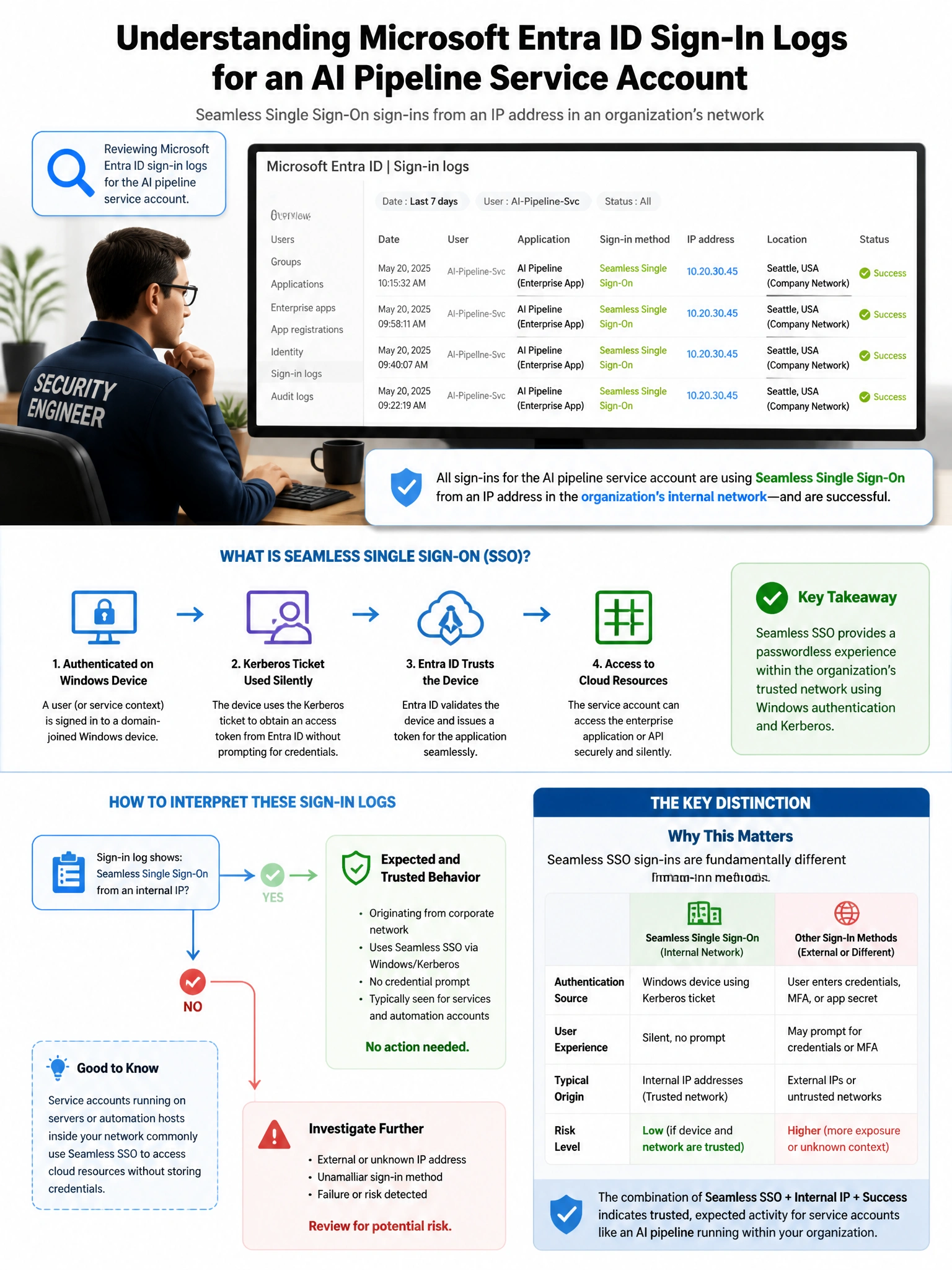
Full Explanation
A is correct because Seamless SSO sign-ins use Kerberos tickets issued by on-premises Active Directory and the AZUREADSSOACC computer account. A Seamless SSO sign-in from an unexpected international location for a service account that should only authenticate from Azure datacenters indicates potential on-premises AD compromise or Kerberos ticket forgery. The immediate action is to reset the AZUREADSSOACC password (to invalidate any forged tickets) and investigate the on-premises domain for signs of compromise. B is incorrect because blocking the service account stops current harm but creating a new account without understanding the root cause (on-premises compromise) leaves the attacker able to compromise the new account through the same vector. C is incorrect because adding the unexpected IP to named locations would dismiss a genuine threat indicator; the sign-in pattern is anomalous for a datacenter-only service account. D is incorrect because a 24-hour monitoring period before action gives an attacker significant time to continue unauthorized activities.