
An organization wants to implement a proactive security control for their Azure OpenAI deployment that automatically blocks known malicious IP addresses identified by Microsoft threat intelligence. Which Azure native service enforces this at the network level?
Select an answer to reveal the explanation.
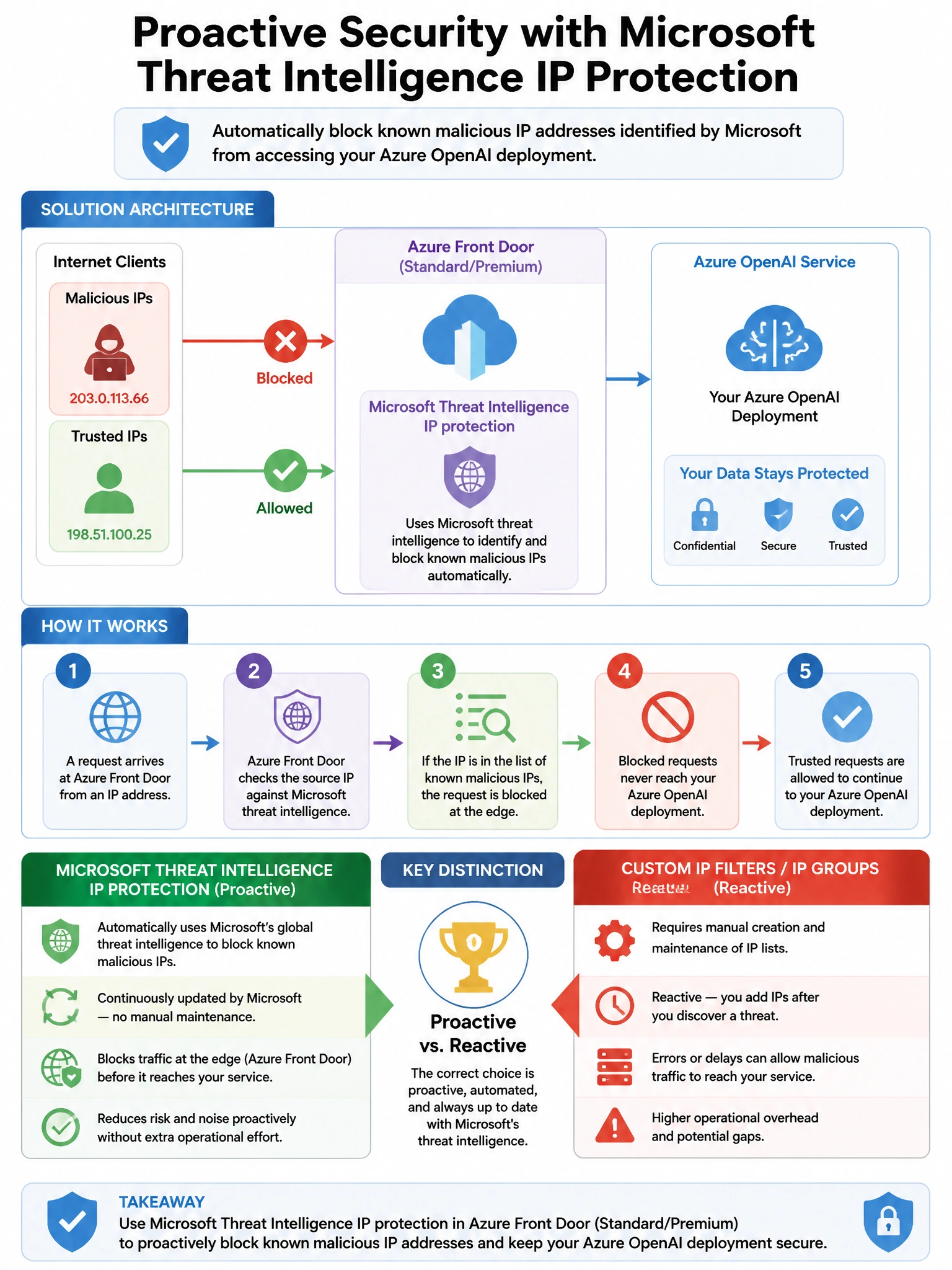
Short Explanation and Infographic
Here's the deal — c is correct because Azure Firewall Premium includes a Microsoft Managed Threat Intelligence-based IDPS (Intrusion Detection and Prevention System) ruleset that automatically blocks known malicious IP addresses, domains, and URLs identified by Microsoft's threat intelligence. This provides automatic, continuously updated protection without requiring manual IP list management.
Full explanation below image
Full Explanation
C is correct because Azure Firewall Premium includes a Microsoft Managed Threat Intelligence-based IDPS (Intrusion Detection and Prevention System) ruleset that automatically blocks known malicious IP addresses, domains, and URLs identified by Microsoft's threat intelligence. This provides automatic, continuously updated protection without requiring manual IP list management. A is incorrect because Azure OpenAI network access rules (service firewall) require manual IP range specification and do not integrate with live threat intelligence feeds for automatic blocking. B is incorrect because Azure DDoS Protection Standard focuses on volumetric DDoS attacks and does not specifically block individual known malicious IPs based on threat intelligence. D is incorrect because NSG rules with manual threat intelligence IP lists require custom automation to keep the rules updated and do not provide the automatic, real-time blocking that Azure Firewall Premium's managed threat intelligence ruleset provides.