
A security engineer needs to configure an Azure AI Language resource used for document analysis to accept requests only from a specific Azure Virtual Network subnet. Which two resources must be configured to achieve this network restriction?
Select an answer to reveal the explanation.
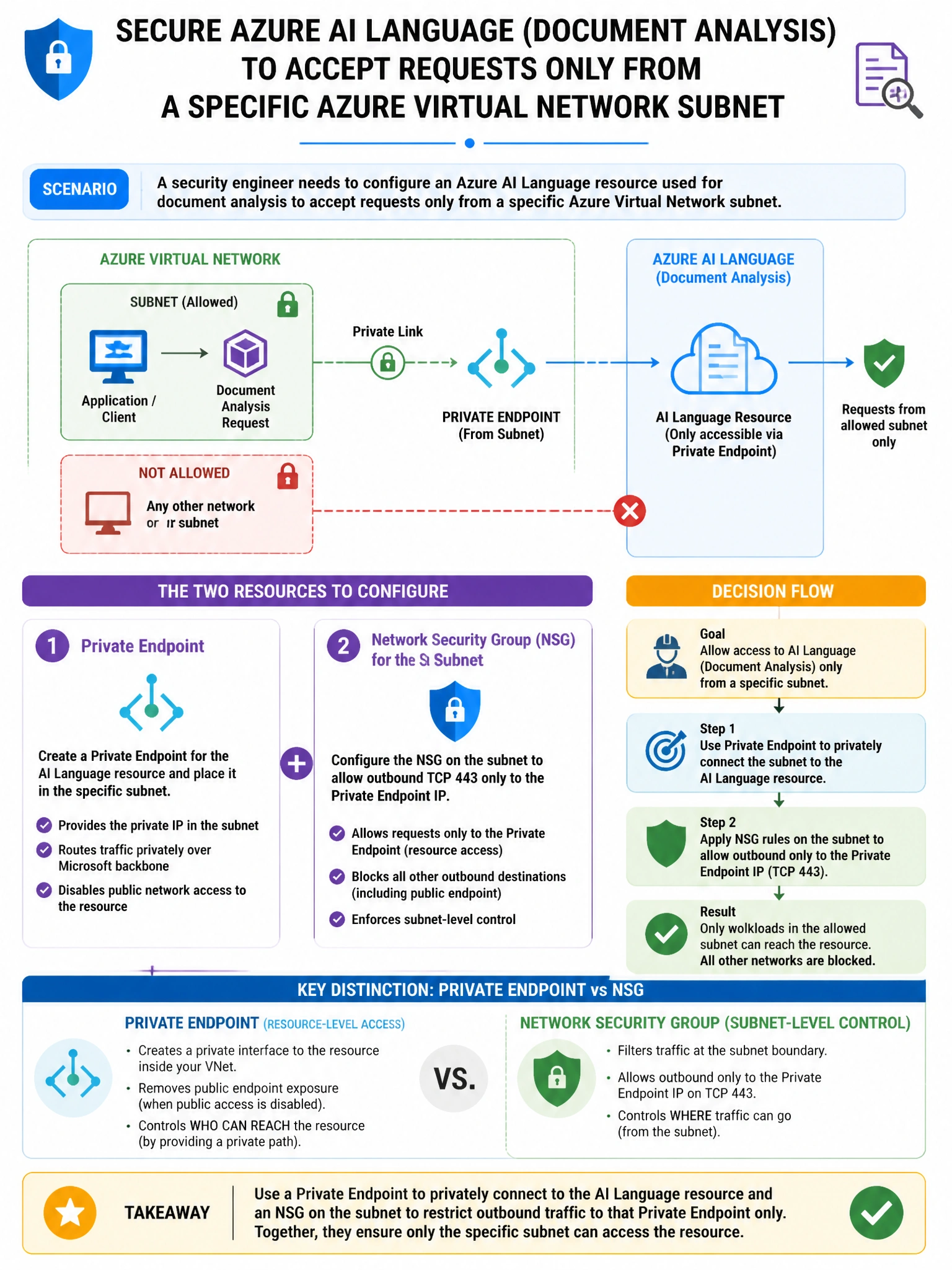
Short Explanation and Infographic
Here's the deal — b is correct because to restrict Azure AI Language (Cognitive Services) access to a specific subnet using service endpoint-based network rules, two configurations are required: enabling the 'Microsoft.CognitiveServices' service endpoint on the VNet subnet (which enables direct routing to the service), and adding a virtual network rule on the Azure AI Language resource's firewall settings to allow access from that specific subnet. Both must be configured together.
Full explanation below image
Full Explanation
B is correct because to restrict Azure AI Language (Cognitive Services) access to a specific subnet using service endpoint-based network rules, two configurations are required: enabling the 'Microsoft.CognitiveServices' service endpoint on the VNet subnet (which enables direct routing to the service), and adding a virtual network rule on the Azure AI Language resource's firewall settings to allow access from that specific subnet. Both must be configured together. C is incorrect because private endpoints provide a different (and stronger) isolation mechanism than service endpoint network rules; C is a valid alternative approach but uses private endpoint architecture, not service endpoint network rules. A is incorrect because NSG rules on the subnet control traffic leaving the subnet but do not configure the Azure AI Language service to accept traffic only from that subnet; the service-side virtual network rule is required. D is incorrect because Azure Firewall with application rules controls egress from the subnet but does not restrict the Azure AI Language service itself to accept requests only from that subnet.