
A compliance team is configuring Microsoft Purview to generate reports demonstrating that the organization's Azure OpenAI usage complies with the EU AI Act. The reports must show that high-risk AI systems have human oversight enabled. Which Microsoft Purview capability should be used to create this compliance report?
Select an answer to reveal the explanation.
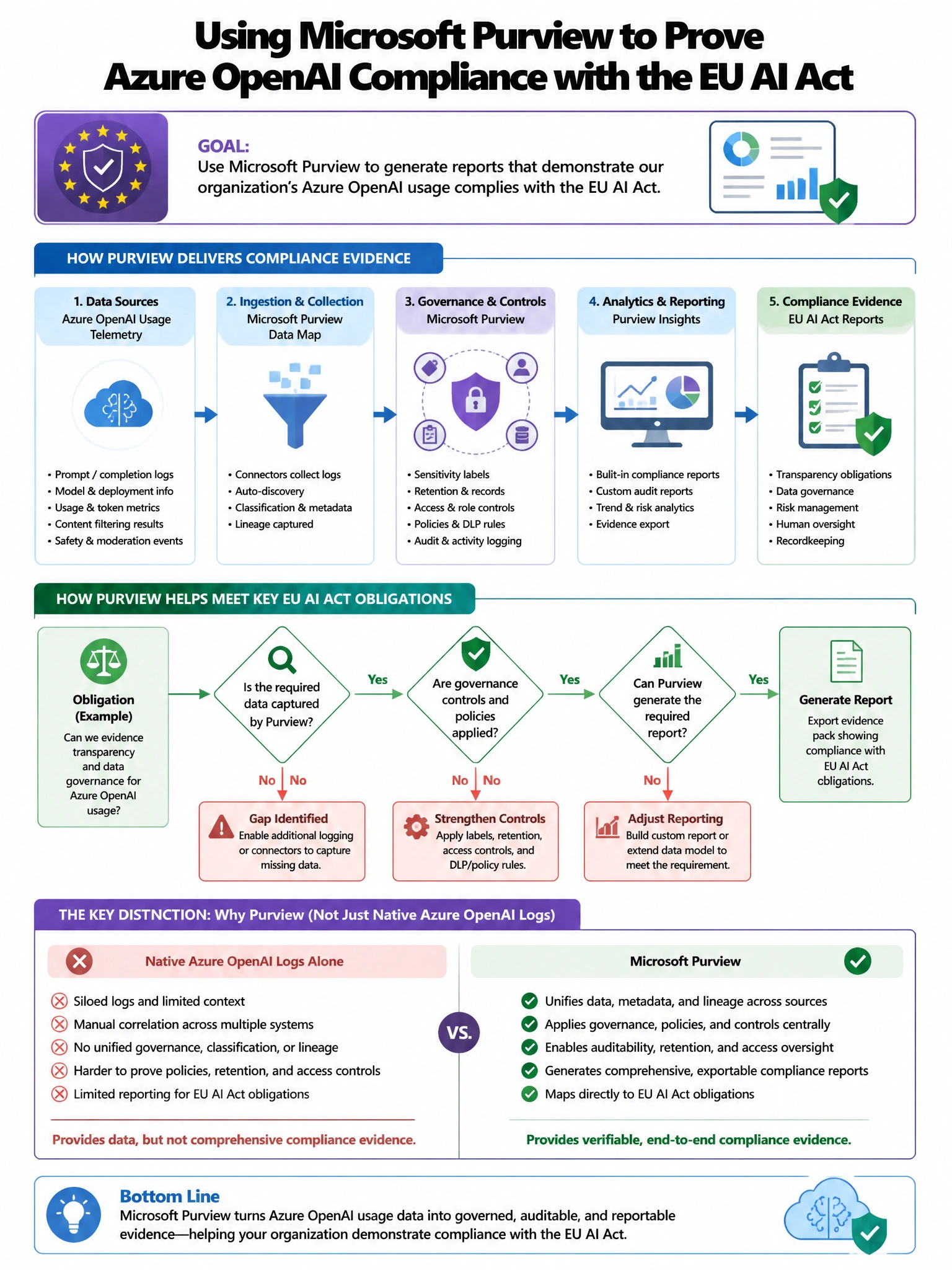
Short Explanation and Infographic
Here's the deal — b is correct because Microsoft Purview Compliance Manager supports custom assessment templates where organizations can create an EU AI Act assessment, define controls (including human oversight requirements), map evidence, and track implementation status. This provides the structured compliance reporting framework needed to demonstrate regulatory compliance to auditors.
Full explanation below image
Full Explanation
B is correct because Microsoft Purview Compliance Manager supports custom assessment templates where organizations can create an EU AI Act assessment, define controls (including human oversight requirements), map evidence, and track implementation status. This provides the structured compliance reporting framework needed to demonstrate regulatory compliance to auditors. A is incorrect because Audit log exports show event history but require manual mapping to EU AI Act human oversight requirements; Compliance Manager provides the structured regulatory mapping. C is incorrect because Data Map lineage reports track data flow, not human oversight implementation status for regulatory reporting. D is incorrect because eDiscovery exports produce raw content for legal discovery, not structured compliance reports demonstrating control implementation.